Clear Sky Science · en
A prefrontal cortex-lateral hypothalamus circuit controls stress-driven increased food intake
Why stress and snacking are closely linked
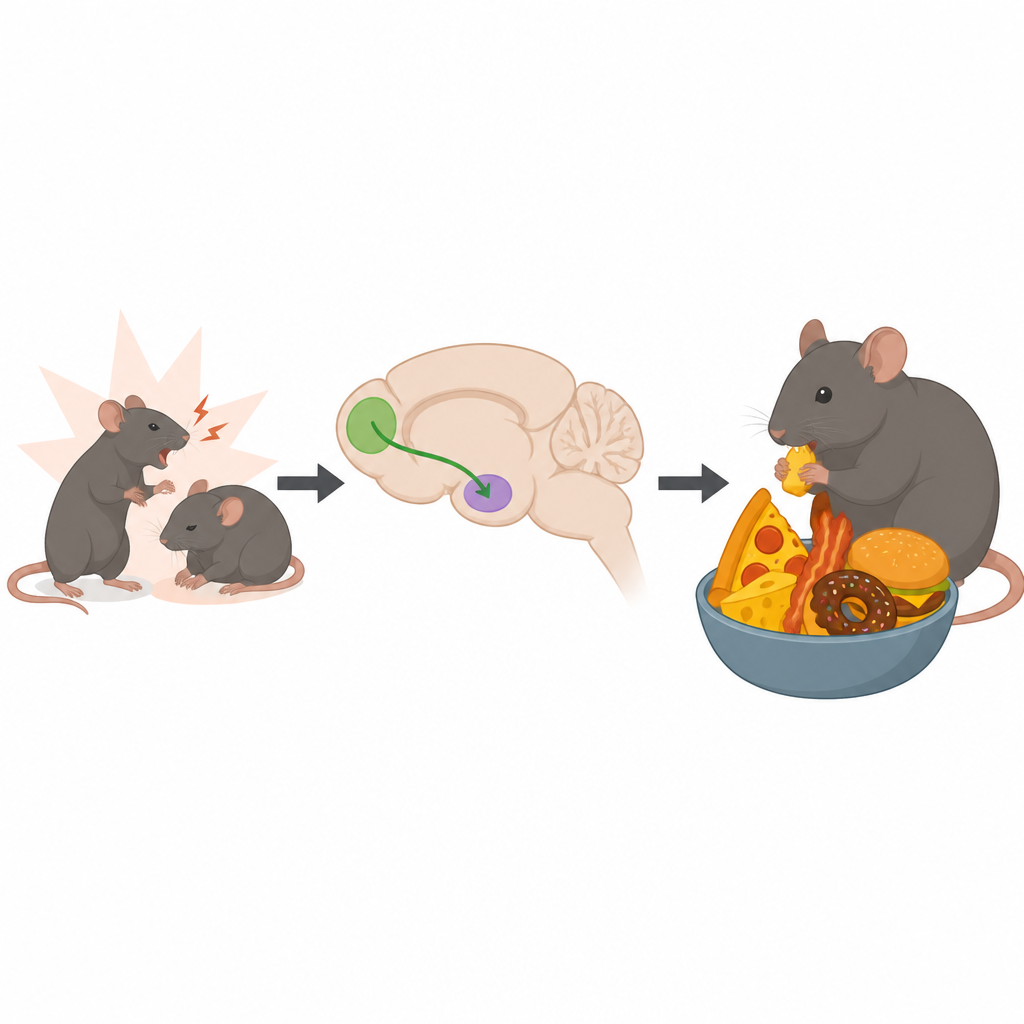
Many people reach for rich, fatty foods after a tough day, but the brain pathways that turn stress into snacking have remained a mystery. This study in mice uncovers a specific circuit connecting a thinking area at the front of the brain to a deeper feeding center that becomes crucial when animals are stressed. Understanding this pathway may help explain why stress can trigger binge eating and weight gain in some individuals.
A conversation between two brain hubs
The researchers focused on two key brain regions. The medial prefrontal cortex, near the front of the brain, helps with decision making and handling difficult situations. The lateral hypothalamus, buried deeper, is a long-known control center for hunger and reward. Using precise light-based tools in mice, the team showed that signals running from the prefrontal cortex to the lateral hypothalamus are able to selectively boost the intake of a fatty treat, without changing how much regular chow the animals eat. When this pathway was gently stimulated at a low rhythm, sated mice kept going back for more fat, especially later in the session when their interest would normally fade.
Stress tunes the circuit toward comfort food
To see how stress affects this pathway, the scientists exposed mice to brief confrontations with a larger, aggressive mouse, a social challenge known to increase later interest in palatable foods. By recording activity from prefrontal cells that send fibers to the lateral hypothalamus, they found that these neurons rapidly changed their firing during the stressful encounter, with some ramping up and others quieting down. When the same mice later had access to chow and fat, switching off this pathway with a designer drug did not alter normal eating. However, it completely prevented the extra fat consumption that usually follows social stress. This shows that the circuit is not needed for everyday feeding but becomes essential when stress is pushing the animals toward overeating.
How stress reshapes signals inside the feeding center
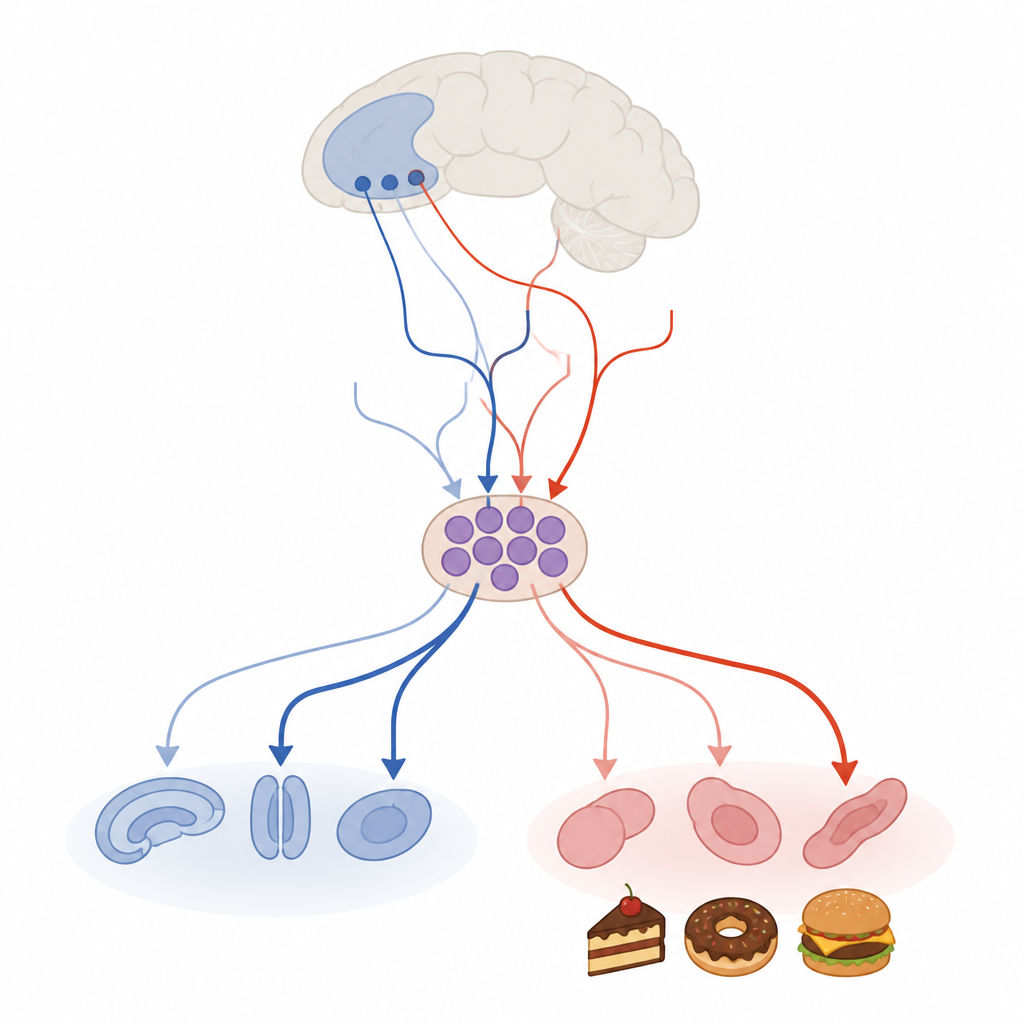
The lateral hypothalamus contains several types of nerve cells, some of which tend to put a brake on eating, while others can promote it. The team mapped which of these cell types receive direct input from the prefrontal cortex and found strong connections to both major groups. They then examined what happens at these tiny contact points, or synapses, after stress. Overall, stress weakened prefrontal signals onto a broad class of cells that normally help limit food intake. At the same time, within this class, certain cells that send onward signals to the brain’s reward hub became more strongly driven by prefrontal input. In effect, stress shifted the balance so that the pathway less effectively activates “stop eating” cells while more powerfully engaging “keep eating” cells linked to reward.
A specialized stress-activated ensemble
The researchers next asked whether only some prefrontal cells in this pathway are especially important for stress eating. They used a genetic trick to permanently tag neurons that were active during social stress and later turned on only this tagged group with light. These stress-marked prefrontal cells preferentially connected to glutamatergic cells in the lateral hypothalamus, including subtypes known to influence reward and food seeking. Activating just this ensemble was enough to raise fat intake in relaxed mice, again without changing chow consumption. Conversely, silencing glutamatergic cells in the lateral hypothalamus during the stressful encounters blocked the later binge on fat, confirming that they are a critical relay.
What this means for stress eating
Taken together, the findings reveal that a specific front-to-deep brain pathway converts stressful experiences into ongoing interest in fatty foods. Under calm conditions, this circuit has little effect on normal meals. After stress, however, its connections are reshaped so that it becomes much easier for prefrontal activity to drive the hypothalamus toward encouraging comfort eating and overriding feelings of fullness. While these experiments were done in mice, they highlight concrete brain mechanisms that may contribute to stress-driven binge episodes and obesity in people, and they point to this multi-branched pathway as a potential target for future interventions.
Citation: Supiot, L.F., Kooij, K.L., Du, W. et al. A prefrontal cortex-lateral hypothalamus circuit controls stress-driven increased food intake. Nat Commun 17, 4620 (2026). https://doi.org/10.1038/s41467-026-71073-z
Keywords: stress eating, binge eating, prefrontal cortex, lateral hypothalamus, high fat diet