Clear Sky Science · en
Smart-flame-retarding layered composite Li negative electrode for safe Li metal battery
Why safer batteries matter
Lithium metal batteries could power longer-range electric cars and slimmer phones, but they carry a hidden danger: the lithium metal inside can burn fiercely if something goes wrong. This study introduces a clever new way to build the lithium side of the battery so it can largely put out its own fire while still storing a lot of energy. The work shows how a carefully stacked structure around lithium metal can both prevent flames and keep the battery working after serious abuse.
The fire risk inside lithium metal batteries
Lithium metal is attractive because it can store more charge by weight than almost any other battery material. However, it is also highly reactive and can catch fire easily when exposed to heat, air, or moisture, leading to very hot, hard-to-extinguish flames. Existing safety efforts mostly focus on using less flammable liquids inside the battery or tougher separators between the positive and negative sides. These steps help, but they do not remove the core problem: if the lithium metal itself ignites, the battery can still fail in a dramatic way. Mixing standard flame-retardant chemicals straight into lithium metal does not work, because the lithium corrodes these additives and destroys both their fire-suppressing ability and the battery’s capacity.
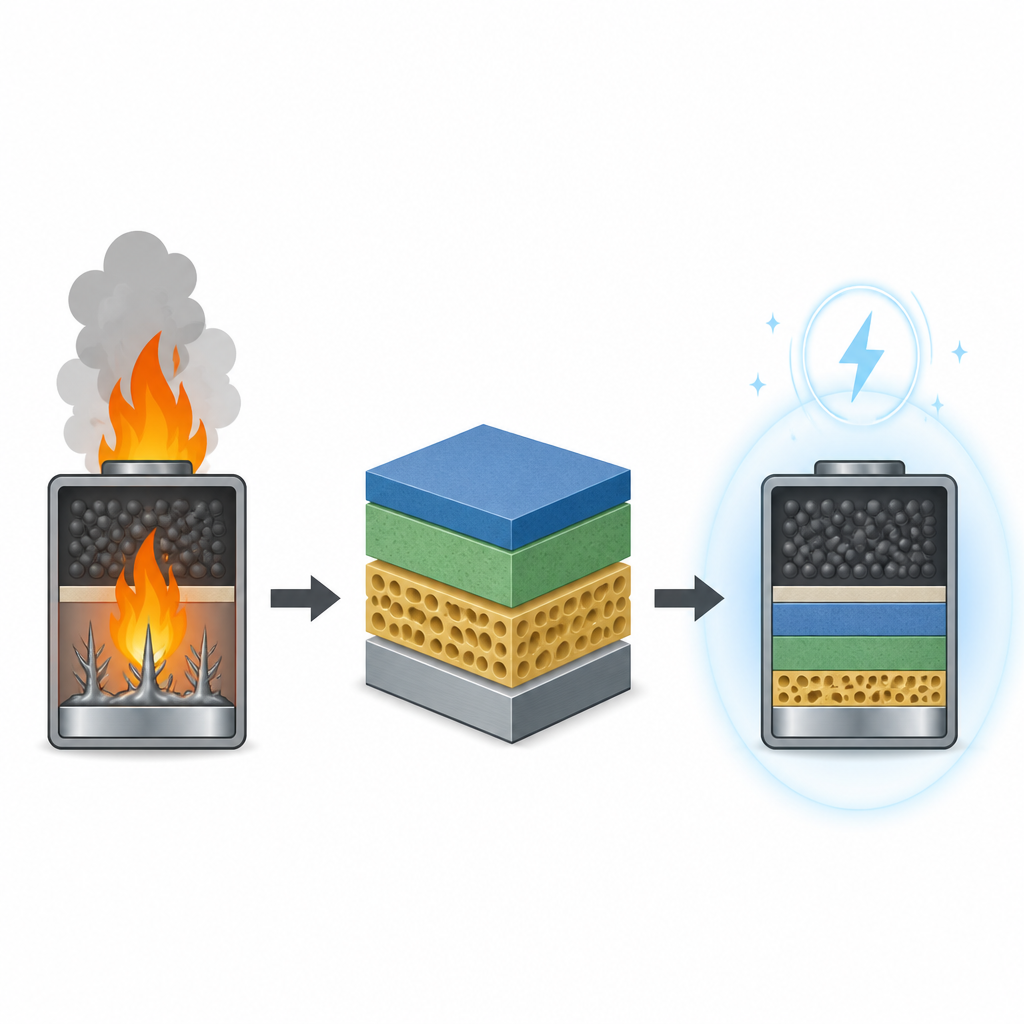
A layered shield around lithium metal
The researchers designed a new lithium metal negative electrode built as a stack of four cooperating layers. At the base is a light, porous framework made from graphene oxide, which provides mechanical support and plenty of space for lithium. Inside this framework they coat a solid flame-retardant compound called triphenyl phosphate. On top of that, they grow a very thin, even layer of zinc oxide, which both attracts molten lithium and acts as a barrier between the lithium and the flame retardant. Finally, lithium metal is infused into the pores so it fills the outer region of the structure. This layout keeps the flame-retardant material sealed away from lithium during normal use, avoiding the destructive side reactions that plague simple mixtures, while still leaving it ready to act in an emergency.
How the smart flame protection works
When exposed to a hot flame, this stacked electrode behaves very differently from plain lithium metal. The porous framework slows and spreads heat, so most of the structure stays much cooler than the ignition point, even when one side is heated strongly. As temperature rises, the hidden flame-retardant layer gradually breaks down and releases gases that seep through tiny channels to the lithium surface. Computer models and imaging show these gases forming a blanket around the electrode that pushes away oxygen and interrupts the chemical chain reactions that feed combustion. At the same time, fragments of the flame-retardant molecules bind strongly to lithium atoms, further cutting off the burn process. As a result, samples of the new electrode do not keep burning even after being held in a 600 degree flame, while plain lithium and a simple lithium plus flame-retardant control both burn violently and crumble.
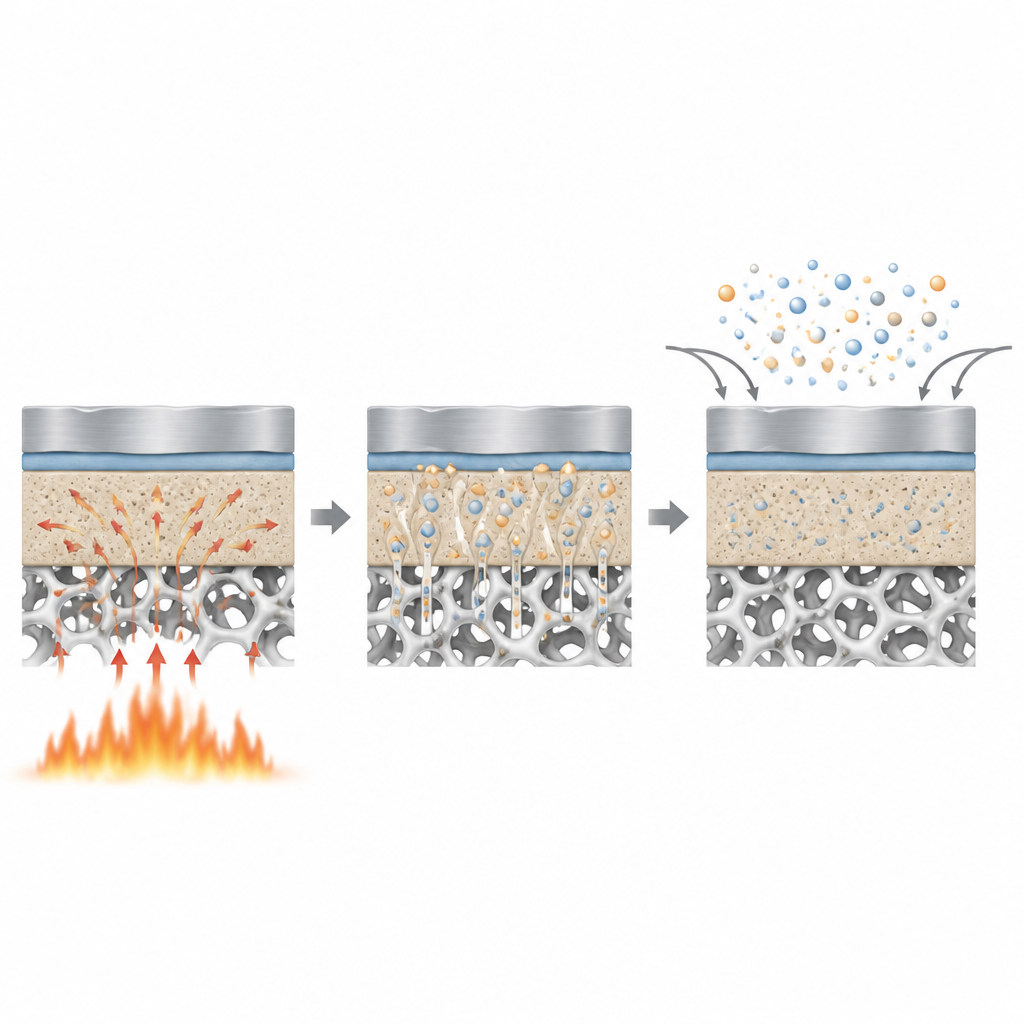
Keeping the battery working during and after fire
Crucially, the safety benefits do not come at the price of performance. In normal battery cycling, the zinc oxide layer blocks the flame retardant from dissolving into the liquid electrolyte and attacking the lithium. This leads to a more stable interface where lithium can plate and strip smoothly, avoiding needle-like growths and keeping the internal resistance low. In tests, the layered electrode supports many more charge and discharge cycles than either plain lithium or the simple mixture with flame retardant. Even after direct ignition, most of the lithium in the layered design remains intact and usable, so cells built with it can continue to run for hundreds of hours, while cells using plain lithium fail completely after burning.
What this means for future devices
To show the real-world impact, the team built pouch cells similar in size and shape to small commercial batteries. When the lithium side of a standard lithium metal cell was exposed to a flame, the entire battery flared up and was destroyed. In contrast, cells using the layered smart electrode kept powering a light without bursting into flame, even under repeated or long-lasting ignition. Overall, the study demonstrates that surrounding lithium metal with a carefully engineered, flame-retarding layered host can turn a notoriously flammable material into a far safer battery component, while still delivering long life and high energy. This approach could help make next-generation lithium metal batteries, and possibly other metal-based batteries, much safer for everyday use.
Citation: Qi, H., Deng, L., Liu, Y. et al. Smart-flame-retarding layered composite Li negative electrode for safe Li metal battery. Nat Commun 17, 4438 (2026). https://doi.org/10.1038/s41467-026-71069-9
Keywords: lithium metal batteries, battery safety, flame retardant electrode, graphene oxide foam, zinc oxide layer