Clear Sky Science · en
Cultivar evolution underpins maize yield sensitivity to adverse climate conditions
Why this study matters for our dinner plates
Maize, or corn, is a staple of modern diets and livestock feed, so even small changes in its harvest can ripple through food prices and food security. This study asks a timely question: as the climate becomes hotter and rainfall more erratic, are new corn varieties helping farmers in China keep yields up, or are they making crops more sensitive to weather shocks in some regions?
Following corn fields across a vast country
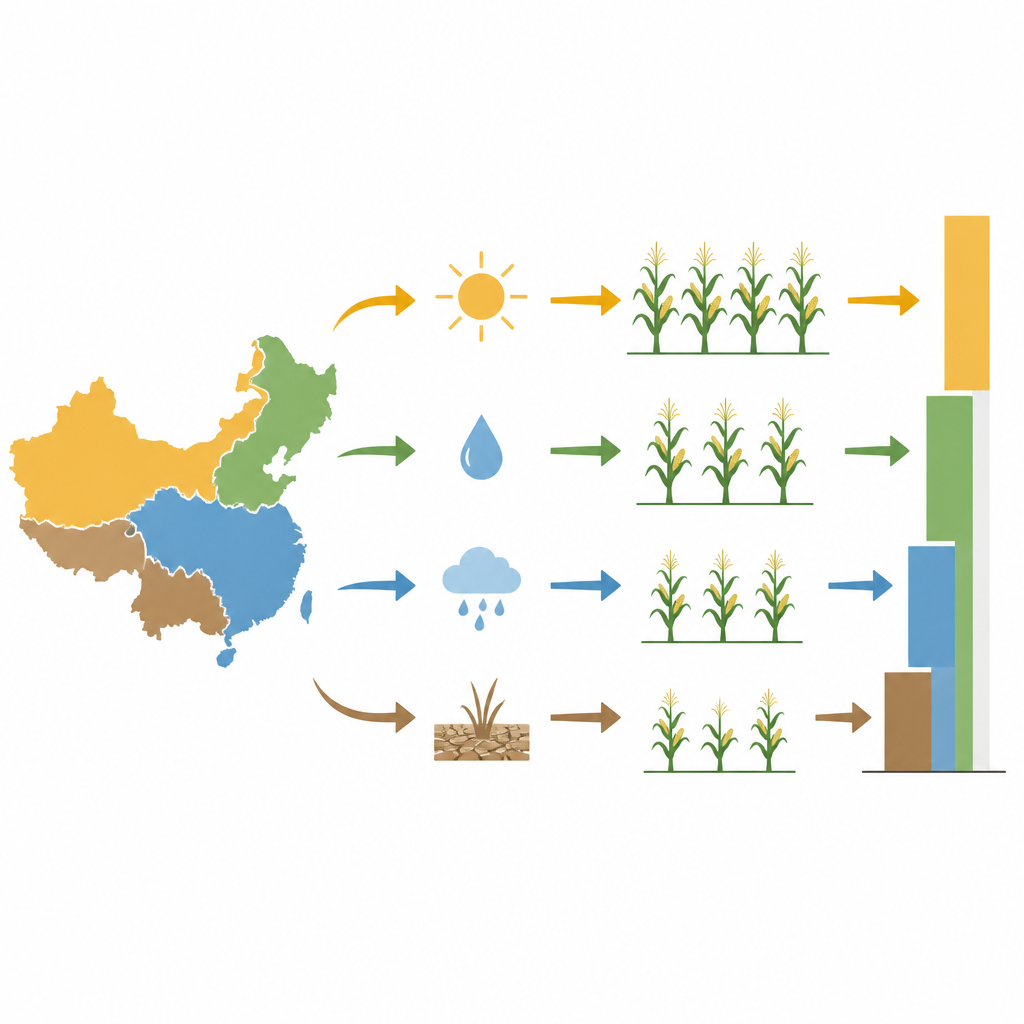
China is the world’s second largest producer of maize, yet its yield gains have trailed behind those in the United States. To understand why, the researchers assembled an unusually large dataset of 48,797 observations from official variety trials run between 2001 and 2020. These trials tested both long-standing standard varieties and newer elite ones at many locations in four major maize regions, while carefully recording local weather. By combining these test results with real-world farm statistics and climate records, the team could tease apart how much yield improvement came from plant breeding and how much from changing weather and farm practices.
New varieties boost yields but not equally everywhere
The analysis shows that breeding new cultivars has clearly pushed maize yields upward across China. In the test network, productivity rose by about a third to nearly three tons per hectare per decade depending on the region, and these gains were not explained by changes in standard reference varieties. Instead, improvements in traits such as kernel number per area and grain weight played a key role. However, actual farm yields remained several tons per hectare lower than those achieved in the test plots, highlighting a persistent gap between what is possible with modern varieties under good management and what farmers typically obtain in their fields.
Heat and rain: friends in some places, foes in others
Climate trends during the growing season differed sharply across China. In the northeast and north, maize was most vulnerable to hot days in July and August, when plants flower and fill grain. Even a one degree rise above about 30 °C during these months could trim yields by several percent, with the strongest damage seen in the north. In the southwest and northwest, rainfall rather than heat was the main concern: too much rain in the southwest likely caused waterlogging, while too little rain in the northwest led to water shortage. Moderate increases in rain helped in dry areas but hurt in already wet ones, showing that both drought and excess water can limit production.
Breeding can cut risk or increase it
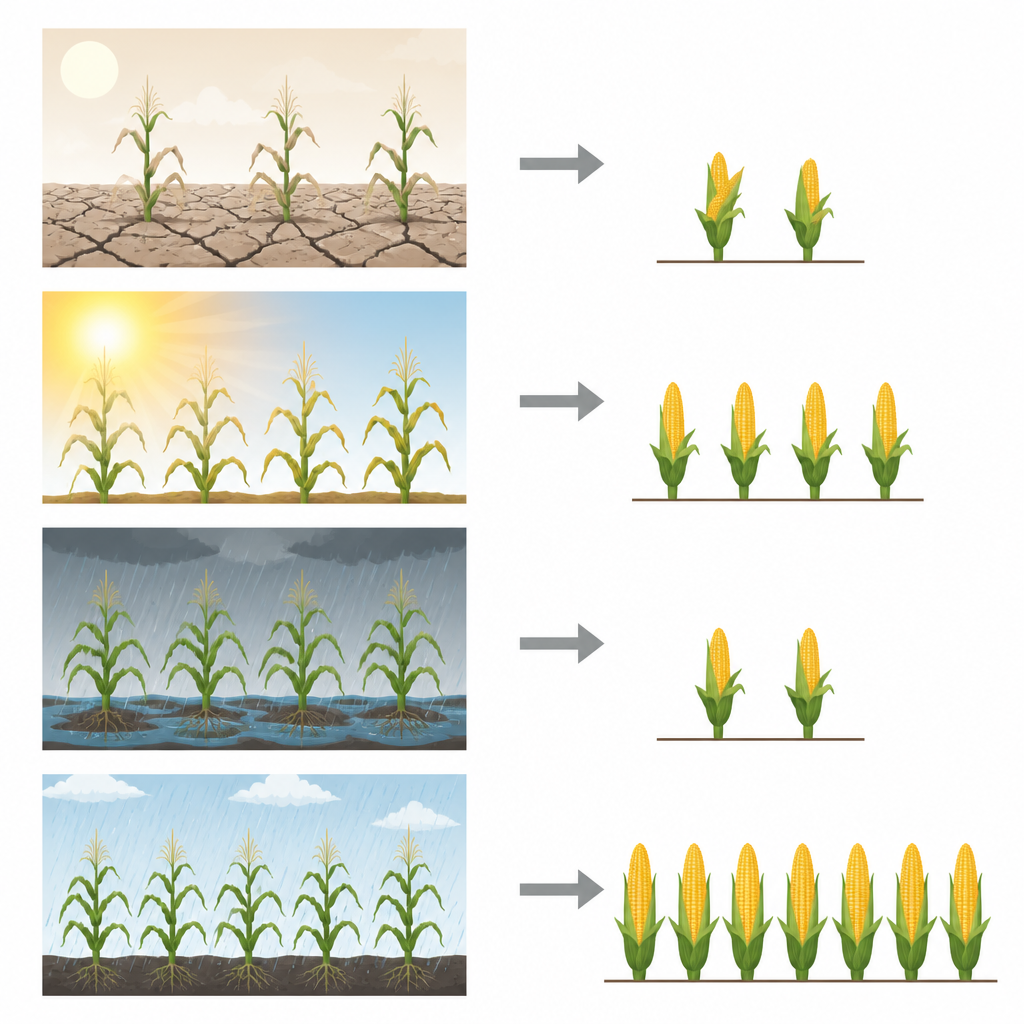
The most striking result is that new cultivars changed how sensitive yields are to bad weather, and not always in the same direction. In Northeast China, newer, higher-yielding varieties became more vulnerable to heat, meaning they lost more harvest when hot spells struck. In North China, by contrast, newer cultivars grew more tolerant of heat over time. In the Southwest, high-yielding varieties were increasingly sensitive to heavy rainfall, while in the drier Northwest they reacted more strongly, in a positive way, to additional rain. In several cases, the varieties that produced the biggest harvests under normal conditions were also the ones that suffered the most when heat or rainfall strayed from ideal levels.
What this means for future corn harvests
For people who depend on maize, the message is that better genetics alone are not enough; breeders must match varieties to local climate risks. The study concludes that while cultivar evolution has driven long term yield gains, it has also reshaped how maize responds to heat and rainfall, sometimes making crops less resilient to extremes. Future breeding should focus on region-specific needs: heat-tolerant types for hot northeastern and northern summers, varieties that withstand waterlogging in the southwest, and water-efficient types for the dry northwest. Coupled with good management, such climate-smart cultivars could help keep corn harvests stable in an era of rising weather surprises.
Citation: Zhang, L., Bai, Z., Xi, W. et al. Cultivar evolution underpins maize yield sensitivity to adverse climate conditions. Nat Commun 17, 4528 (2026). https://doi.org/10.1038/s41467-026-71045-3
Keywords: maize, climate stress, crop breeding, heat and rainfall, China agriculture