Clear Sky Science · en
Pulmonary fibroblast activation during Aspergillus fumigatus infection enhances lung defense via immunomodulation and tissue remodeling
How Quiet Lung Cells Help Fight a Dangerous Fungus
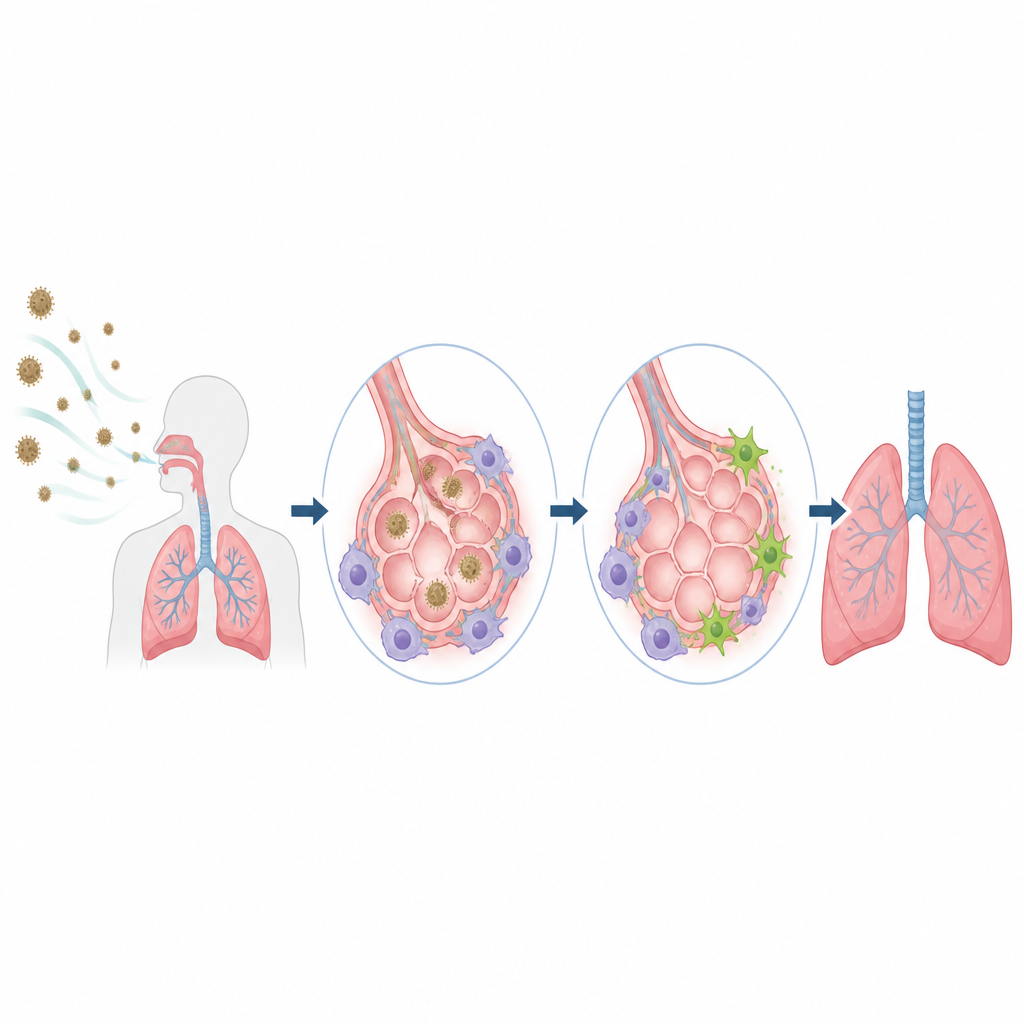
Most of us inhale fungal spores every day without ever noticing. One common mold, Aspergillus fumigatus, can cause deadly pneumonia in people whose immune systems are weakened. This study explores an overlooked ally in the lung’s defense team: fibroblasts, the support cells that build and repair tissue. By watching these cells respond to fungal attack in mice and in human cell cultures, the researchers uncovered how fibroblasts help control infection and limit tissue damage.
A Common Mold with Serious Consequences
Aspergillus fumigatus lives in soil and decaying leaves and spreads through tiny airborne spores. Healthy lungs usually clear these spores before they grow. But in people with weakened immunity or damaged lungs, the spores can germinate into invasive filaments that chew through tissue and blood vessels, causing severe bleeding and high death rates. The fungus also releases enzymes and toxins that repeatedly injure lung tissue, contributing to chronic disease. Because resistance to antifungal drugs is rising, understanding how the body naturally protects itself has become increasingly important.
Support Cells Step into Action
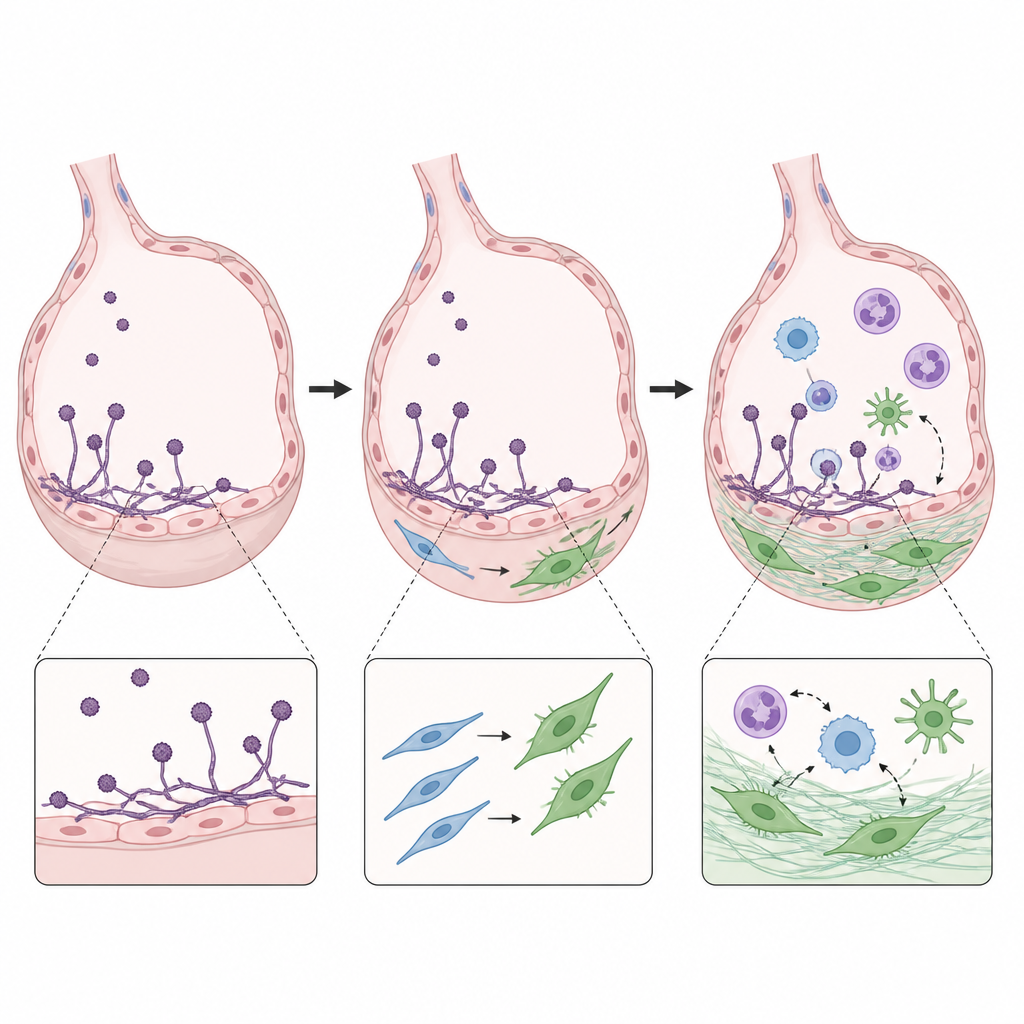
Fibroblasts are best known as the body’s builders. They secrete collagen and other scaffold materials that give organs their shape and strength. In this study, the team used genetically engineered mice to “tag” fibroblasts that switch on a gene called periostin when they become activated. After exposing healthy mice to fungal spores, they saw a wave of collagen laid down exactly where inflammation appeared in the lungs. At the same time, a subset of fibroblasts in the tiny air sacs became enlarged and highly active, turning on periostin and other genes associated with tissue repair. These activated fibroblasts were distinct from the thin, quiet fibroblasts seen in uninfected lungs.
From Scaffolding to Immune Coaching
The researchers then asked what these activated fibroblasts actually do. By comparing their gene activity to that of resting fibroblasts, they found more than a thousand genes changed. Many were involved in reshaping the lung’s scaffold: producing different types of collagen, elastin, and enzymes that strengthen and remodel the tissue. But the cells also turned on genes usually associated with immune cells. They began making signaling proteins that call in neutrophils, macrophages, and other defenders, and they produced receptors that can sense fungal components. Single-cell RNA sequencing revealed temporary fibroblast subgroups that both stabilize the matrix and send immune-guiding signals, then gradually fade back toward a resting state as the infection resolves.
What Happens When These Cells Are Missing
To test whether these fibroblasts truly protect the lung, the team created mice in which periostin-activated fibroblasts could be selectively killed. When these mice were made immunosuppressed and infected with Aspergillus, they died faster than control animals, with extensive bleeding in the air sacs and fungal growth invading blood vessels. The total amount of fungus in the lungs was similar between groups, but the pattern of immune cell entry was very different. Mice lacking activated fibroblasts had an overabundance of inflammatory cells such as macrophages and neutrophils, consistent with poorly controlled inflammation that damages tissue instead of simply clearing the pathogen.
Evidence from Human Lung Cells
The scientists also studied fibroblasts isolated from healthy human lungs. When these cells were exposed to live Aspergillus spores in the lab, they began to increase production of several inflammatory signals over time, particularly once the spores germinated into growing filaments. Heat-killed spores triggered much weaker responses, suggesting that fibroblasts are tuned to recognize active fungal growth. This behavior mirrors the patterns seen in the mouse lungs, supporting the idea that human fibroblasts can directly sense fungal invasion and help coordinate the immune response.
Why This Matters for Lung Health
Overall, the study reveals that fibroblasts in the lung are not just passive builders repairing damage after the fact. When Aspergillus fumigatus attacks, these cells rapidly shift gears: they reinforce the lung’s structural framework while also acting as local “conductors” that shape when and how immune cells arrive. Removing this fibroblast support system leads to leaky, damaged tissue and a chaotic inflammatory response, even when the fungal burden is unchanged. For people at risk of invasive fungal pneumonia, future treatments that preserve or gently boost these protective fibroblast functions could help balance infection control with tissue protection.
Citation: Guirao-Abad, J.P., Kasprovic, D.A., Seo, D. et al. Pulmonary fibroblast activation during Aspergillus fumigatus infection enhances lung defense via immunomodulation and tissue remodeling. Nat Commun 17, 4650 (2026). https://doi.org/10.1038/s41467-026-71027-5
Keywords: Aspergillus fumigatus, lung fibroblasts, invasive aspergillosis, immune response, tissue remodeling