Clear Sky Science · en
Sequential sequencing reveals the architecture and complexity of genomic variants in patients with Alport syndrome
Why this kidney study matters
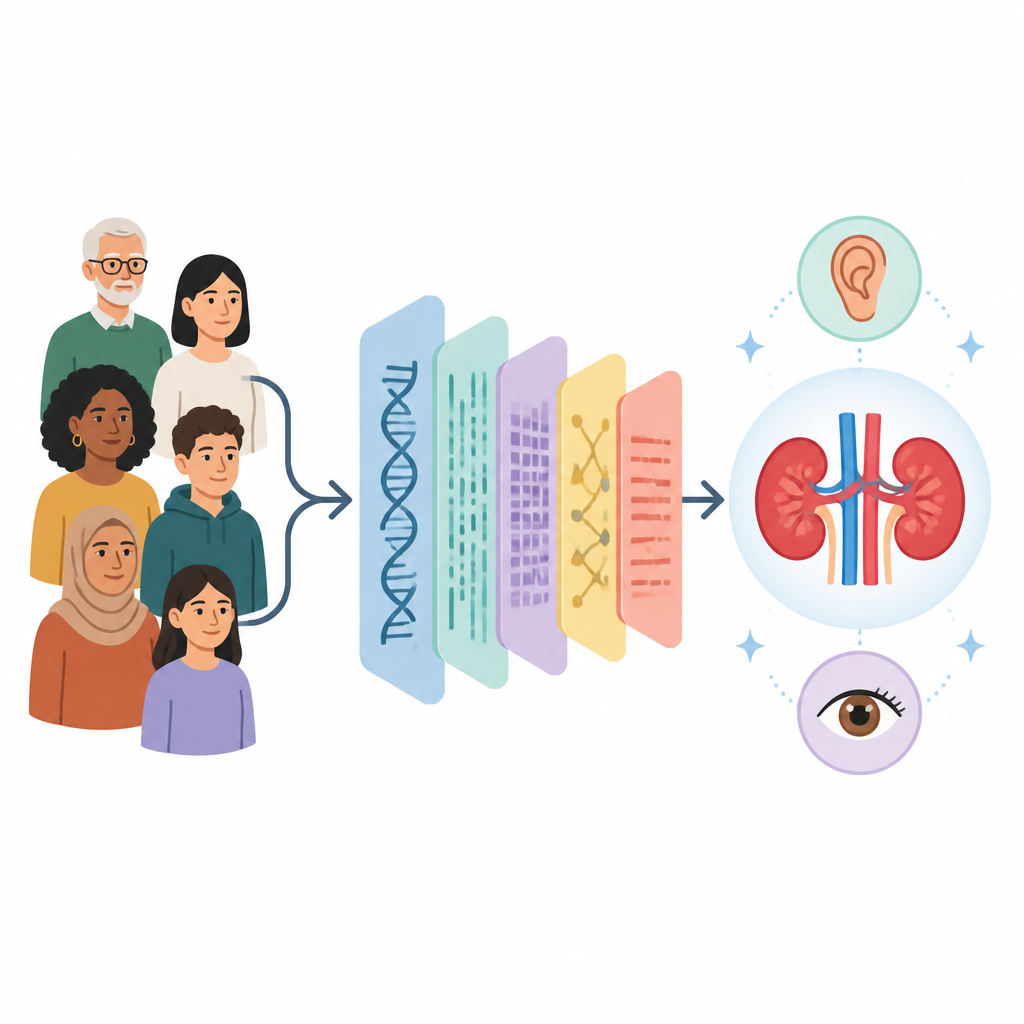
Alport syndrome is a rare inherited kidney disease that often progresses to kidney failure and can also affect hearing and eyesight. Many families never learn the exact genetic cause, which makes it harder to predict who in the family is at risk or to plan treatment and monitoring. This study used several cutting-edge DNA and RNA tests in more than 500 patients to build a much clearer picture of the hidden genetic changes behind Alport syndrome.
A closer look at a fragile kidney filter
Alport syndrome damages the body’s natural filters, especially in the kidneys. These filters rely on a mesh of proteins that form a thin support layer in blood vessel walls. Three key genes help build this mesh, and changes in any of them can weaken the structure. When that happens, blood can leak into the urine, scarring can build up in the kidneys, and over time the filters may fail, sometimes along with problems in the ears and eyes that share the same support tissue.
Layered testing to find hidden mutations
The researchers investigated 555 people in China with biopsy-proven Alport syndrome. They started with a widely used test that scans the protein-coding parts of genes, then added whole-genome sequencing, RNA sequencing from kidney tissue, and long-read sequencing in especially puzzling cases. This stepwise approach allowed them to pick up not only classic single-letter changes in DNA, but also alterations in noncoding regions, missing or duplicated stretches of DNA, and more complex rearrangements that standard tests often miss.
Unexpected variety in genetic changes
Using this layered strategy, the team pinpointed disease-related variants in over 91 percent of patients and cataloged 431 distinct genetic changes, nearly half of which had never been reported before. Most changes occurred in the protein-coding regions, but about one in six lay in noncoding stretches of DNA that influence how gene messages are cut and stitched together. The scientists showed that some of these hidden changes cause extra segments to be inserted into the message or entire segments to be skipped, disrupting the structure of the collagen mesh. They also uncovered previously unseen forms of large DNA changes, including long pieces inserted within gene gaps and intricate duplication–inversion patterns that alter how gene messages are produced.
Links between gene changes and symptoms
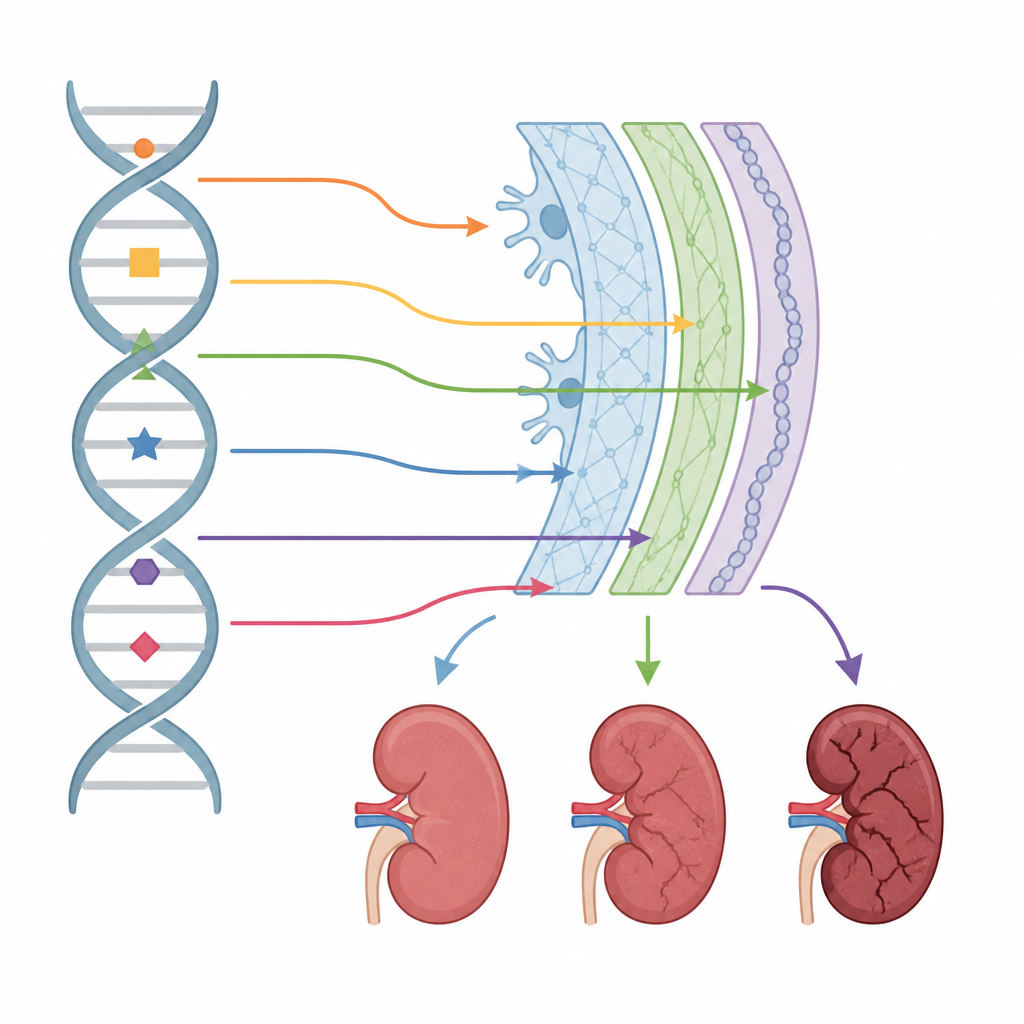
Because the patients had detailed clinical records and kidney tissue samples, the researchers could relate specific types of DNA changes to how the disease appeared in the body. In men with the X-linked form of the disease, more severe mutations were tied to complete loss of a key collagen chain in kidney and skin staining tests and to a faster march toward kidney failure. Certain genetic patterns were linked to a higher chance of hearing loss or kidney cysts, and hearing loss itself signaled a greater risk of kidney failure. In contrast, people with milder variants or with disease inherited through other patterns tended to show slower or less predictable progression.
What this means for patients and families
This work shows that looking only at the usual gene segments can miss an important share of disease-causing changes in Alport syndrome. By combining genome-wide and long-read sequencing with RNA studies, doctors can reach a genetic diagnosis for many more patients, clarify family risks, and better judge who may face faster kidney decline or additional complications. The same multi-layered testing roadmap can be adapted to other inherited conditions, helping uncover elusive mutations that standard genetic tests overlook.
Citation: Di, H., You, Z., Wang, L. et al. Sequential sequencing reveals the architecture and complexity of genomic variants in patients with Alport syndrome. Nat Commun 17, 4321 (2026). https://doi.org/10.1038/s41467-026-70936-9
Keywords: Alport syndrome, kidney disease genetics, whole-genome sequencing, long-read sequencing, collagen IV