Clear Sky Science · en
Adult patients with autoinflammation of unknown origin partially phenocopy the immune presentation of Still’s disease
Why mysterious inflammation matters
Some adults suffer from repeated bouts of fever, fatigue, joint pain and rashes, yet doctors cannot pin down a clear diagnosis. These episodes of unexplained inflammation can drag on for months or years, leaving patients without answers or tailored treatment. This study set out to discover whether these puzzling cases share a common pattern in the immune system, and how they relate to a better known condition called Still’s disease. By comparing blood from many patients across Europe, the researchers show that this mysterious illness partly mirrors the immune activity seen in Still’s disease, pointing to new paths for diagnosis and care.
A closer look at rare inflammatory illnesses
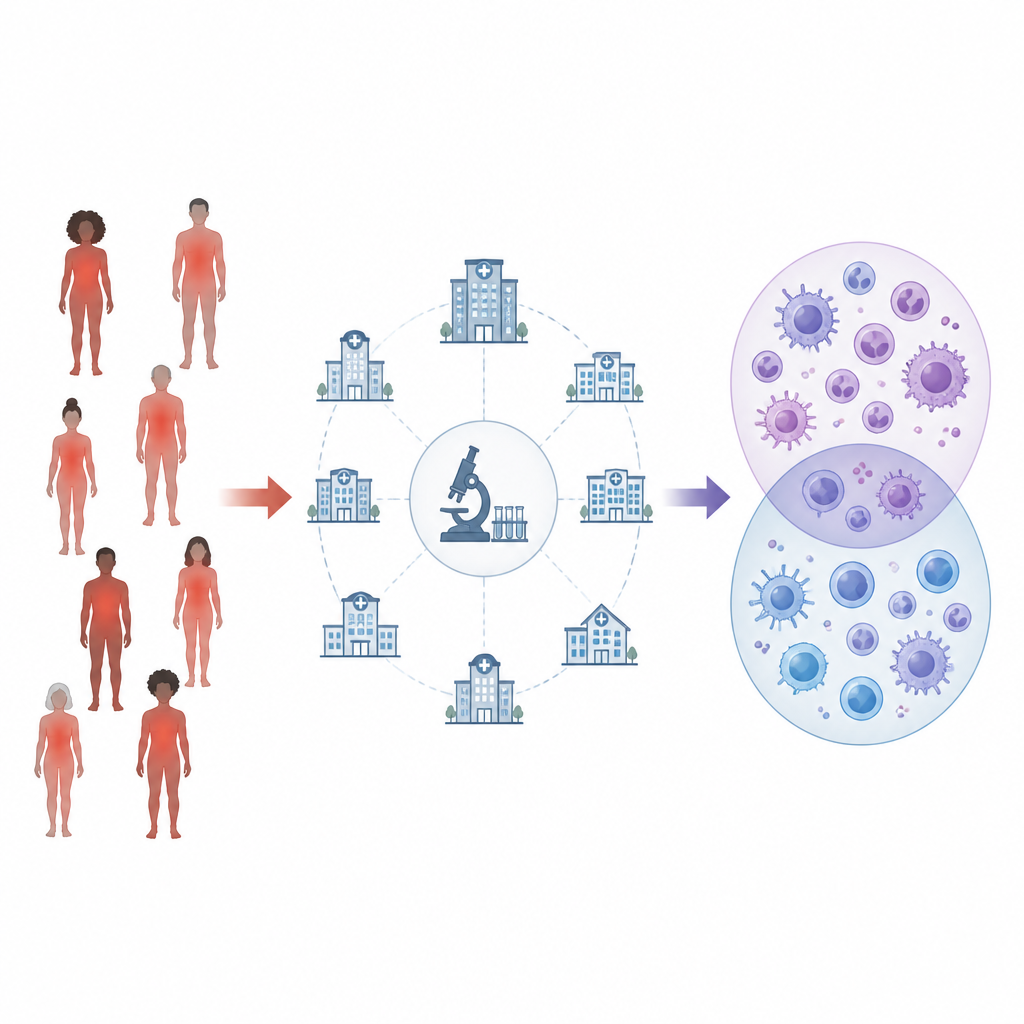
Systemic autoinflammatory disorders are conditions where the body’s built in defense system becomes overactive, causing repeated inflammation throughout the body. Some of these disorders can be traced to single gene changes, while others arise from a mix of genes and environment. Many patients, however, do not fit any known pattern. They have regular fevers, high blood markers of inflammation and symptoms such as rash or joint pain, but no clear genetic or clinical label. The authors refer to these cases as “autoinflammation of unknown origin” and ask whether they form one recognisable disease or a mixture of different problems that simply look similar.
Building a large, shared patient picture
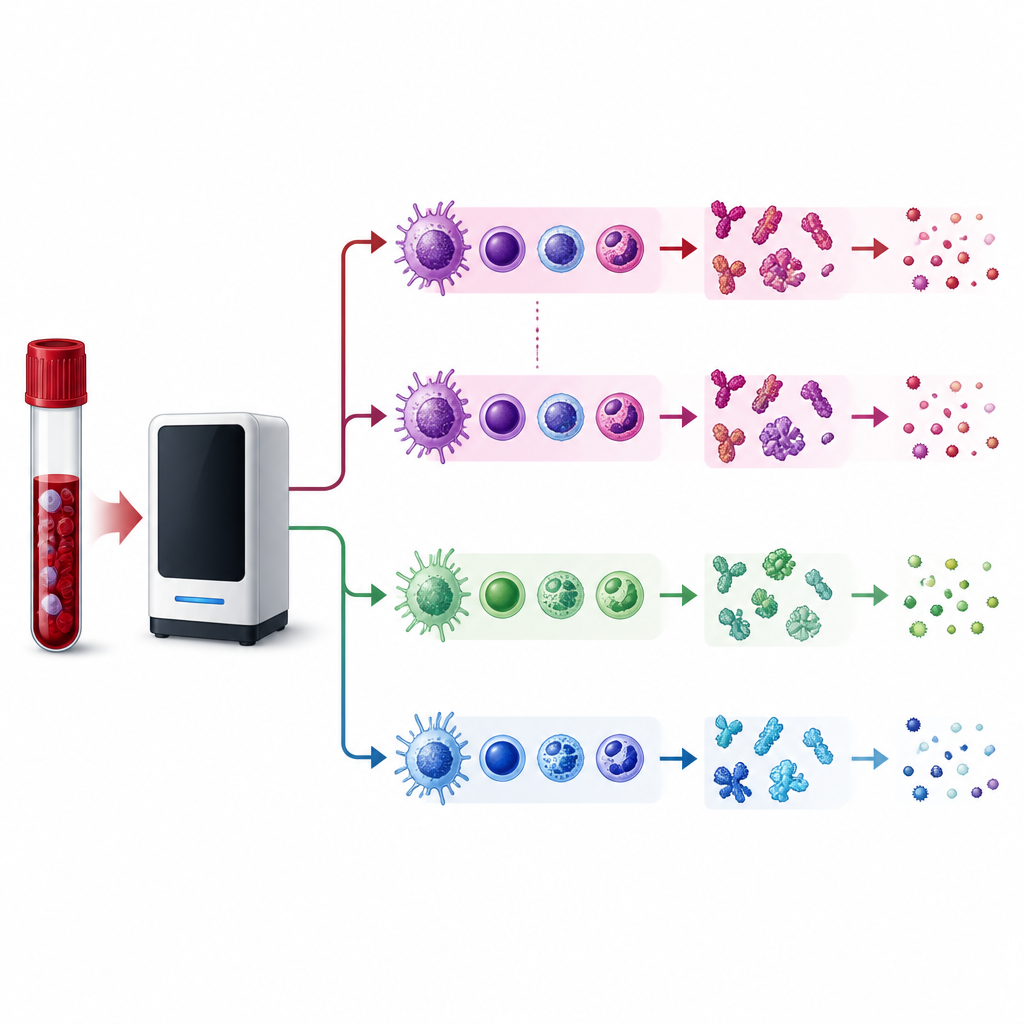
To tackle this question, doctors and scientists from 30 European medical centers joined forces. They collected blood from 36 adults with autoinflammation of unknown origin during active disease, alongside 58 healthy volunteers and 92 patients with three defined inflammatory illnesses: Still’s disease, Familial Mediterranean Fever and Behçet’s disease. Using high detail cell analysis and measurements of hundreds of blood proteins, the team mapped 208 types of immune cells and many circulating molecules. They then applied modern statistical tools and machine learning to see which features best separated the groups and how closely the unknown cases resembled each named disease.
Shared immune patterns with Still’s disease
The unknown group showed a clear immune fingerprint that set them apart from healthy people. Many of their T cells and natural killer cells displayed higher levels of surface markers linked to activation, while certain memory B cells were reduced. At the protein level, patients carried raised amounts of classic “acute phase” molecules that rise during strong inflammation, as well as shifts in proteins that usually help to keep inflammation in check. When these cell and protein traits were compared across diseases, the pattern in autoinflammation of unknown origin lined up most strongly with that of Still’s disease. The changes were often slightly milder, but they moved in the same direction, whereas the other two diseases showed weaker or different profiles.
What this means for diagnosis and treatment
The results suggest that autoinflammation of unknown origin is not just a vague label but represents a fairly distinct immune state that partially copies the immune presentation of Still’s disease. This similarity appears in both the cellular makeup of the blood and in key proteins, and it does not seem to be driven mainly by current treatment. Although more work and independent studies are needed, these findings hint that patients with this mysterious inflammation might benefit from being assessed and perhaps treated in ways similar to Still’s disease. In practical terms, the shared immune markers identified here could help doctors recognise such patients earlier, group them more precisely and test whether therapies that help in Still’s disease could also ease their unexplained, long lasting inflammation.
Citation: Veiga, R., De Vuyst, L., Poulet, C. et al. Adult patients with autoinflammation of unknown origin partially phenocopy the immune presentation of Still’s disease. Nat Commun 17, 4670 (2026). https://doi.org/10.1038/s41467-026-70895-1
Keywords: autoinflammatory disease, Still’s disease, immune profiling, recurrent fever, biomarkers