Clear Sky Science · en
Prasugrel inhibits TLR7-driven autoimmunity in systemic lupus erythematosus by acetylating cGAS
Why this research matters for people with lupus
Systemic lupus erythematosus is a long term autoimmune disease in which the immune system attacks the body’s own tissues, often affecting the skin, joints, kidneys, and other organs. Current treatments blunt the immune system broadly, which can ease symptoms but often cause side effects and do not work well for everyone. This study uncovers a key alarm system inside immune cells that seems to drive a common form of lupus and shows that an existing blood thinning drug, prasugrel, can switch this alarm off in lab models and patient cells.
A hidden alarm inside immune cells
Our cells normally keep their DNA safely tucked away in the nucleus and in tiny power plants called mitochondria. When DNA appears in the wrong place, it can signal danger, such as a viral infection. A sensor protein called cGAS detects misplaced DNA and sets off a chain reaction that leads to the release of interferons and other immune messengers. The authors found that this alarm system is unusually active in people with lupus: the blood of patients contained higher amounts of cGAMP, a small molecule made by cGAS, compared with healthy volunteers. This rise was not seen in patients with two other autoimmune diseases, rheumatoid arthritis and dermatomyositis, pointing to a special link between cGAS and lupus. 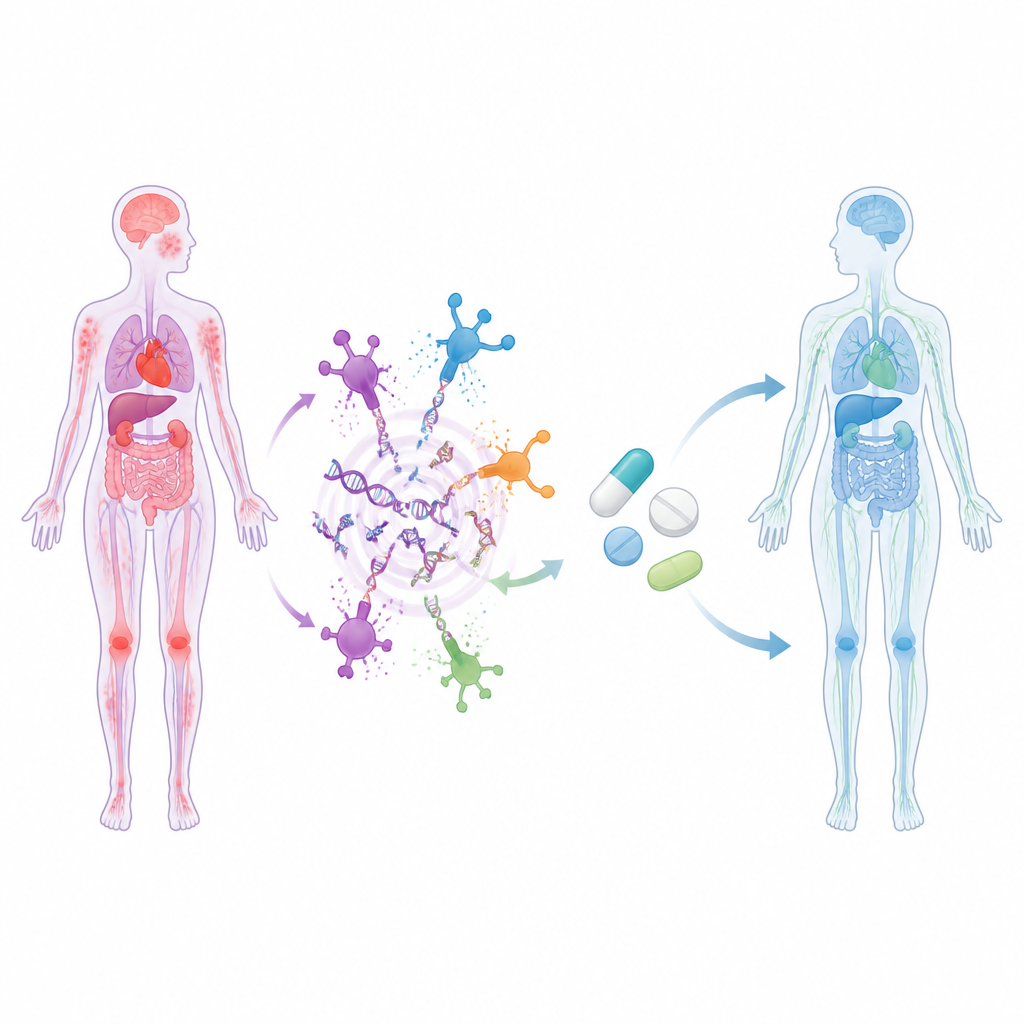
How a skin cream model reveals a disease pathway
To probe cause and effect, the team turned to a mouse model in which repeated application of the skin cream imiquimod, a drug that stimulates the immune sensor TLR7, leads to lupus like disease. In normal mice, this treatment caused a sharp increase in blood cGAMP, swelling of the spleen, kidney damage, and the appearance of antibodies against the body’s own DNA. In striking contrast, mice genetically lacking cGAS were largely protected: they had smaller spleens, fewer harmful antibodies, and less kidney injury. Further experiments showed that activating TLR7 caused mitochondria to leak bits of their DNA into the cell fluid, where cGAS could sense it and drive interferon production. Blocking either TLR7 or cGAS, or the release of mitochondrial DNA, reduced this response, revealing a tight connection between TLR7, mitochondrial DNA, and cGAS in this form of lupus.
Repurposing a heart drug to quiet the alarm
Because turning down cGAS might help patients, the researchers screened more than 3,000 already approved drugs looking for ones that could chemically modify and disable cGAS. They identified prasugrel, a pill widely used to prevent blood clots, as a strong candidate. Prasugrel adds small chemical tags called acetyl groups to specific positions on cGAS. This change prevents cGAS from forming dense droplets with DNA inside cells, a step now known to be crucial for fully switching on the alarm. In immune cells grown in dishes, prasugrel blocked the production of cGAMP and interferon in response to DNA, while leaving other immune sensing pathways, such as those that respond to RNA or to other toll like receptors, largely intact. 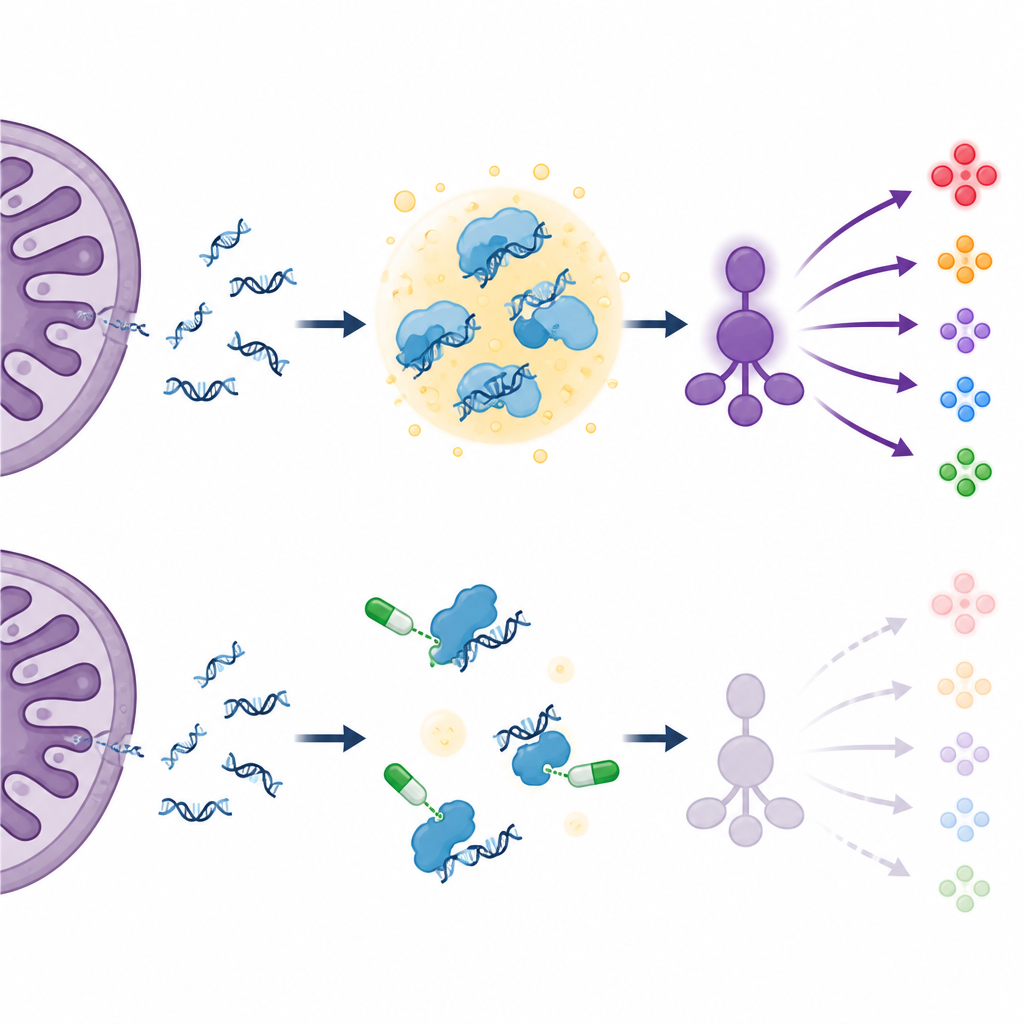
Testing prasugrel in mouse models and patient cells
Next, the team asked whether prasugrel could calm autoimmune activity in living animals. In mice that develop a lupus like disease because they cannot clear their own stray DNA, prasugrel reduced the expression of interferon stimulated genes in the heart and extended survival. In the imiquimod driven lupus model, daily prasugrel injections shrank enlarged spleens, lowered autoantibody levels, reduced interferon in the blood, and eased kidney damage more effectively than clopidogrel, another blood thinner that targets the same platelet receptor but does not acetylate cGAS. Finally, the researchers treated blood immune cells from people with lupus with prasugrel in the lab. The drug dampened gene activity patterns linked to interferon and inflammation, in a way similar to a direct JAK inhibitor used as a control.
A possible blood test to guide treatment
An important question is which patients might benefit most from a cGAS targeting strategy. In a second group of lupus patients, the authors measured both plasma cGAMP and the effect of prasugrel on their blood immune cells. Cells from patients with higher baseline cGAMP levels showed a stronger drop in interferon related genes when exposed to prasugrel. This suggests that a simple blood test for cGAMP could help flag patients whose disease is particularly driven by cGAS and who might respond better to this kind of treatment.
What this could mean for people living with lupus
This work supports the idea that, in at least a sizable subset of lupus, an internal DNA alarm pathway centered on cGAS is a major driver of disease. By chemically modifying cGAS, prasugrel can silence this alarm in mice and in human immune cells, reducing harmful immune activity while sparing other defenses. Because prasugrel is already approved for use as an antiplatelet drug, these findings raise the possibility that, after proper clinical testing, it could be repurposed or adapted as a more targeted treatment for lupus and perhaps other conditions linked to overactive cGAS signaling.
Citation: Guo, ZL., Sun, LM., Jiang, S. et al. Prasugrel inhibits TLR7-driven autoimmunity in systemic lupus erythematosus by acetylating cGAS. Nat Commun 17, 4147 (2026). https://doi.org/10.1038/s41467-026-70794-5
Keywords: systemic lupus erythematosus, autoimmunity, cGAS pathway, prasugrel, interferon signaling