Clear Sky Science · en
Impacts of local anthropogenic stressors outpace those of climate on coral reef collapse in the northern South China Sea
Why these reefs matter to all of us
Coral reefs are often called the rainforests of the sea. They shelter fish, blunt the force of storms, support tourism, and help feed millions of people. This study looks at reefs in the northern South China Sea and asks a pressing question: are these reefs collapsing mainly because of global climate change, or because of more local human pressures such as overfishing and pollution? The answer matters far beyond China’s shores, because it shows what local communities can still fix, even as the planet warms.
Tracking two decades of change
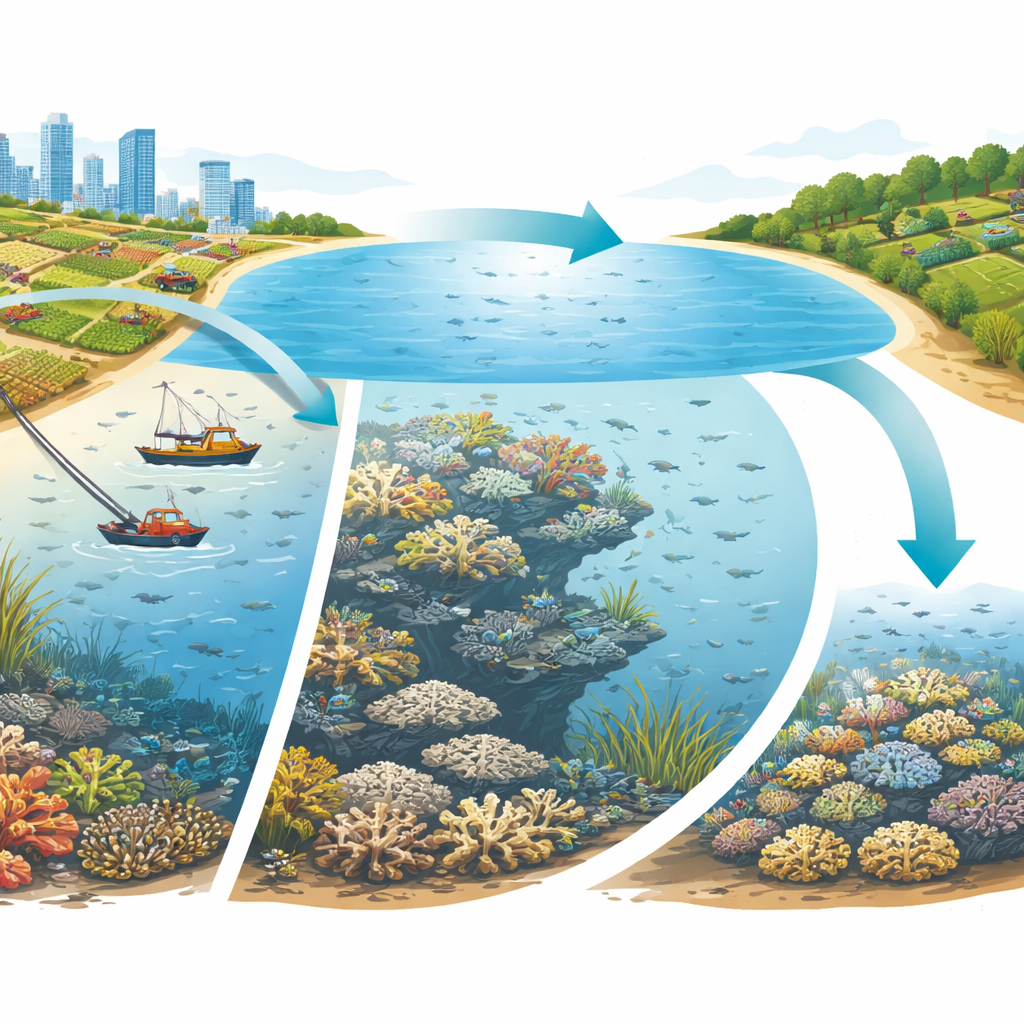
The researchers pulled together twenty years of detailed observations from 102 sites on 22 coral reefs around Hainan Island and the nearby Xisha Islands. They measured how much of each reef was still covered by living corals, how many fish were present, how much seaweed had taken over, and how common coral‑eating crown‑of‑thorns starfish were. They combined these field records with satellite data on sea temperature, water cloudiness, and typhoons, plus statistics on farming, cities, tourism, and population growth along the coast. This long, wide‑ranging view allowed them to tease apart the separate and combined impacts of local activities and global warming.
Reefs in retreat
Across the study area, live coral cover fell by roughly 40 percent over two decades, dropping to an average of just 19 percent—well below the global average. Some regions, like the remote Xisha reefs, lost about half their coral. At the same time, the types of corals shifted toward slow‑growing, tough species that can tolerate stress but build less complex reef structures. Fish numbers declined, seaweed often spread, and outbreaks of crown‑of‑thorns starfish chewed through remaining colonies. Together, these changes signaled not just damage to individual animals, but a broad unraveling of the reef ecosystem that supports coastal fisheries and tourism.
Local pressures beat climate in this hotspot
To understand which pressures mattered most, the team used statistical models that can separate direct impacts from indirect domino effects. They found that local human stressors—especially overfishing and nutrient pollution from agriculture and fast‑growing coastal cities—explained nearly three‑quarters of the variation in live coral cover. In contrast, heat stress from global warming, while real and increasing, played a smaller role in these particular reefs over the study period. In near‑shore areas, fertilizer runoff and waste from fish farms overloaded the water with nutrients, fueling seaweed growth that smothers baby corals. In tourist hubs, rapid urban expansion and poorly treated sewage added both nutrients and sediments, clouding the water and stressing corals. On more distant reefs, heavy fishing removed key fish that normally keep seaweed in check and help control crown‑of‑thorns starfish, paving the way for starfish outbreaks and mass coral loss.
Different places, different pathways to decline
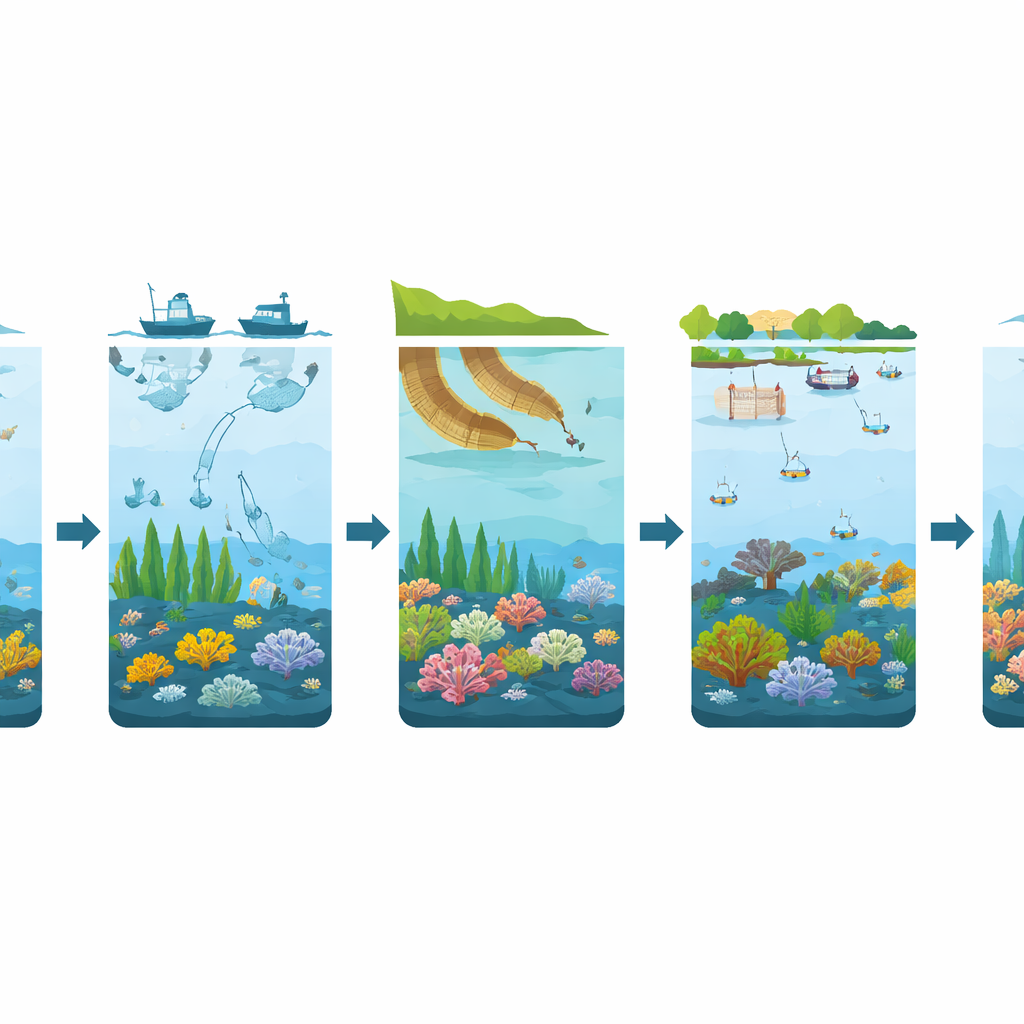
The story was not the same everywhere. In Hainan East, coral decline was driven by a combination of too many nutrients washing off farms and too few fish left to graze down the resulting seaweed, leading to a lasting shift from coral‑dominated to algae‑dominated reefs. In Hainan South, dense tourism and construction along the shore degraded water quality and buried some reefs in sediment, while fishing pressure further weakened their resilience. In the relatively pristine‑looking Xisha area, the main culprits were long‑term overfishing and explosive population booms of crown‑of‑thorns starfish, which devoured corals even though the surrounding waters stayed relatively clear and low in nutrients. These contrasts show that there is no single recipe for reef decline; local history and geography shape how stresses play out.
A roadmap to turn the tide
Rather than stopping at diagnosis, the authors built an "Integrated Coast‑Reef Management" framework that links what happens on land to what happens on the reef. They tested scenarios in which local communities reduced fertilizer loss from farms, improved sewage and fish‑farm waste treatment, curbed destructive fishing, rebuilt fish populations, and actively controlled crown‑of‑thorns starfish. Their simulations suggest that when land and sea actions are combined, live coral cover on some reefs could double or even quadruple, lifting many above the minimum level needed for reefs to keep building their limestone skeletons even under continued global warming. For a layperson, the key message is that while climate change remains a serious long‑term threat, local choices about fishing, farming, and urban growth can quickly make the difference between a dying reef and one that still has a fighting chance.
Citation: Xu, H., Li, Y., Liu, T. et al. Impacts of local anthropogenic stressors outpace those of climate on coral reef collapse in the northern South China Sea. Nat Commun 17, 4136 (2026). https://doi.org/10.1038/s41467-026-70760-1
Keywords: coral reefs, overfishing, nutrient pollution, coastal management, South China Sea