Clear Sky Science · en
Mutant ribosomal protein RPS15 drives B cell malignancy through oxidative stress and genomic instability
When the Cell’s Protein Factory Goes Off Script
Our cells build every protein they need using tiny machines called ribosomes. This study shows how a subtle flaw in one ribosomal part, found in some patients with chronic lymphocytic leukemia (CLL), can quietly push healthy immune cells toward cancer by generating internal stress and DNA damage over many years.
A Tiny Mutation in a Big Disease
CLL is a slow-growing blood cancer of B cells, a type of white blood cell that helps fight infection. Large genetic studies had hinted that a recurring change in a ribosomal protein called RPS15 might be important in CLL, especially in patients whose disease returns after treatment. But it was not clear whether this mutation actually drives cancer or just tags along with other, more powerful defects. To answer this, the researchers built a mouse in which B cells carried the same hotspot RPS15 mutation seen in people with CLL and watched how these cells behaved over the animals’ lifetimes.
From Slowed Growth to Full-Blown Leukemia
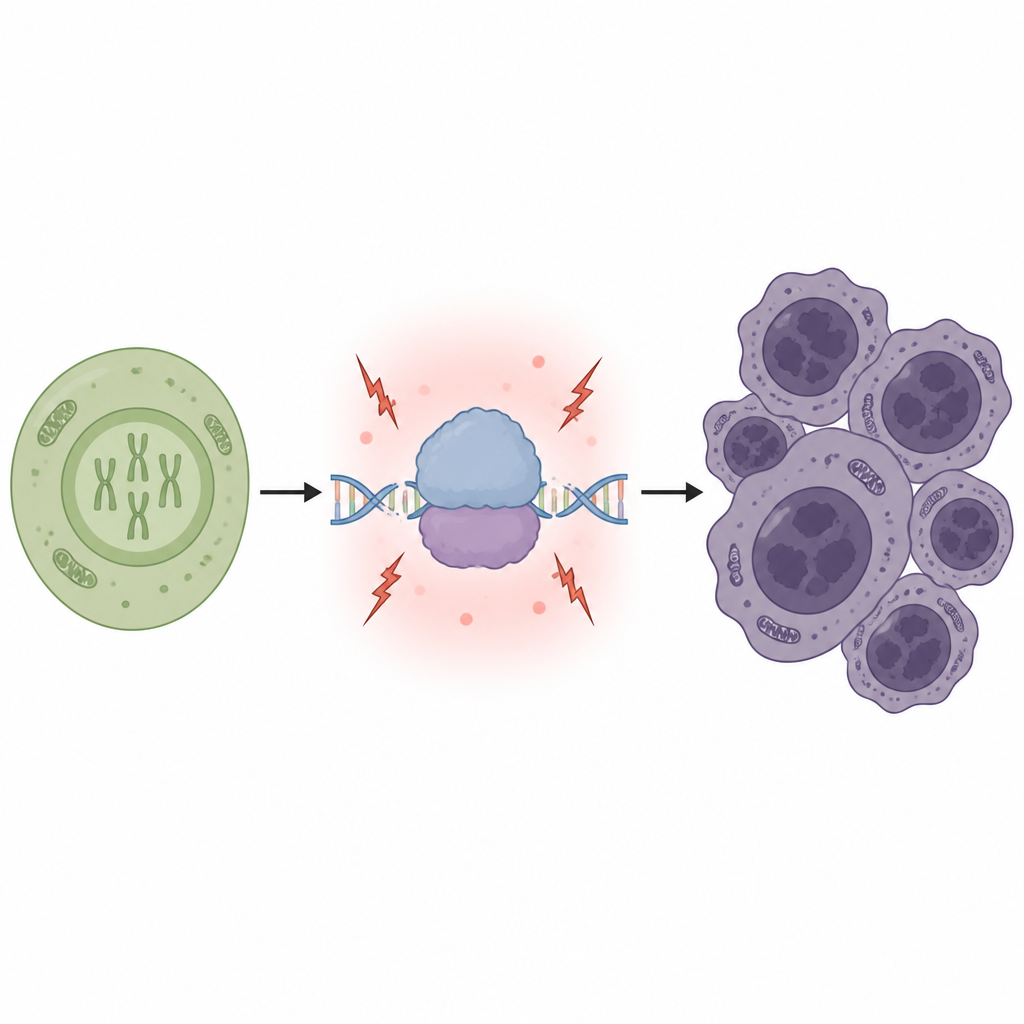
In young mice, mutant B cells looked stressed rather than aggressive. They divided less, were more likely to die, and carried signs of elevated “oxidative” stress—an accumulation of reactive molecules that can harm cellular components. Their DNA showed more damage, and the cells activated p53, a central guardian that can halt the cell cycle to allow repairs. Despite this brake, about one third of older mice with the RPS15 mutation eventually developed a leukemia resembling human CLL, and some animals with an added defect in the p53 pathway progressed to an even more aggressive lymphoma akin to Richter syndrome. This mirrors patient data: RPS15 mutations tend to co-occur with damage to TP53, the human version of the p53 gene, and with other genes that maintain DNA integrity.
How a Faulty Ribosome Rewires the Cell
To understand how a ribosomal glitch leads to both stress and cancer, the team examined how mutant RPS15 alters ribosome behavior. Using engineered human CLL cell lines and a technique called ribosome profiling, they found that mutated ribosomes assemble less efficiently and translate many genes differently. Some messages involved in detoxifying reactive oxygen species and repairing DNA were translated less, weakening the cell’s defenses. Others that promote cell division and growth became easier to translate. The mutant ribosomes also tended to stall near stop signals on messenger RNA and sometimes read past them, potentially creating abnormally extended proteins that further disturb the cell’s protein quality control systems.
Breaking the Genome’s Safety Net
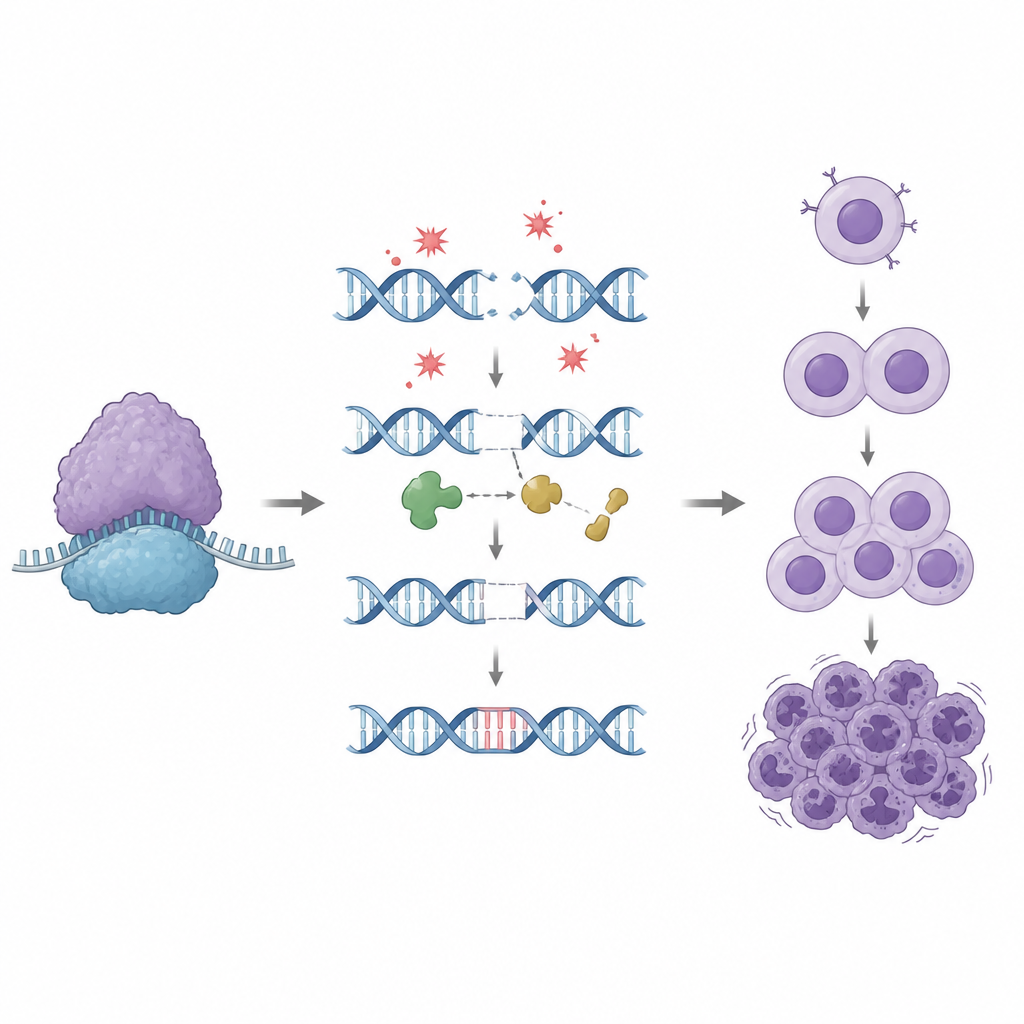
Over time, the combined effect of oxidative stress, translation errors, and weakened repair systems led to clear signs of genomic instability. Pre-leukemic B cells from mutant mice accumulated microscopic DNA-containing fragments called micronuclei, a hallmark of chromosome breakage. Whole-genome sequencing of their tumors revealed patterns of DNA mutations associated with peroxide damage, gains and losses of entire chromosomal regions, and additional hits in genes that control DNA repair and cell division. When p53 function was partially removed in these mice, mutant B cells escaped their early growth slowdown, divided more readily, collected even more DNA damage, and progressed faster to leukemia or high-grade lymphoma.
Why This Matters for Patients
This work shows that an RPS15 mutation is not just a bystander but a true driver of B cell malignancy. It does so in a two-step fashion: first by creating a stressed, slowly growing state marked by faulty protein production, oxidative damage, and p53-dependent cell-cycle arrest; then, after additional mutations disable key safeguards like TP53, by allowing damaged cells with growth advantages to expand into full leukemia. For people with CLL, these findings help explain why RPS15 and TP53 mutations together signal poorer outcomes, and they highlight the ribosome and cellular stress pathways as potential weak points for future therapies.
Citation: Gutierrez, C., Kwok, M., Ruthen, N. et al. Mutant ribosomal protein RPS15 drives B cell malignancy through oxidative stress and genomic instability. Nat Commun 17, 4613 (2026). https://doi.org/10.1038/s41467-026-70655-1
Keywords: chronic lymphocytic leukemia, ribosomal protein mutation, oxidative stress, genomic instability, B cell cancer