Clear Sky Science · en
First-line Nivolumab plus FOLFOXIRI/Bevacizumab in advanced RAS/BRAF-mutated colorectal cancer: efficacy, safety and biomarker discovery from the phase II NIVACOR trial
Why this study matters for patients and families
Colorectal cancer is one of the most common cancers worldwide, and many patients are diagnosed only after the disease has already spread. Standard chemotherapy can shrink tumors, but responses are often temporary. New immune-based drugs can help the body attack cancer, yet they usually work only in a small subgroup of patients whose tumors have a specific genetic repair defect. This study tested whether combining an intensive chemotherapy mix with a targeted blood vessel drug and an immune drug could help a broader group of patients with advanced colorectal cancer that carries RAS or BRAF mutations, which are usually linked to worse outcomes.
A powerful drug combination in tough-to-treat cancer
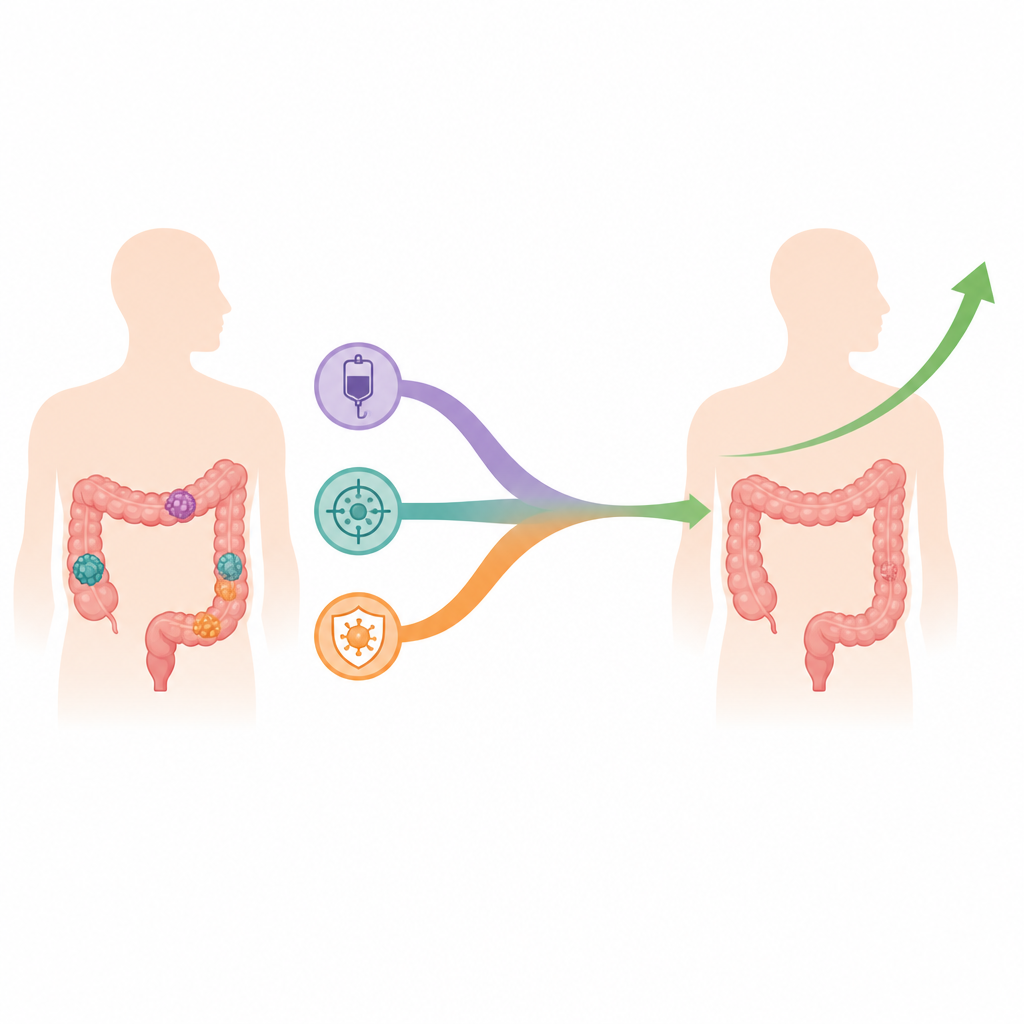
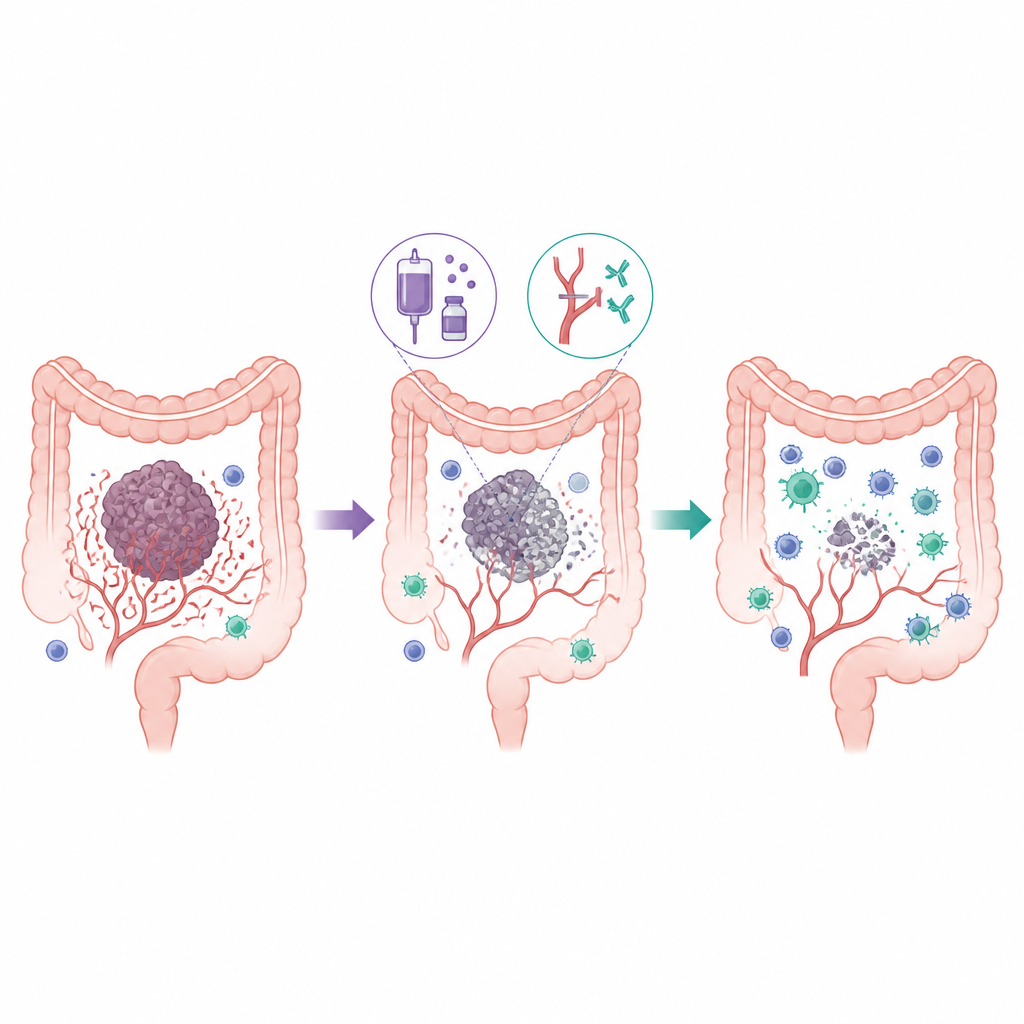
The NIVACOR trial enrolled 73 people in Italy with advanced, inoperable colorectal cancer whose tumors carried RAS or BRAF mutations. All participants received a triplet chemotherapy regimen (FOLFOXIRI), a drug that blocks tumor blood vessel growth (bevacizumab), and an immune checkpoint inhibitor (nivolumab) as their very first treatment. These patients typically have a poorer outlook than average, so achieving strong disease control is challenging. The main question was how many patients would see their tumors shrink, with additional tracking of how long treatment kept the cancer in check and how safe the combination was over time.
How well did patients respond to treatment
The trial met its main goal. About three out of four patients (76.7%) had their tumors shrink measurably, and nearly all patients (97.3%) at least avoided tumor growth for a time. Some people experienced complete disappearance of visible disease on scans. The median time before the cancer started growing again was just over 10 months, and the median overall survival had not yet been reached when the data were analyzed, suggesting that many patients were still alive. Results were strong across different genetic subgroups, including both RAS and BRAF mutations and both types of DNA repair status, even though BRAF-mutated and mismatch repair–deficient cases usually behave more aggressively or more unpredictably.
Side effects and safety of the combination
As expected for such an intensive regimen, side effects were frequent and sometimes serious. Almost nine in ten patients experienced treatment-related problems, and about two thirds had at least one severe event. The most common issues were diarrhea, fatigue, low white blood cell counts, nerve symptoms, and nausea. A smaller number of patients developed immune-related problems, such as thyroid changes or severe diarrhea, reflecting the effects of nivolumab on the immune system. While most side effects could be managed with dose adjustments and supportive care, a few patients had to stop treatment, and one treatment-related death was reported. These findings underscore that this approach is powerful but demanding, and careful patient selection and close monitoring are crucial.
Clues from tumor DNA and RNA
Beyond measuring response rates, the researchers probed tumor samples to understand why some patients benefited longer than others. By sequencing hundreds of cancer-related genes and analyzing gene activity patterns, they looked for molecular signatures linked to sensitivity or resistance. They found that tumors with a higher overall number of DNA changes (high tumor mutational burden) and certain alterations in a cell growth pathway called PI3K/AKT tended to have longer periods without disease worsening, especially within the group whose tumors are usually less responsive to immunotherapy. They also identified sets of genes tied to DNA repair and immune signaling that separated patients with shorter versus longer benefit, suggesting that both the ability of cancer cells to fix DNA damage and the readiness of the immune microenvironment shape how well this combined treatment works.
What this means for future care
For people with advanced colorectal cancer carrying RAS or BRAF mutations, this study suggests that adding an immune drug to an intensive chemotherapy plus anti–blood vessel regimen can achieve high tumor shrinkage rates, even in tumors that usually do not respond well to immunotherapy alone. At the same time, the approach brings substantial side effects and is not suitable for everyone. The genetic and gene-activity markers uncovered here may help doctors in the future to select which patients are most likely to gain lasting benefit, guiding more personalized treatment choices. Larger, randomized trials are now needed to confirm whether this combination truly improves survival compared with current standards and to validate the proposed biomarkers before they can be used in everyday clinical practice.
Citation: Damato, A., Esposito Abate, R., Tessitore, S. et al. First-line Nivolumab plus FOLFOXIRI/Bevacizumab in advanced RAS/BRAF-mutated colorectal cancer: efficacy, safety and biomarker discovery from the phase II NIVACOR trial. Nat Commun 17, 4478 (2026). https://doi.org/10.1038/s41467-026-70620-y
Keywords: metastatic colorectal cancer, immunotherapy, nivolumab, RAS BRAF mutations, tumor biomarkers