Clear Sky Science · en
Magnaporthe oryzae MoPh1 perceives ER stress and promotes adaptive responses via a plasma membrane-to-vacuole pathway
How a Crop-Killing Fungus Copes with Inner Turmoil
Inside every living cell, thousands of new proteins are folded every minute. When this process goes wrong, the cell experiences a kind of internal traffic jam called endoplasmic reticulum (ER) stress, which can lead to disease in humans, animals, and plants. This study explores how the rice blast fungus—one of the world’s most destructive crop pathogens—detects and relieves such internal stress. Understanding this hidden stress-response system not only reveals new biology but may also point to fresh ways to protect global food supplies.
When Protein Factories Overheat
The ER is the cell’s protein factory and quality-control hub. If too many proteins misfold, the ER becomes stressed, threatening cell survival. In many organisms, including fungi and humans, the classic response relies on a sensor embedded in the ER membrane that sends signals to the nucleus, which then turns on genes to help refold or break down damaged proteins. The authors show that in the rice blast fungus, ER stress naturally rises and falls as the pathogen builds its infection structure, the appressorium, used to punch into rice leaves. Both too much and too little ER stress, or blocking the normal response, reduce the fungus’s ability to infect plants and even its basic survival, underlining how delicately this internal balance must be managed.
A New Watchtower on the Cell’s Surface
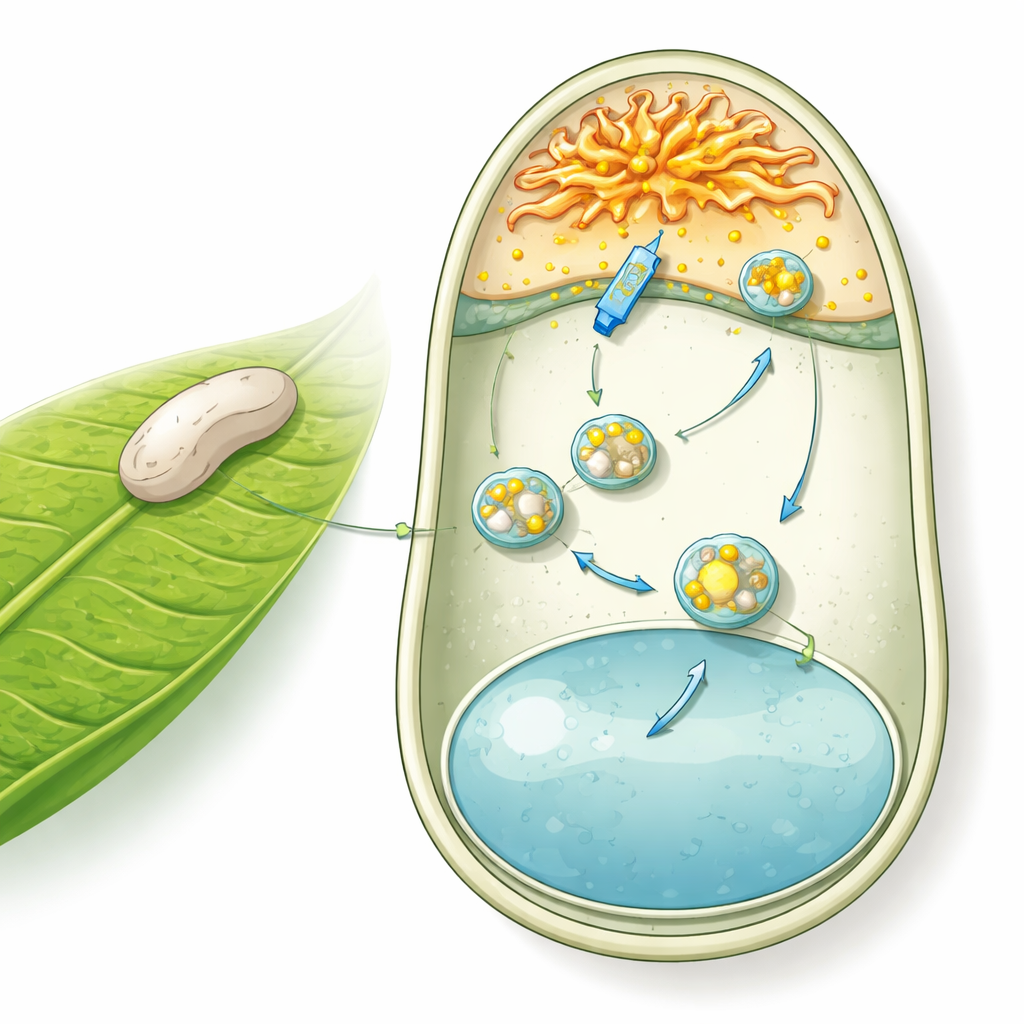
Surprisingly, the researchers discovered that the cell’s outer skin—the plasma membrane—also plays a direct role in sensing this inner turmoil. Using large-scale protein surveys and imaging, they identified a protein called MoPh1 that normally sits in the plasma membrane but responds dramatically when ER stress rises. Under stress, portions of the ER move closer to the membrane, forming intimate contact sites. There, another protein, MoTcb1, helps transmit the distress signal from the ER to MoPh1. A protein kinase named MoDbf2 then modifies MoPh1 in a way that allows it to leave the membrane and move deeper into the cell. Fungal strains lacking MoPh1 were far less able to withstand ER stress and were much less infectious on rice and barley, showing that this membrane “watchtower” is crucial for both survival and disease.
Turning Stress into Cellular Housecleaning
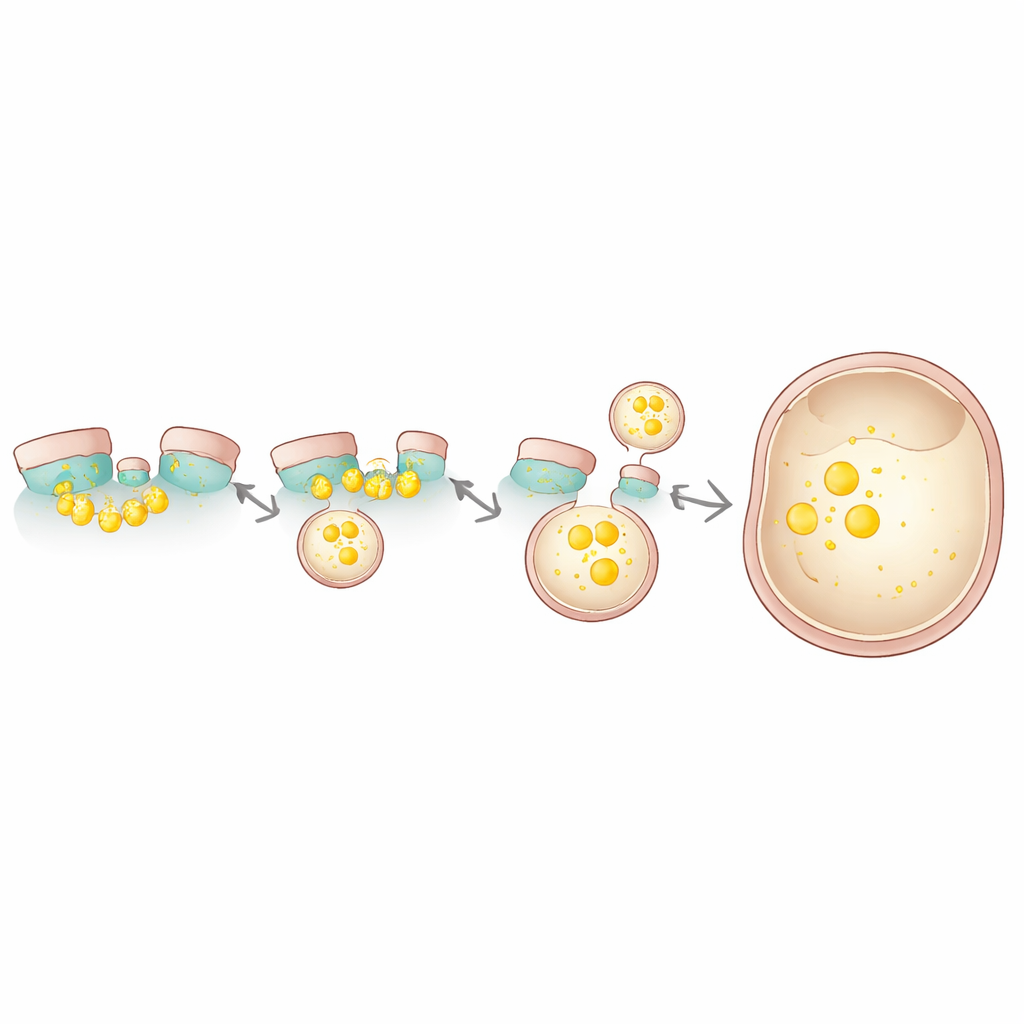
Once MoPh1 is activated and leaves the cell surface, it travels to small recycling structures called autophagosomes. These structures act as cellular cleanup crews, engulfing worn-out components and delivering them to the vacuole, a large internal compartment where materials are broken down and recycled. MoPh1 physically associates with key autophagy proteins, including a scaffold called MoAtg11 and a fusion factor MoYpt7, helping to assemble autophagosomes and guide their fusion with the vacuole. Without MoPh1, the fungus forms fewer autophagosomes, and the normal fine-grained distribution of autophagy machinery collapses into clumps. As a result, the cell’s ability to clear stress-related damage is sharply reduced, undermining the pressure-generating appressorium and weakening infection.
Crosstalk with the Classic Stress Pathway
MoPh1’s pathway operates independently of the well-known ER sensor Ire1, yet the two systems are not completely separate. The authors found that Ire1 forms tiny droplets inside the ER that boost its ability to process RNA messages needed for the stress response. MoPh1 helps promote the formation of these droplets by interacting with a flexible region of Ire1, even though it does not alter Ire1’s activation switch. When MoPh1 is missing, fewer Ire1 droplets form, and the downstream genetic response to stress is weakened. Thus, the plasma membrane–to–vacuole route not only activates autophagy but also amplifies the traditional ER-to-nucleus signaling, creating a multi-layered defense against internal damage.
A Shared Strategy from Fungi to Plants
To test whether this surface-to-interior stress pathway is unique to the rice blast fungus, the team looked for similar proteins in the model plant Arabidopsis. They identified plant counterparts of MoPh1 that also reside at the plasma membrane and move inward when ER stress is triggered. These plant proteins interact with ER–membrane contact regulators and, when deleted, make plants more sensitive to ER stress. Together, these findings suggest that using plasma-membrane sensors to detect and relieve internal protein-folding stress may be a common strategy across distant branches of life.
Why This Hidden Circuit Matters
In simple terms, this work reveals a new safety valve inside cells: when the protein factories are overworked, a sensor on the cell’s surface receives the alarm via physical contact with the ER, then travels inward to launch a cleanup operation that protects the cell and, in the case of the rice blast fungus, preserves its ability to invade crops. Because similar components exist in plants, the same logic may help them survive harsh conditions. By pinpointing MoPh1 and its partners as key coordinators of this stress-relief system, the study opens the door to strategies that could selectively disarm dangerous fungi without harming their plant hosts, offering a promising avenue for future crop protection.
Citation: Yin, Z., Xu, J., Ma, S. et al. Magnaporthe oryzae MoPh1 perceives ER stress and promotes adaptive responses via a plasma membrane-to-vacuole pathway. Nat Commun 17, 4019 (2026). https://doi.org/10.1038/s41467-026-70610-0
Keywords: ER stress, autophagy, rice blast fungus, plasma membrane sensor, plant-pathogen interactions