Clear Sky Science · en
Complex marine ecological response during the Eocene-Oligocene revealed by global foraminiferal record
When Ancient Seas Faced a Climate Turning Point
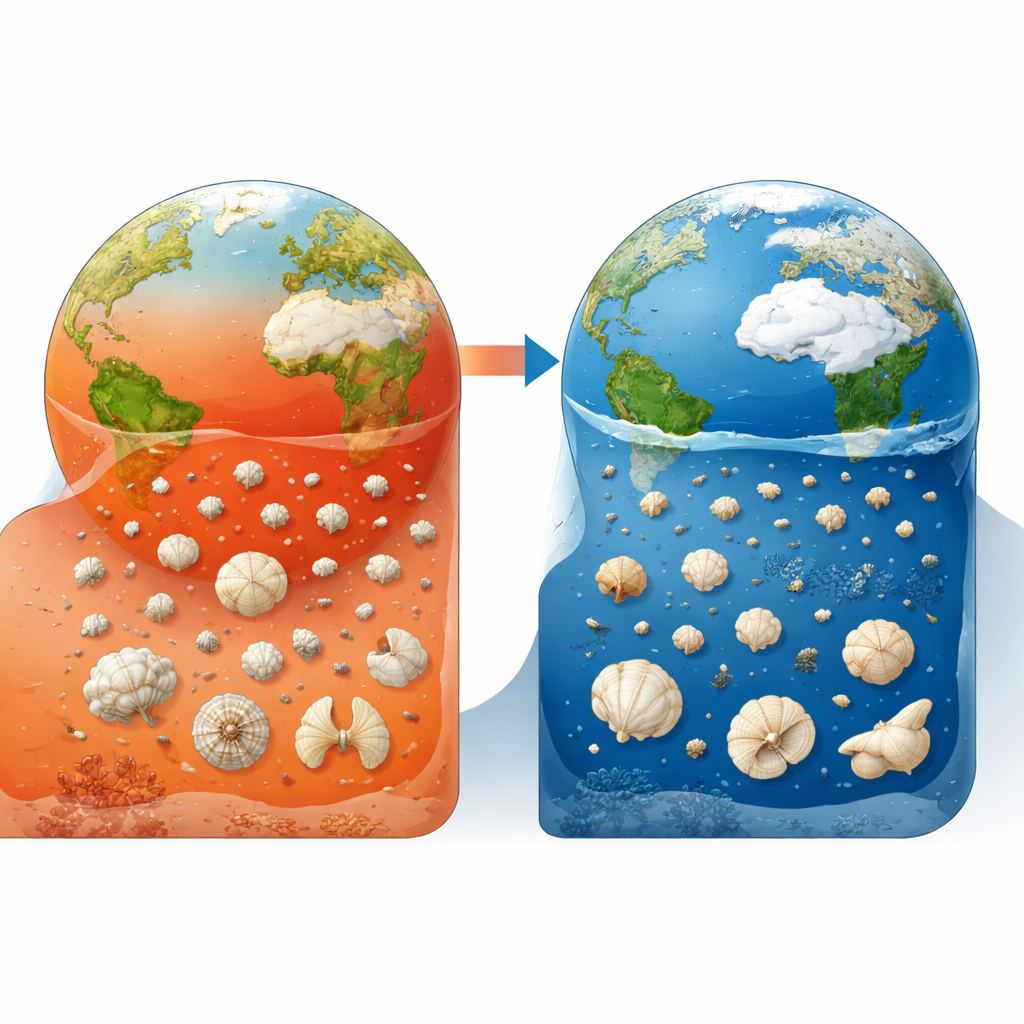
About 34 million years ago, Earth’s climate flipped from a steamy world with little permanent ice to one dominated by large ice sheets in Antarctica. This shift reshaped sea levels, ocean temperatures, and the lives of countless marine organisms. In this study, researchers dive into the fossil record of tiny shelled creatures called foraminifera—key players in ancient seas—to uncover how different marine communities actually responded to this great climate upheaval. Their work reveals that the story is far richer than a single mass die-off: different groups of foraminifera followed very different evolutionary paths as the planet cooled.
Tiny Shells as Time Travelers
Foraminifera are single-celled organisms that build intricate shells and live either floating in the open ocean or on the seafloor, from sunlit shallows to the deep sea. Because their shells fossilize in huge numbers, they form one of the best records of past ocean life. The team assembled a massive global dataset of more than a thousand species from 161 drill cores and rock outcrops, spanning 48 to 20 million years ago. They then used a new computer algorithm that borrows ideas from evolutionary biology—"mutations," "recombination," and "selection" among alternative timelines—to stitch together a very detailed global history of when species appeared and disappeared, down to an average spacing of about 29,000 years.
Rebuilding the Rise and Fall of Ancient Diversity
With this high-resolution timeline, the researchers traced how species richness—essentially the number of different species—rose and fell through time. They found two broad growth phases and two major declines. Before the big climate transition, there was an early boost in diversity followed by a long slide during the late Eocene. Then came a surge of new species in the early Priabonian stage, especially on the deep sea floor. The real crisis began later, as a prolonged decline stretched from the latest Eocene into the early Oligocene, broken into a drawn-out extinction phase and a further drop in the early Oligocene. Diversity stayed low into the early Miocene, with only early hints of recovery.
Different Habitats, Different Fates
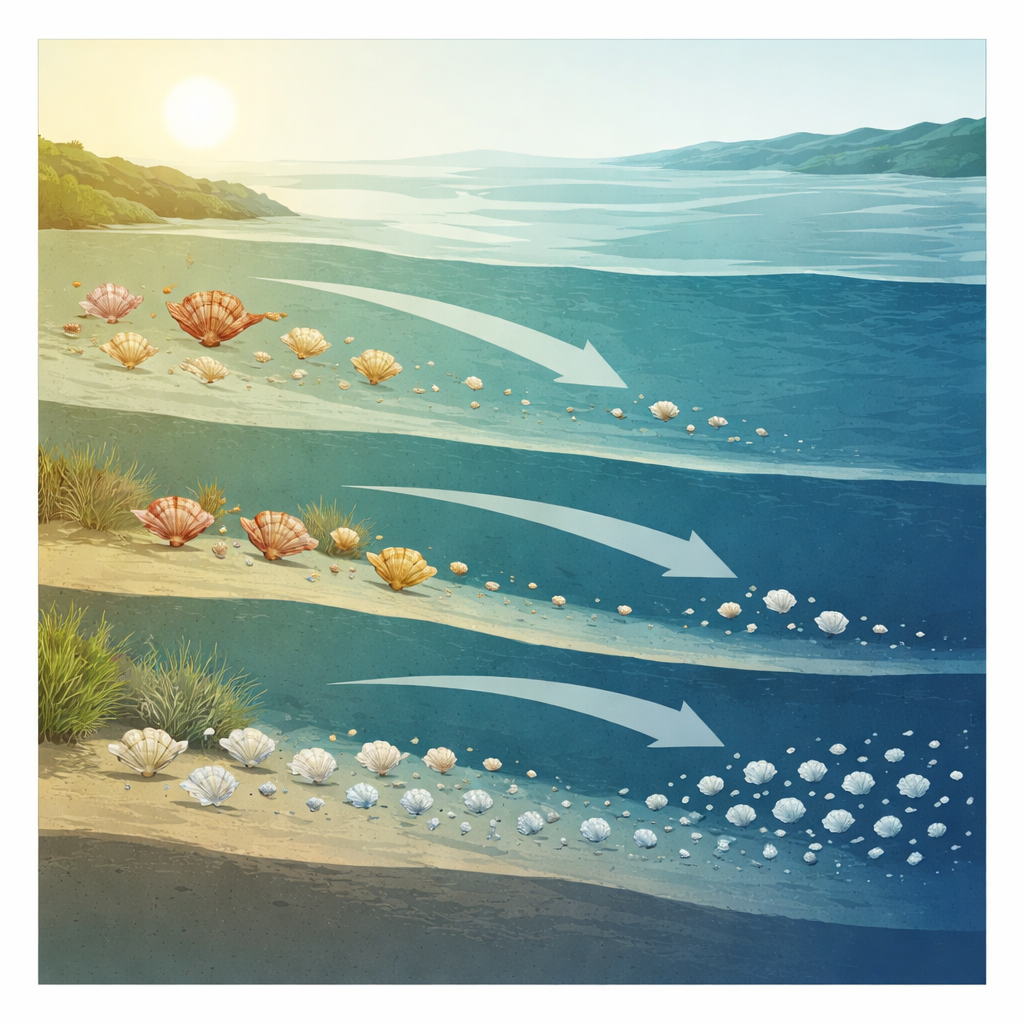
One of the central insights is that not all foraminifera reacted the same way. Planktonic species drifting near the surface and larger forms living in warm, shallow waters had closely linked histories. Their diversity tracked sea-surface temperature and sea level: as the planet cooled and sea level fell, warm-water specialists lost ground. The sharpest losses for these groups occurred just as a large, stable ice sheet formed on Antarctica and sea level dropped by tens of meters. In contrast, small benthic species on the deeper seafloor told a different story. They flourished briefly in the late Eocene, likely fuelled by changes in food reaching the depths as cooler conditions and blooms of microscopic plants increased the export of organic matter downward, and only later entered a long, uneven decline.
Climate, Food, and Underwater Landscapes
By comparing fossil trends with independent records of temperature, sea level, and carbon chemistry, the study teases apart the drivers of these changes. Surface-dwelling and shallow-water species were most sensitive to cooling seas and shrinking shallow habitats. Deep-sea communities, on the other hand, responded more strongly to changes in deep-water temperature, the amount of organic debris raining down from above, and shifts in the global carbon cycle. The authors also examined other dramatic events of the time, such as meteorite impacts and massive volcanic eruptions, and found that these had little or no clear fingerprint on overall foraminiferal diversity compared with the long-term climate and ocean changes.
A Complex Past with Lessons for the Future
To a layperson, it might be tempting to imagine ancient climate shifts as simple disasters that wipe out life in one stroke. This work paints a subtler picture: as Earth cooled into its modern icehouse state, some marine communities collapsed, others briefly boomed, and many responded in ways tightly tied to their habitat and food sources. By using cutting-edge computational methods on a huge global dataset, the study shows that life’s reaction to climate change is layered, habitat-specific, and heavily dependent on the pace and nature of environmental change. Understanding that complexity in the deep past helps scientists better anticipate how today’s oceans—and the countless small creatures that underpin them—may respond as our own climate rapidly shifts.
Citation: Lu, Z., Xue, K., Deng, Y. et al. Complex marine ecological response during the Eocene-Oligocene revealed by global foraminiferal record. Nat Commun 17, 3954 (2026). https://doi.org/10.1038/s41467-026-70541-w
Keywords: Eocene-Oligocene climate transition, foraminifera fossils, marine biodiversity change, ancient climate and sea level, deep-sea ecosystems