Clear Sky Science · en
Dopamine and serotonin inversely modulate D2 medium spiny neurons to regulate cocaine reward
Why Brain Chemicals and Addiction Matter
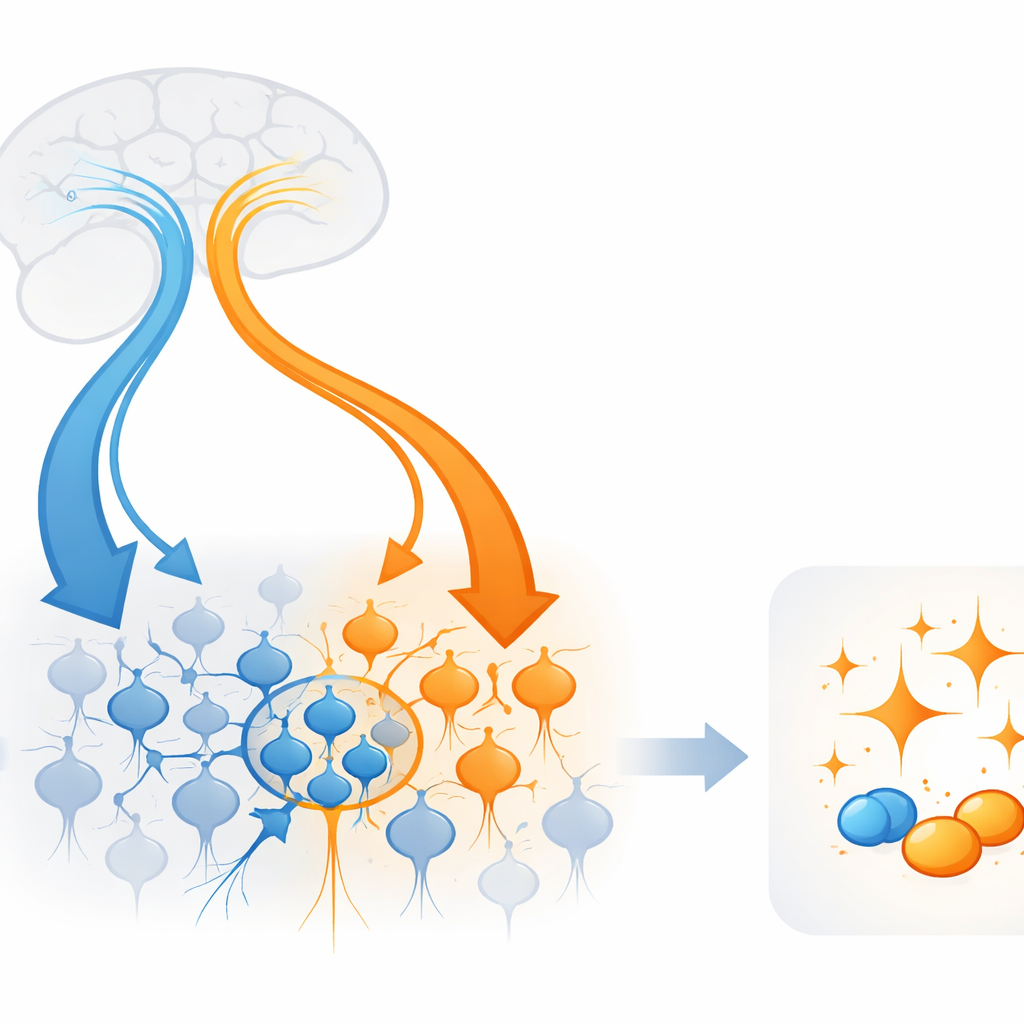
Why do some drugs feel powerfully rewarding, and what protects the brain from slipping into addiction? Two well-known brain chemicals, dopamine and serotonin, have long been cast as opposites: dopamine pushes us toward rewards, while serotonin is thought to slow us down or encourage caution. This study digs into how these two chemicals act on a specific set of brain cells to shape the pull of cocaine, revealing a built-in balancing system that may help protect against drug abuse.
A Tale of Two Brain Messengers
The authors focus on a brain region called the striatum, a key hub for learning from rewards and guiding habits. Inside the striatum live medium spiny neurons, roughly split into two groups often labeled D1 and D2, after the dopamine receptors they carry. Dopamine is known to rev up D1 cells and quiet D2 cells, tipping the circuit toward action and reward seeking. Serotonin, however, has been harder to pin down. Classic theories say it often works against dopamine, but the wiring diagram for how that opposition is achieved has been missing.
Mapping Where Serotonin Can Act
To uncover this wiring, the team first looked at which serotonin receptors are present on which striatal cells in mice. Using single-cell gene data and fluorescent labeling in brain slices, they found that nearly all of these neurons carry serotonin receptors, but not in the same mix. D1 cells tended to have receptors that would produce a more balanced, mixed influence of serotonin. In contrast, D2 cells were especially rich in a subset of receptors—called 5-HT2a and 5-HT2c—that are wired to excite cells. This pattern was strongest in part of the striatum called the nucleus accumbens medial shell, a hotspot for reward processing that also receives dense serotonin input.
How Dopamine and Serotonin Push and Pull Neurons
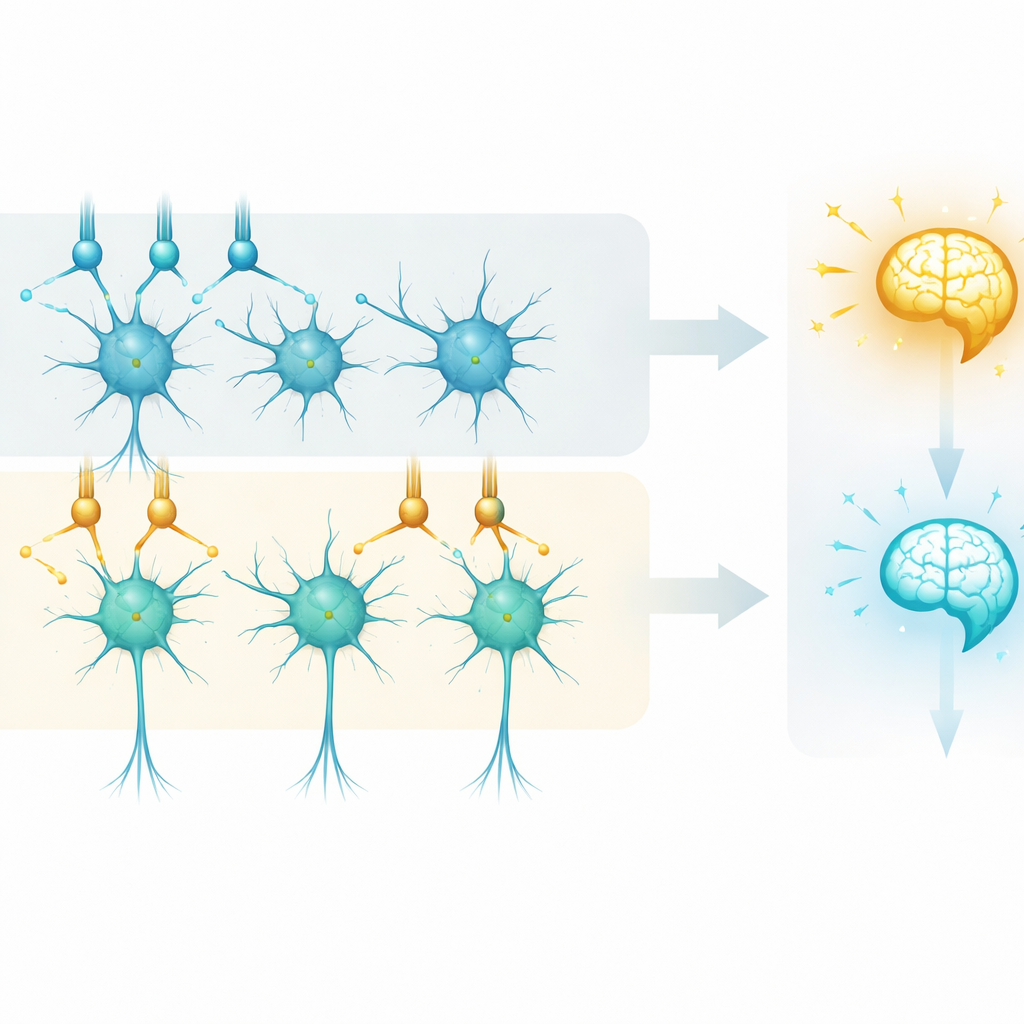
Armed with this map, the scientists recorded the electrical activity of identified D1 and D2 cells in brain slices. As expected, adding dopamine made D1 cells fire more and D2 cells fire less, reinforcing the idea that dopamine promotes reward by silencing D2 cells. When they added serotonin, the pattern flipped for D2 cells: serotonin left D1 cells largely unchanged but boosted firing in D2 cells. Blocking the 5-HT2a and 5-HT2c receptors erased this boost, showing that these specific receptors are responsible for serotonin’s excitatory effect. In living mice, the team increased serotonin levels in the nucleus accumbens using a drug that blocks its reuptake and then looked for a marker of recent activity. They found that this manipulation selectively lit up D2 cells, indicating that serotonin excites these neurons in the intact brain as well.
Serotonin as a Brake on Cocaine Reward
The crucial question was whether this cellular push–pull actually changes behavior. Cocaine is a powerful drug that raises both dopamine and serotonin levels in the striatum, and its rewarding effects are known to depend on dopamine. The researchers used a gene-editing approach to remove the 5-HT2c receptor from either D1 or D2 cells in the nucleus accumbens. Mice lacking this receptor in D1 cells behaved normally in a standard test of cocaine preference. But when the receptor was removed specifically from D2 cells, mice showed stronger responses to cocaine: they became more sensitized in their movement and spent more time in the place where they had received the drug. These changes were not due to general changes in activity, pointing instead to a heightened impact of cocaine’s dopamine signal when serotonin could no longer excite D2 cells.
What This Means for Addiction and Treatment
Taken together, the findings outline a simple but powerful idea: dopamine and serotonin act in opposite ways on D2 neurons, and this inverse control helps set how rewarding cocaine feels. Dopamine quiets these cells to promote reinforcement, while serotonin, acting through 5-HT2c and related receptors, turns them back on to limit that reinforcement. This circuit-level explanation links long-standing observations that serotonin-releasing or serotonin-boosting drugs can blunt the appeal of cocaine and other addictive substances. It also suggests that targeting 5-HT2c receptors in the striatum might help develop treatments for substance use disorders that reduce craving and reward without triggering the hallucinogenic effects associated with some serotonin-based drugs.
Citation: Cardozo Pinto, D.F., Guo, M.Y., Pomrenze, M.B. et al. Dopamine and serotonin inversely modulate D2 medium spiny neurons to regulate cocaine reward. Nat Commun 17, 3964 (2026). https://doi.org/10.1038/s41467-026-70519-8
Keywords: dopamine, serotonin, cocaine, reward circuit, addiction