Clear Sky Science · en
Impact of NPAS2 on mPFC dopamine synthesis and nap behavior
Why Our Brains Want an Afternoon Break
Many people naturally feel sleepy in the afternoon and reach for a quick nap, yet the biology behind this daily slump has been mysterious. This study in mice uncovers a built‑in brain program that schedules a short sleep in the middle of the active period, much like a human afternoon nap. By tracing specific brain cells and clock genes, the researchers show that the urge to nap is not just about boredom or big lunches, but is partly hard‑wired into our biology.
A Hidden Brain Clock for Naps
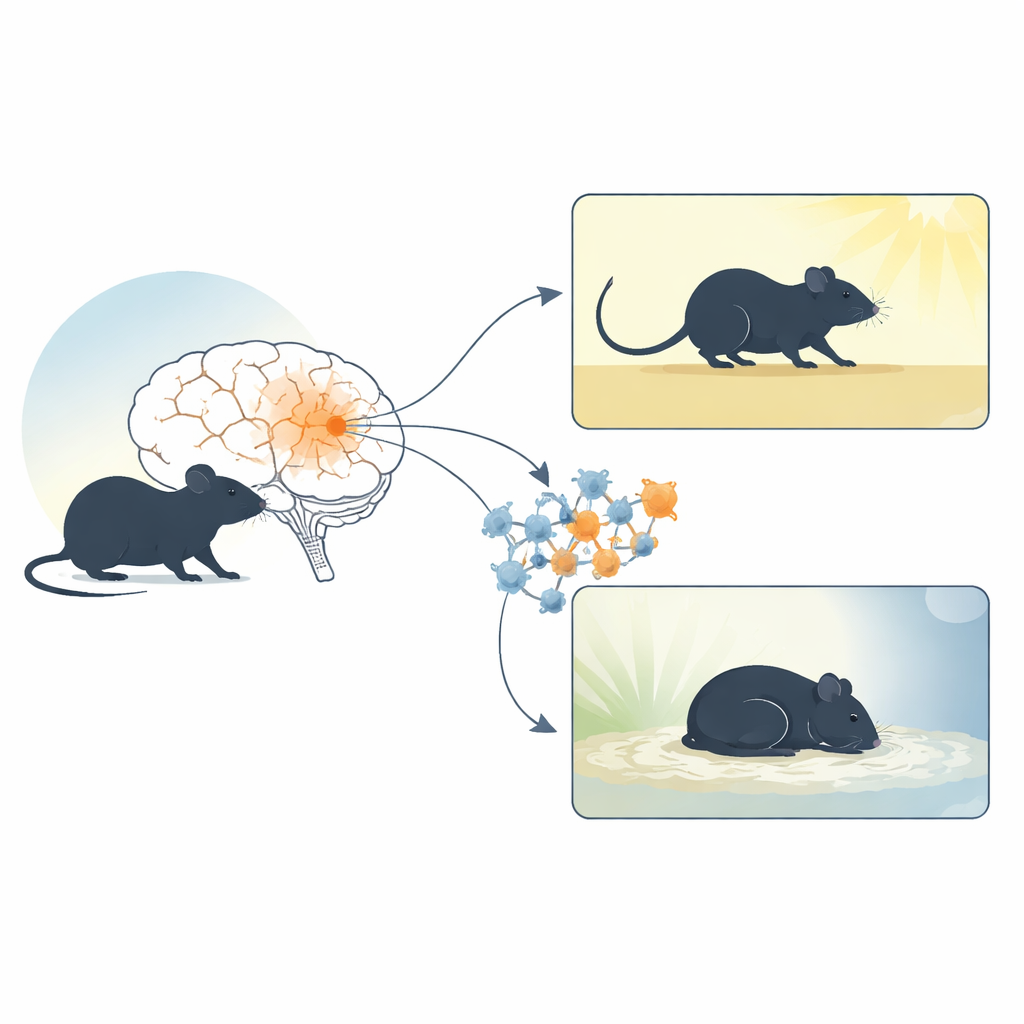
The team focused on a brain area called the medial prefrontal cortex (mPFC), which helps control thinking, decision‑making, and mood. They examined a clock gene named NPAS2, already known to shape daily rhythms in sleep. When they removed NPAS2 throughout the body, mice completely lost their usual nap during the late part of their active (nighttime) period, even though their overall night and day sleep remained mostly intact. Knocking down NPAS2 only in the mPFC produced the same loss of naps, while altering this gene in other brain regions had little effect. Conversely, boosting NPAS2 levels in the mPFC restored or lengthened naps, revealing this gene as a key on–off switch for daily nap behavior.
Naps Sharpen Mind and Mood
To see whether naps matter for health, the scientists gently kept mice awake during their regular nap window. Animals that missed their nap performed worse on memory and attention tasks for several hours afterward, struggling in mazes and object‑recognition tests. Their mood‑related behaviors also worsened in classic stress and pleasure‑seeking assays, suggesting increased despair and reduced enjoyment. These problems faded by the next day, likely because the mice slept more at other times, but the results point to the nap as a quick, natural reset that supports clear thinking and emotional balance.
Dopamine Neurons That Hold Wakefulness in Check
The researchers then asked how NPAS2 in the mPFC could selectively promote naps. They discovered a special group of neurons in this region that make the enzyme tyrosine hydroxylase (TH), which is essential for producing dopamine, a chemical strongly linked to wakefulness and motivation. Using light‑based and drug‑based tools to turn these neurons on and off, they found that activating them kept mice awake, while silencing them increased deep, non‑dreaming sleep and lengthened naps. Advanced recordings showed that these cells fired vigorously when the animals were awake, but their activity naturally dipped during the usual nap period—unless NPAS2 was missing, in which case the neurons stayed overactive and naps disappeared.
A Gene Chain That Dials Down Dopamine
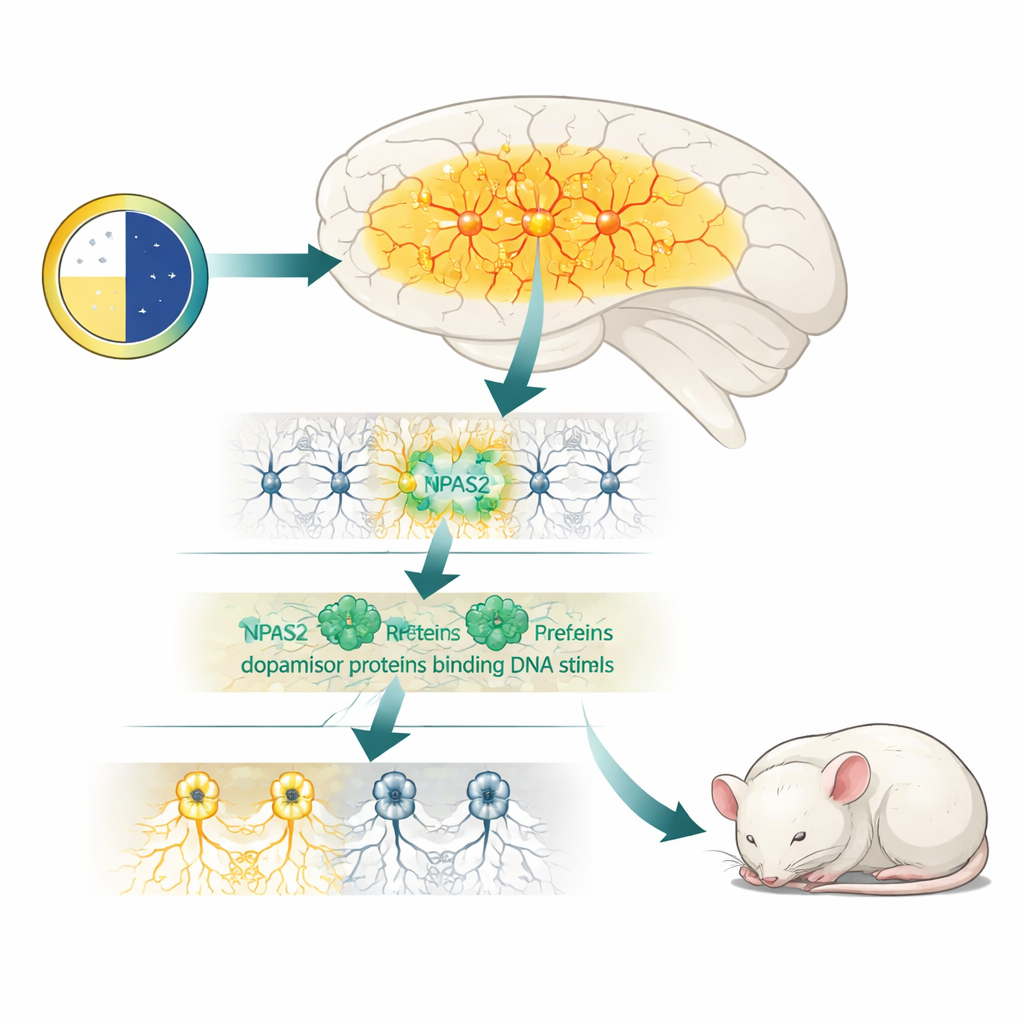
Zooming in further, the team mapped a molecular chain that connects the clock gene NPAS2 to dopamine production. NPAS2 turns on another gene called POU2F2, which acts as a brake on the TH gene. When NPAS2 levels rise near the regular nap time, POU2F2 increases, TH levels drop, and dopamine output in these mPFC neurons falls. This quiets a key wake‑promoting circuit and opens a window for sleep. Removing NPAS2 or POU2F2 breaks this chain: TH and dopamine climb, the wake‑promoting neurons remain highly active, and the nap vanishes. Importantly, this mechanism is specific to the mPFC; similar changes were not seen in classic dopamine centers deeper in the brain.
How the Brain’s Nap Switch Keeps Us Going
Taken together, the findings reveal a built‑in “nap switch” in the prefrontal cortex, controlled by the daily rise and fall of NPAS2. At a certain time in the active phase, NPAS2 peaks, dampens dopamine‑producing neurons, and makes it easier for the brain to slip into a brief sleep. This scheduled dip in arousal appears to refresh thinking and mood before the day’s end. Although the work was done in mice, humans share similar clock genes and brain circuits, suggesting that our own urge to nap may be partly genetic—and that, for many of us, a short, well‑timed nap is not a sign of laziness but an expression of deep biological design.
Citation: Guo, L., Cen, H., Huang, Y. et al. Impact of NPAS2 on mPFC dopamine synthesis and nap behavior. Nat Commun 17, 4014 (2026). https://doi.org/10.1038/s41467-026-70424-0
Keywords: circadian clock, dopamine, prefrontal cortex, afternoon nap, NPAS2