Clear Sky Science · en
High-voltage and stable co-free LiNiO2 positive electrode for sulfide-based all-solid-state batteries
Why Safer, Longer-Lasting Batteries Matter
Lithium‑ion batteries power our phones, laptops, and increasingly our cars, but today’s designs still rely on flammable liquids and scarce metals like cobalt. This study explores a new way to build high‑energy, cobalt‑free solid‑state batteries that are both safer and longer‑lived. By redesigning the positive electrode material at the atomic level, the authors show how to keep powerful nickel‑rich batteries stable even under high voltages that would normally cause them to crack, overheat, and quickly fade.
The Challenge with Powerful Nickel Batteries
Nickel‑rich lithium nickel oxide (LiNiO₂) is attractive because it can store a lot of energy and avoids the cost and toxicity of cobalt. However, when pushed to high charge levels, its crystal structure becomes unstable. Inside each tiny particle, the atomic layers shift and collapse, generating internal stress and microcracks. At the same time, the material reacts with its surrounding electrolyte. In liquid batteries this raises the risk of gas release and thermal runaway; in solid‑state batteries using sulfide electrolytes, it forms resistive by‑products that block the flow of lithium. Together, these structural and interfacial failures quickly rob the battery of capacity.
Why Solid-State and New Architecture Are Needed
All‑solid‑state lithium batteries replace flammable liquid electrolytes with solid ones, promising safer, more compact packs. Sulfide‑based solid electrolytes conduct lithium ions very well and are soft enough to make good contact with the electrode. Unfortunately, they react strongly with LiNiO₂ at the high voltages needed for high energy. Coating the particles with protective layers helps, but does not fully stop cracking inside the particles or long‑term degradation. The authors argue that to truly extend battery life, one must stabilize both the interior of the particles and their outer surface where they touch the solid electrolyte. 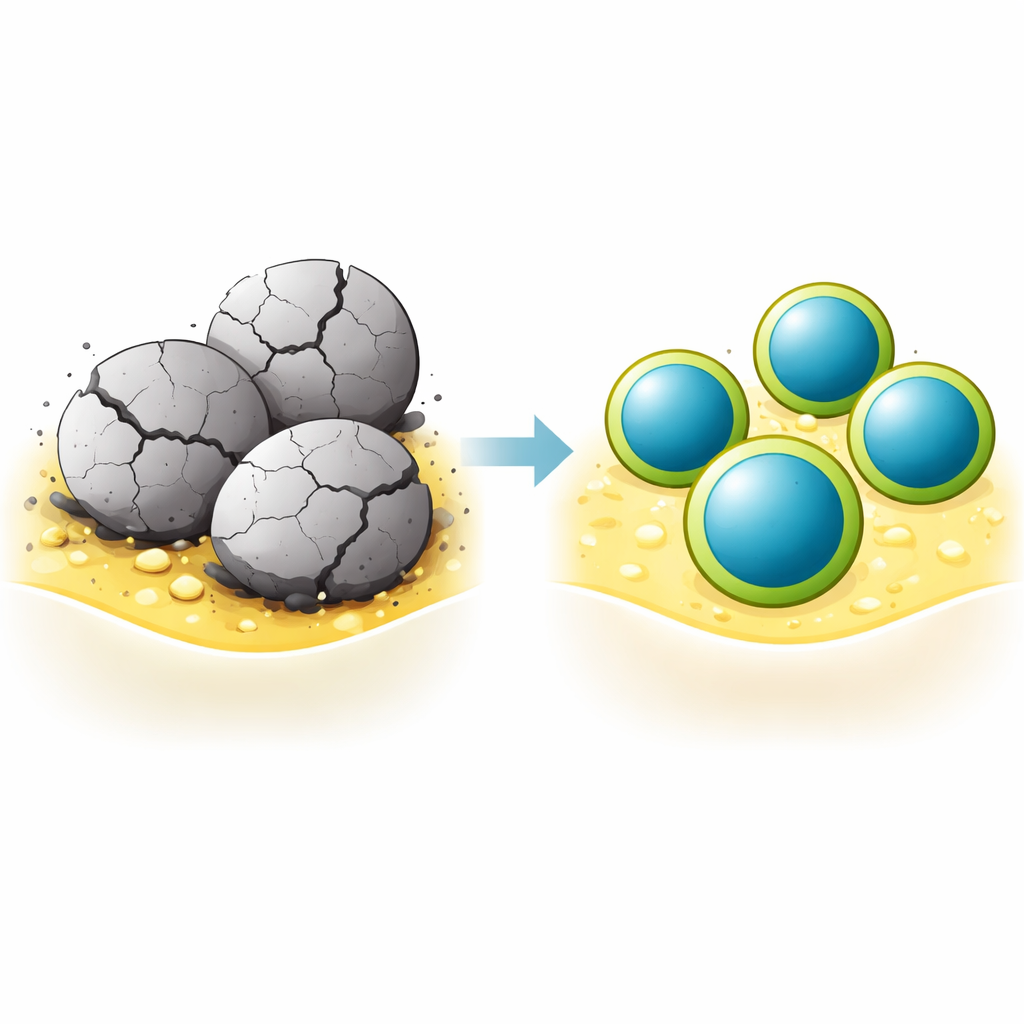
A Smart Two-Role Doping Strategy
The team proposes a “surface‑to‑bulk heterophase reconstruction” strategy, using two different added elements that naturally settle in different regions of the particle. They design a material called LiNi₀.₉₆₄Al₀.₀₃W₀.₀₀₆O₂. Aluminum, which has a lower charge state, diffuses deep into the bulk and strengthens the layered framework through strong bonds, reducing the tendency of nickel and lithium to swap places and disrupt ion paths. Tungsten, with a higher charge state, migrates more slowly and accumulates near the surface. There it promotes the formation of a thin, spinel‑like surface layer that is mechanically robust and more compatible with the sulfide solid electrolyte. Together, these regions form a stable “layered core–spinel shell” scaffold that resists cracking and chemical attack.
Seeing the Atomic-Level Changes and Battery Gains
Using advanced X‑ray and electron microscopy techniques, the researchers directly observe this architecture: aluminum is evenly spread throughout the interior, while tungsten is concentrated at the surface, giving each particle a thin spinel skin a few nanometers thick. Computer calculations confirm that aluminum prefers to occupy nickel positions inside the bulk and raises the energy barrier for harmful cation disorder, while tungsten encourages gentle surface reconstruction into the spinel phase. Electrochemical tests in solid‑state cells show that this engineered material can be charged up to 4.5 volts and still deliver high capacity: about 188 milliamp‑hours per gram initially, and 65% of that even after 720 cycles. Compared with undoped LiNiO₂, it has far fewer microcracks, much smaller increases in resistance, and greatly reduced formation of resistive sulfur‑based by‑products at the interface. 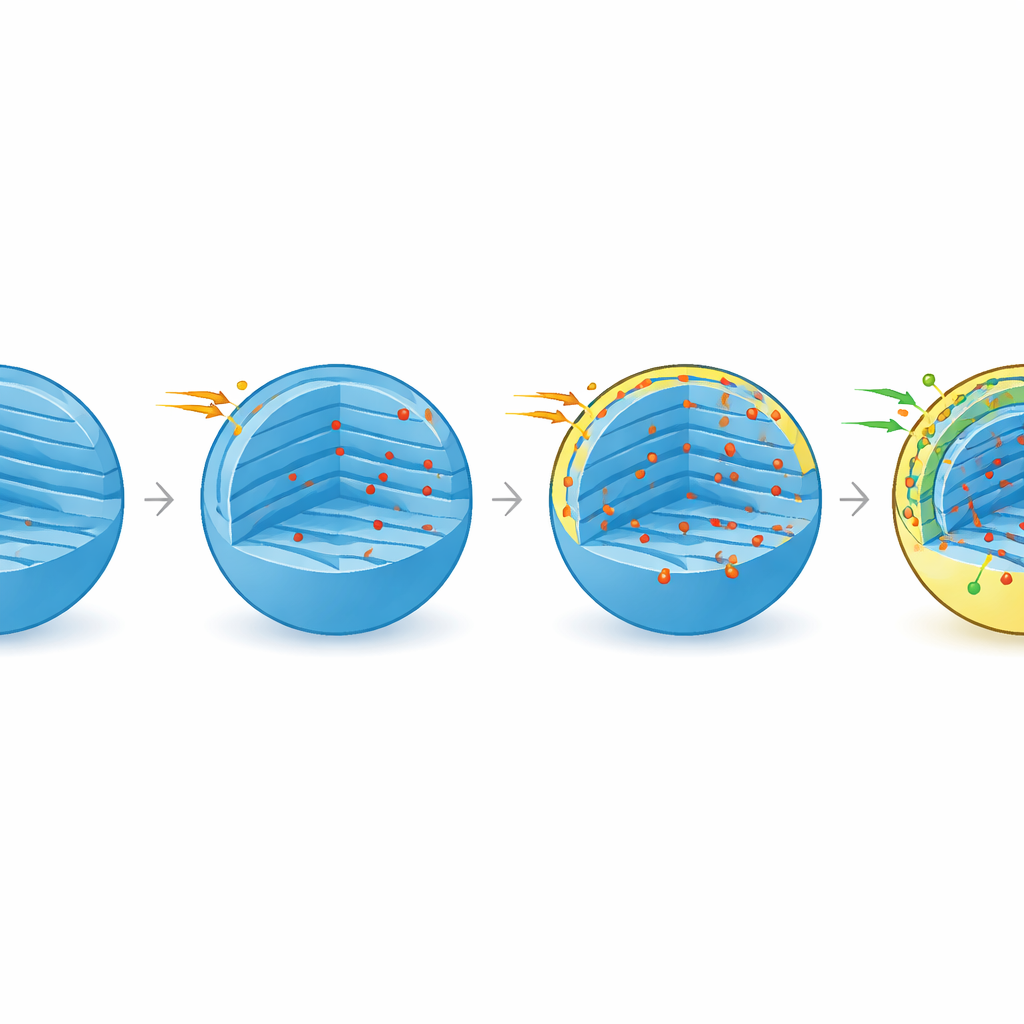
A General Recipe for Better Solid-State Batteries
To show that this is not a one‑off trick, the authors extend their approach to other combinations of low‑valence and high‑valence dopants, such as aluminum with molybdenum, and boron with tungsten or niobium. In each case, the same pattern emerges: the low‑valence element stabilizes the interior, while the high‑valence element shapes a protective surface, and the resulting solid‑state batteries show higher capacity and longer life. In plain terms, the study provides a design recipe for future cobalt‑free, high‑energy solid‑state batteries: choose one element to strengthen the “skeleton” inside each particle and another to build a tough, friendly “skin” where it meets the solid electrolyte. This dual‑role design could help bring safer, high‑performance electric vehicles and energy storage systems closer to everyday reality.
Citation: Wang, Y., Ni, D., Li, H. et al. High-voltage and stable co-free LiNiO2 positive electrode for sulfide-based all-solid-state batteries. Nat Commun 17, 3661 (2026). https://doi.org/10.1038/s41467-026-70405-3
Keywords: solid-state batteries, lithium-ion cathodes, nickel-rich materials, battery interface stability, cobalt-free energy storage