Clear Sky Science · en
Bioengineered ferritin-based lysosome-targeting chimera platform for tumor-targeted therapy
Turning the Cell’s Garbage System Against Cancer
Our cells are constantly cleaning house, breaking down worn-out or harmful proteins in tiny compartments called lysosomes. This study shows how scientists can hijack that natural garbage-disposal system to selectively destroy cancer-driving proteins on tumor cells. By building a modular protein-based delivery vehicle from ferritin—the body’s own iron-storage nanocage—the researchers create a flexible platform that can be retargeted to different tumor types and even reach hard-to-treat brain cancers.
A New Way to Make Bad Proteins Disappear
Most medicines work by latching onto a problem protein and blocking its activity. But many disease-related proteins have shapes or locations that make them hard to block, earning them the label “undruggable.” A newer strategy, called targeted protein degradation, takes a different approach: instead of just blocking a protein, it sends it to the cell’s destruction machinery. One class of such drugs, called lysosome-targeting chimeras (LYTACs), drags proteins from the cell surface into lysosomes, where they are chopped up. Existing LYTACs, however, often require complex antibody engineering or have stability and delivery problems, making it difficult to build a simple, reusable platform that can be easily adapted to many targets.
Using a Natural Nanocage as a Smart Delivery Vehicle
To solve this, the team turned to human heavy-chain ferritin, a naturally occurring protein shell that self-assembles into a 24-piece nanocage. Ferritin has two key advantages: it can be engineered to display small binding modules on its surface, and it is naturally taken up by cells that carry high levels of a surface receptor called transferrin receptor 1 (TfR1), which is abundant on many tumors. The researchers used structure-guided design to create a ferritin mutant, called HFn6, that binds TfR1 more strongly and stays attached longer. They then equipped HFn6 with a molecular “plug-and-socket” system (SpyTag–SpyCatcher), allowing different binding proteins, known as affibodies, to be snapped onto the ferritin shell in a simple mixing step. The result is a modular LYTAC: one standardized ferritin core plus interchangeable targeting heads for different disease proteins. 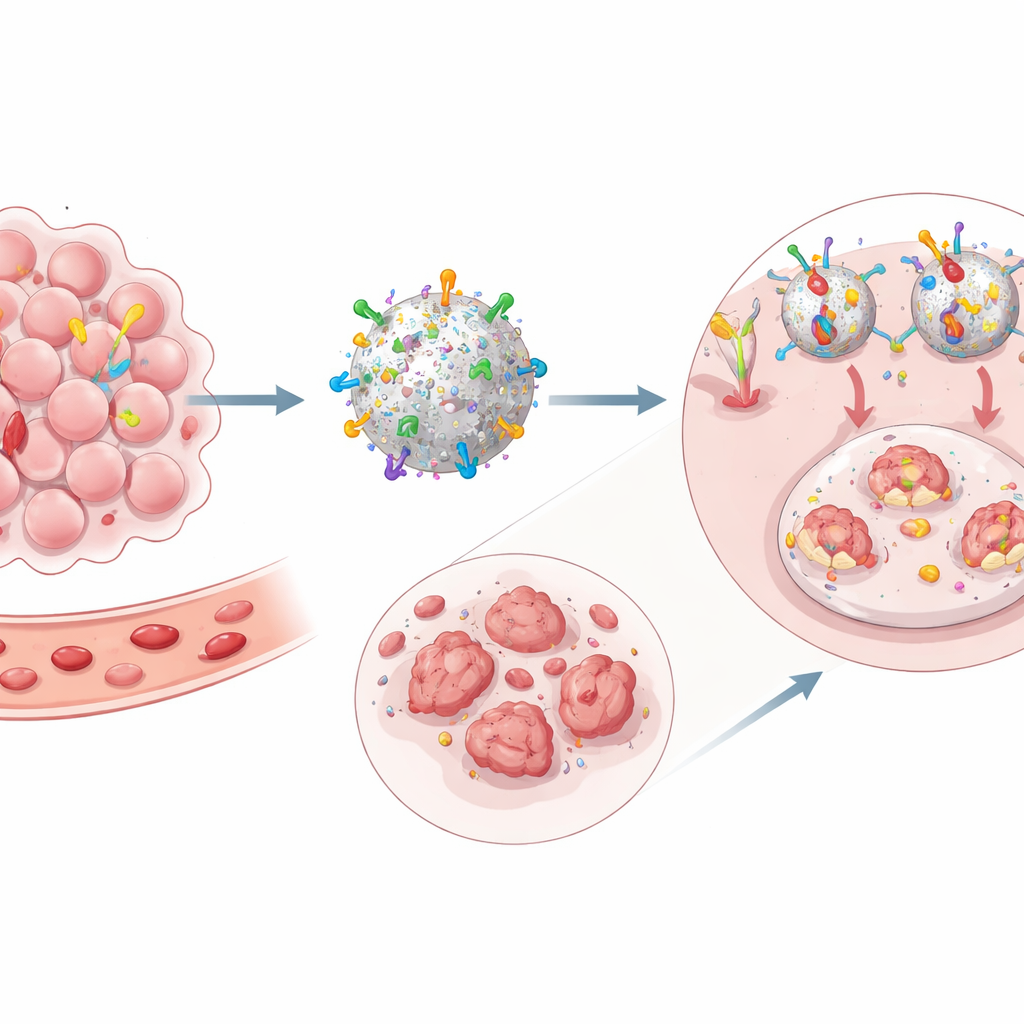
Custom-Built Degraders for Multiple Tumor Targets
As a test bed, the team built ferritin-based LYTACs against three clinically important proteins on cancer cells: EGFR and HER2, which drive growth in several solid tumors, and PD-L1, which helps tumors evade the immune system. By adjusting how many affibody molecules were attached to each ferritin cage, they found sweet spots that maximize degradation while avoiding crowding that would block uptake. In cell cultures, these constructs removed 60–80% of their targets from the cell surface and lowered total protein levels inside the cells. Importantly, the same ferritin scaffold could be reused simply by swapping which affibody was attached, showing that the platform is genuinely modular rather than a one-off design for each protein.
Two Complementary Routes into the Cellular Shredder
Detailed experiments revealed that these LYTACs do not rely on a single trick, but on two cooperating mechanisms. In the first, the LYTAC binds both TfR1 and the disease protein at the same time, forming a three-part complex that is pulled into the cell through a well-known uptake route and delivered to lysosomes for breakdown. In the second, the ferritin nanocage itself, with many copies of the affibody on its surface, behaves like a multivalent nanoparticle: its size and multiple binding points are enough to trigger internalization and lysosomal delivery even without TfR1. This backup route is less efficient but broadens the range of cells the system can act on. Using chemical inhibitors and ferritin from another species that does not bind TfR1, the authors showed that both lysosomes and a specific form of endocytosis are essential for degradation. 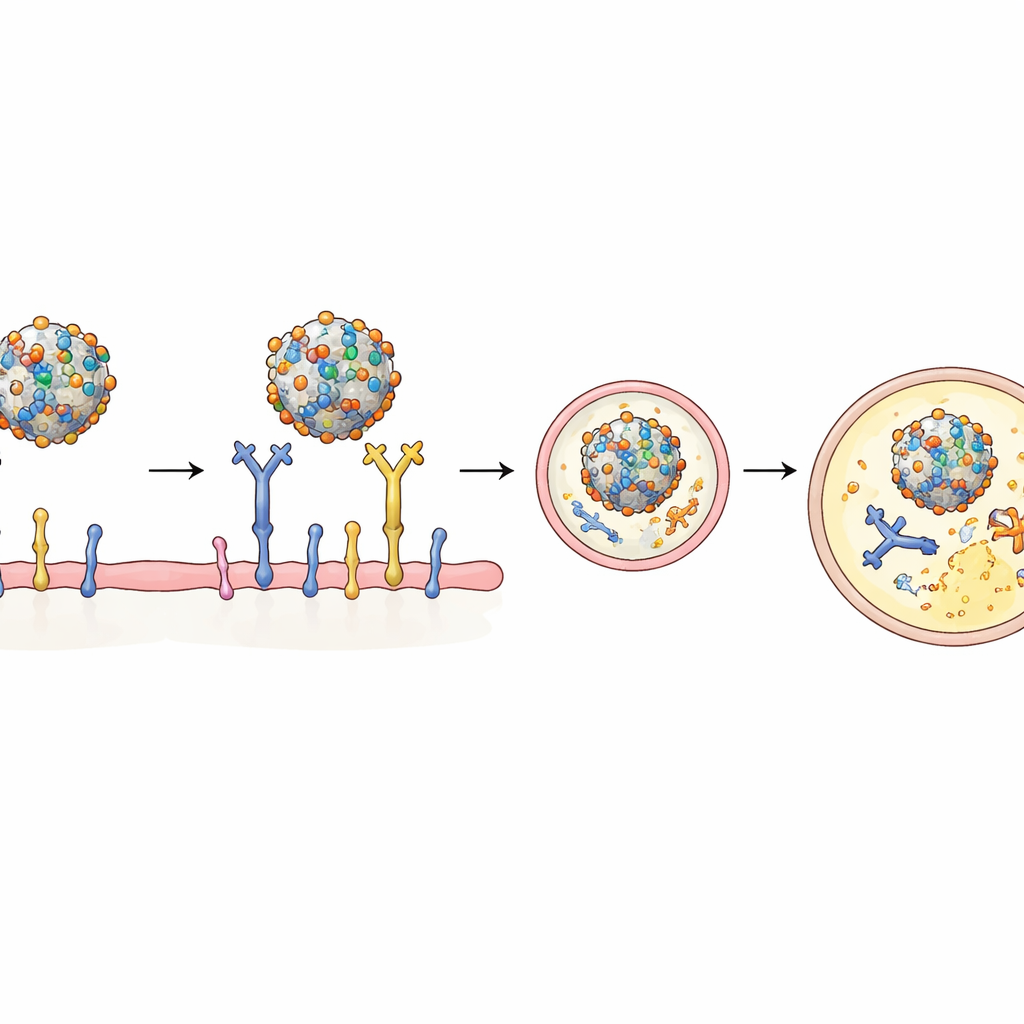
Slowing Tumors and Reaching the Brain
When tested in mice bearing human tumor grafts, the HER2-targeting ferritin LYTAC circulated in the blood far longer than a free affibody, accumulated preferentially in tumors, and significantly slowed tumor growth while sparing major organs. The targeted HER2 levels in tumors dropped, but TfR1 itself was recycled and not depleted, an important safety consideration. The platform also showed promise against glioblastoma, an aggressive brain tumor. A version targeting EGFR crossed an in vitro blood–brain barrier model, reached brain tumors in mice after intravenous injection, reduced EGFR levels, and curtailed tumor growth, again without clear toxicity.
What This Means for Future Cancer Treatments
In plain terms, this work introduces a reusable “Lego hub” for cancer drugs that erase harmful proteins instead of just blocking them. Because the ferritin core is the same each time and the targeting pieces are small and easy to swap, scientists could, in principle, rapidly assemble new degraders for many different surface proteins across tumor types. The fact that the platform works in animals, spares healthy tissues, and can reach brain tumors makes it a promising foundation for next-generation cancer therapies and possibly for other diseases driven by stubborn cell-surface proteins.
Citation: Zhang, S., Jin, Y., Hou, Y. et al. Bioengineered ferritin-based lysosome-targeting chimera platform for tumor-targeted therapy. Nat Commun 17, 3706 (2026). https://doi.org/10.1038/s41467-026-70383-6
Keywords: targeted protein degradation, lysosome-targeting chimeras, ferritin nanocages, cancer therapy, tumor surface receptors