Clear Sky Science · en
A large-scale genome-wide association meta-analysis for nevus count provides direct insights into the genetics of melanoma
Why Moles Matter for Skin Cancer Risk
Most of us think of moles as harmless specks on the skin, but their number is one of the strongest warning signs for melanoma, the deadliest form of skin cancer. This study asks a simple question with big implications: what is it in our DNA that makes some people covered in moles and others almost mole‑free, and how does that genetic blueprint connect to melanoma risk? By scanning the genomes of tens of thousands of people, the researchers begin to decode that link, opening doors to better risk prediction and, potentially, new ways to prevent or treat melanoma.
Looking Across Genomes and Counting Spots
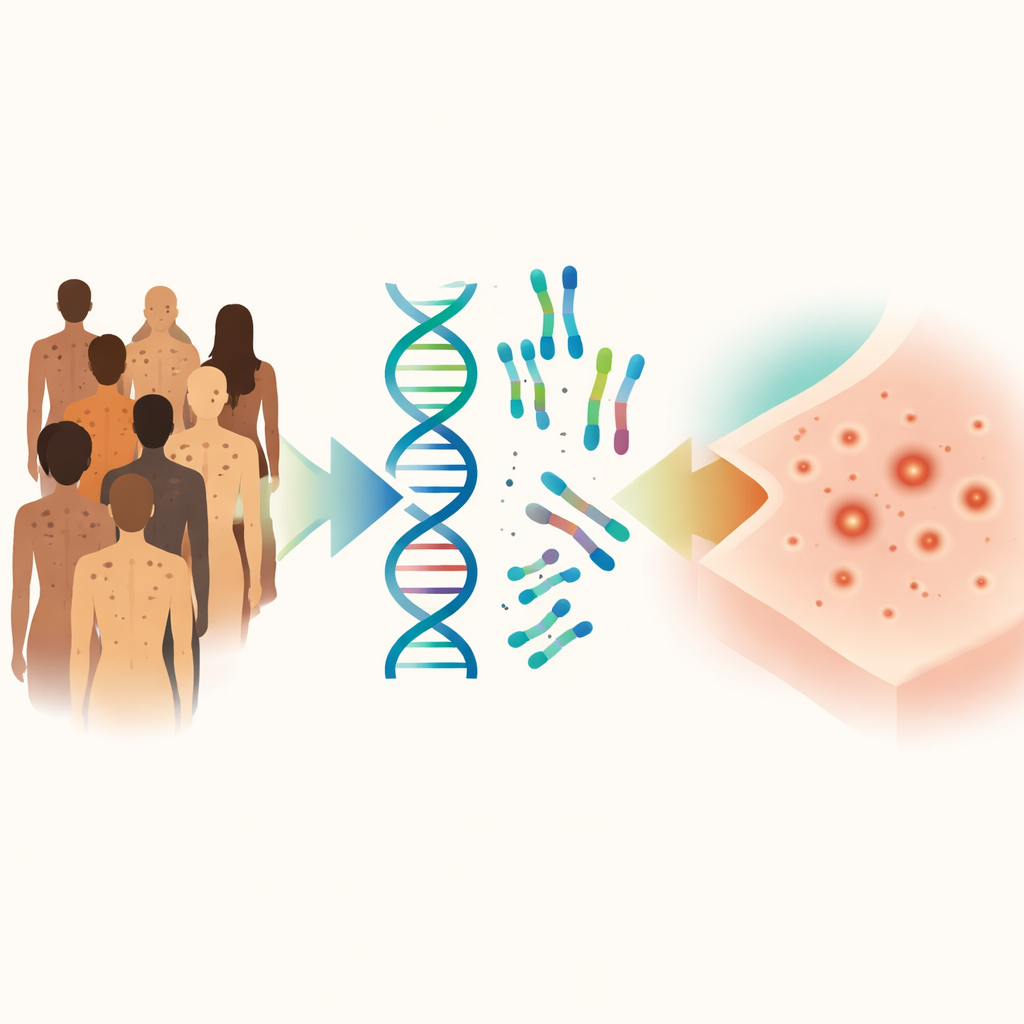
To tackle this, the team combined data from 14 large studies, including nearly 86,000 people of European ancestry, each with information on how many melanocytic nevi—common moles—they had. They performed a massive genome‑wide association meta‑analysis, scanning millions of positions across the DNA to see which variants tracked with having more or fewer moles. This effort revealed 29 regions in the genome strongly linked to mole count, 24 of which had not previously been flagged when researchers looked at mole numbers alone. Together, the common DNA variants they studied explain a modest but meaningful slice of how many moles people tend to develop.
Beyond Skin Color: New Biological Pathways
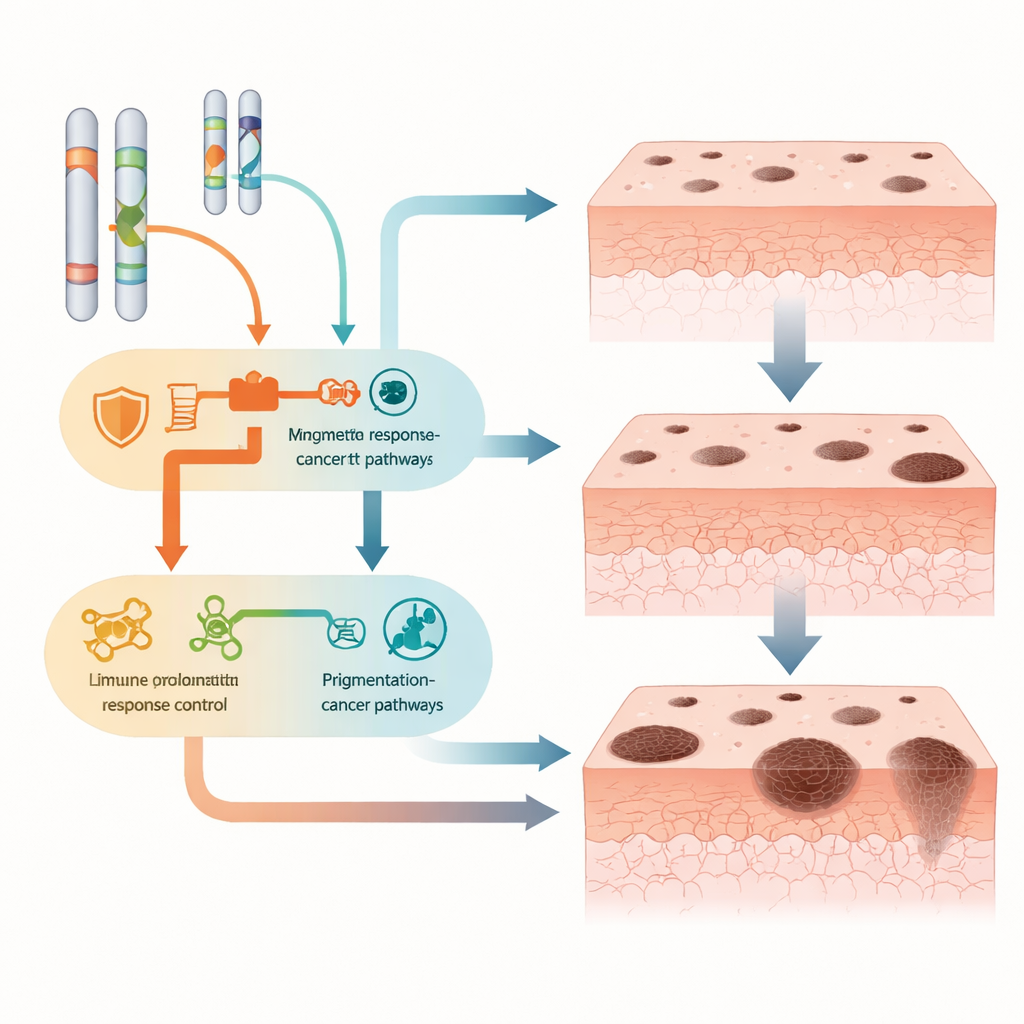
Many known risk factors for melanoma, such as fair skin and poor tanning, involve pigmentation genes. This study confirms that some pigmentation‑related genes are important for mole formation, but it also points far beyond skin color. Using several layers of analysis, the researchers highlighted 255 likely genes near the risk regions and found that many participate in immune responses, cell growth and survival, and pathways also active in other cancers that have nothing to do with pigmentation, such as breast, prostate, and certain brain tumors. For example, genes like SIKE1 and others help control how the immune system responds to threats, which in turn can influence how melanocytes—the pigment‑producing cells that form moles—grow or are kept in check.
Shared Roots of Moles and Melanoma
The team then asked how strongly these mole‑related DNA regions overlap with the genetics of melanoma itself. By combining their mole data with results from a large melanoma study, they found that 28 of the 29 mole regions appear to influence both traits through shared genetic mechanisms. Using a method called Mendelian randomization, which treats genetic variants as natural experiments, they showed that having a genetic tendency toward more moles causally increases melanoma risk. Interestingly, not every gene acts in the same direction: one key pigmentation gene variant tends to lower mole counts while raising melanoma risk, suggesting that some DNA changes may reduce visible moles yet still make pigment cells more vulnerable to damage from ultraviolet light.
Men, Women, and Different Types of Moles
Because mole numbers and melanoma patterns differ between men and women on different parts of the body, the researchers looked for sex‑specific genetic effects. Women in one large cohort had more total moles than men, but when the team split the genetic analyses by sex, they found that nearly all of the underlying genetic architecture was shared. Only two genetic regions behaved differently between men and women, suggesting that lifestyle and environmental exposures—such as clothing choices and sun habits—likely explain most of the sex differences in mole counts. The study also extended its findings to the eye. A score that captures someone’s inherited tendency to form many skin moles showed a weaker, but still detectable, link to pigmented spots on the iris, which are known risk factors for a rare eye cancer called uveal melanoma.
Turning Genetics into a Risk Score
Finally, the scientists combined thousands of small genetic effects into a single polygenic risk score for mole count. Tested in two independent adult groups, this score explained about 4–5 percent of the variation in how many moles people had—an improvement over earlier versions. When applied to eye moles, its predictive power was much smaller but still statistically significant. Although these numbers may sound modest, they demonstrate that genetic profiles can already help identify people who are predisposed to having more moles and therefore higher melanoma risk. As genetic studies grow and scores become more accurate, they may be woven into future screening tools alongside clinical exams and sun‑exposure histories.
What This Means for You and Future Care
For a layperson, the main takeaway is that mole count is not just a cosmetic quirk—it is an outward sign of deeper biological processes that are strongly rooted in our DNA and closely tied to melanoma risk. This study shows that many of the key genes involved reach beyond skin color to include immune defenses, cell‑growth controls, and pathways shared with other cancers and even some brain conditions. By charting these genetic connections and building practical risk scores, researchers move closer to more precise melanoma risk assessment. In the long run, such insights may guide personalized prevention strategies and reveal new targets to help keep harmless moles from becoming life‑threatening cancers.
Citation: Jayasinghe, G.J.M.S.R., Zhu, G., Pandeya, N. et al. A large-scale genome-wide association meta-analysis for nevus count provides direct insights into the genetics of melanoma. Nat Commun 17, 3772 (2026). https://doi.org/10.1038/s41467-026-70368-5
Keywords: melanoma genetics, mole count, skin cancer risk, genome-wide association, polygenic risk score