Clear Sky Science · en
Long-read sequencing of families reveals increased germline and postzygotic mutation rates in repetitive DNA
Why tiny DNA changes matter to families
Every child carries a handful of genetic changes that are not found in either parent. Most are harmless, but some can alter health and development. For years, scientists have struggled to measure these fresh mutations accurately because many hide inside the most repetitive, hard‑to‑read stretches of our DNA. This study uses new long‑read sequencing tools in real families to uncover those hidden changes and ask where and when in life they arise.
Reading DNA with a wider lens
Traditional DNA sequencing chops the genome into short fragments, which are then reassembled like a puzzle. That approach works well for most of our DNA but fails in long, repeated stretches where many pieces look nearly identical. The authors combined three technologies—two long‑read platforms and standard short‑read sequencing—to examine 73 children and their parents from 42 families, mostly recruited through autism studies in which no clear genetic cause had been found. By comparing each child’s genome to those of both parents and cross‑checking across platforms, they built a high‑confidence catalog of new mutations unique to each child.
Across the portion of the genome they could reliably analyze—about 92 percent of our 2.9 billion DNA letters—the team found on average 95 new mutations per child. Most were single‑letter changes; a smaller share were short insertions or deletions. Despite the families being ascertained through autism, affected children and their unaffected siblings carried similar numbers and types of new mutations. This suggests that, at least in these families, autism risk is unlikely to stem from a general increase in mutation load, but more from where specific rare mutations land.
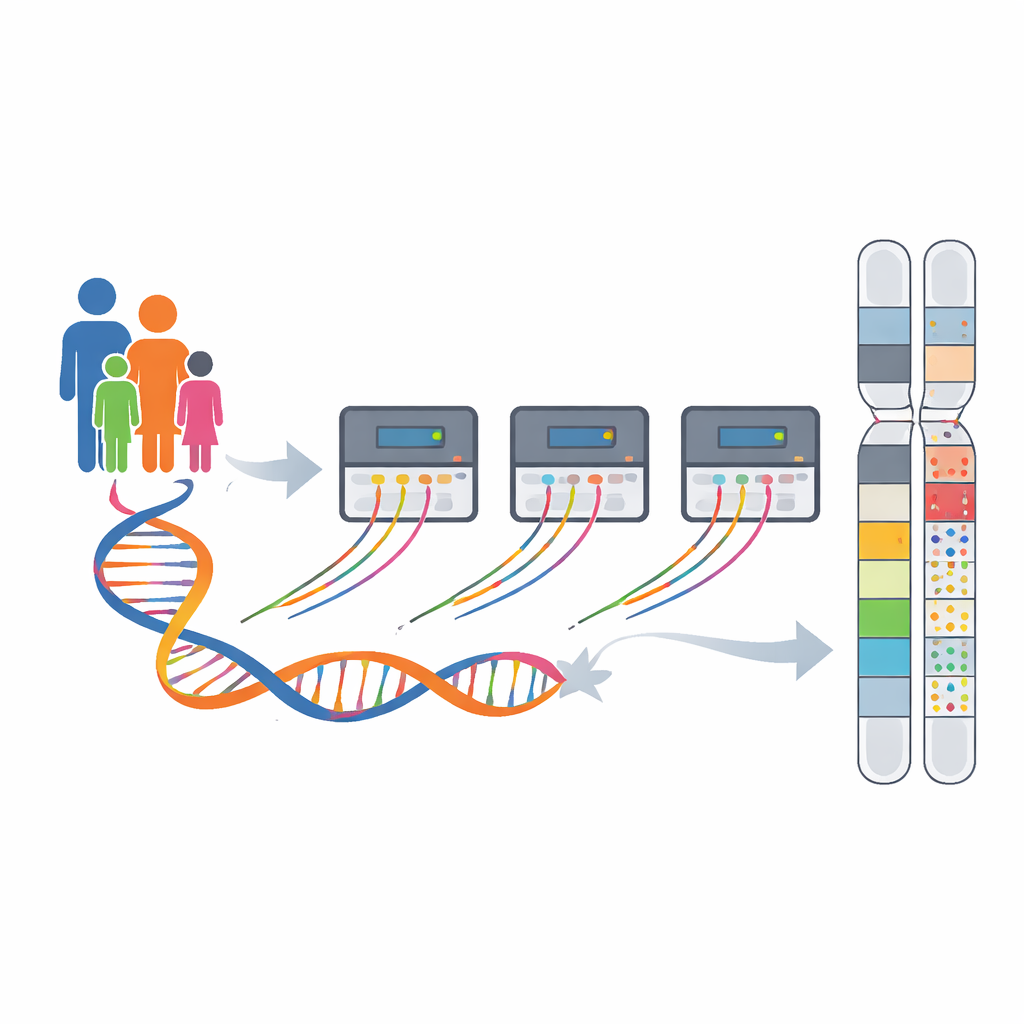
When mutations arise: before or after conception
New mutations can appear in two broad windows. Some occur in the eggs and sperm of the parents and are present in every cell of the child; these are called germline mutations. Others appear soon after fertilization during the first few cell divisions, so only a fraction of the body’s cells carry them; these are postzygotic or early embryonic mutations. Long DNA reads are long enough to span many inherited markers at once, allowing the researchers to assign almost every new mutation to the mother’s or father’s chromosome and to see whether it appears in all copies or only a subset—a key clue to its timing.
The team estimated a germline mutation rate of about 1.3 × 10⁻⁸ substitutions per DNA base per generation, consistent with previous work, and a postzygotic rate about one‑sixth as large. Roughly 15 percent of single‑letter changes arose after conception—almost double many earlier estimates that relied only on short‑read data. As in prior studies, most germline mutations came from the father, and their number rose with both paternal and maternal age, more steeply for fathers. Postzygotic mutations showed only a mild paternal skew and a weaker age effect, hinting at different underlying biological processes in the early embryo.
Repetitive DNA as a hotspot for change
A central goal of the study was to ask whether repetitive DNA—such as mobile elements and long duplicated segments—mutates faster than the rest of the genome. Long‑read data finally allow these regions to be examined directly instead of being discarded. The authors found that certain repeat types, notably SINE elements like Alus and large duplicated blocks known as segmental duplications, show clearly elevated mutation rates. In these duplications, the more similar and longer the copies are, the higher their mutation rate, especially for changes that occur after fertilization.
Postzygotic mutations were more than twice as common in highly similar duplications and in the repetitive cores of chromosomes called centromeres than in ordinary DNA. The pattern of DNA letter changes in these hotspots differed from that of typical germline mutations, with fewer of the classic age‑related CpG changes and more “transversions,” where one chemical class of base is swapped for another. The authors argue that faulty DNA repair and a process called gene conversion—where one repeated copy overwrites another—may be driving this excess of mutations inside repeats during the earliest stages of development.
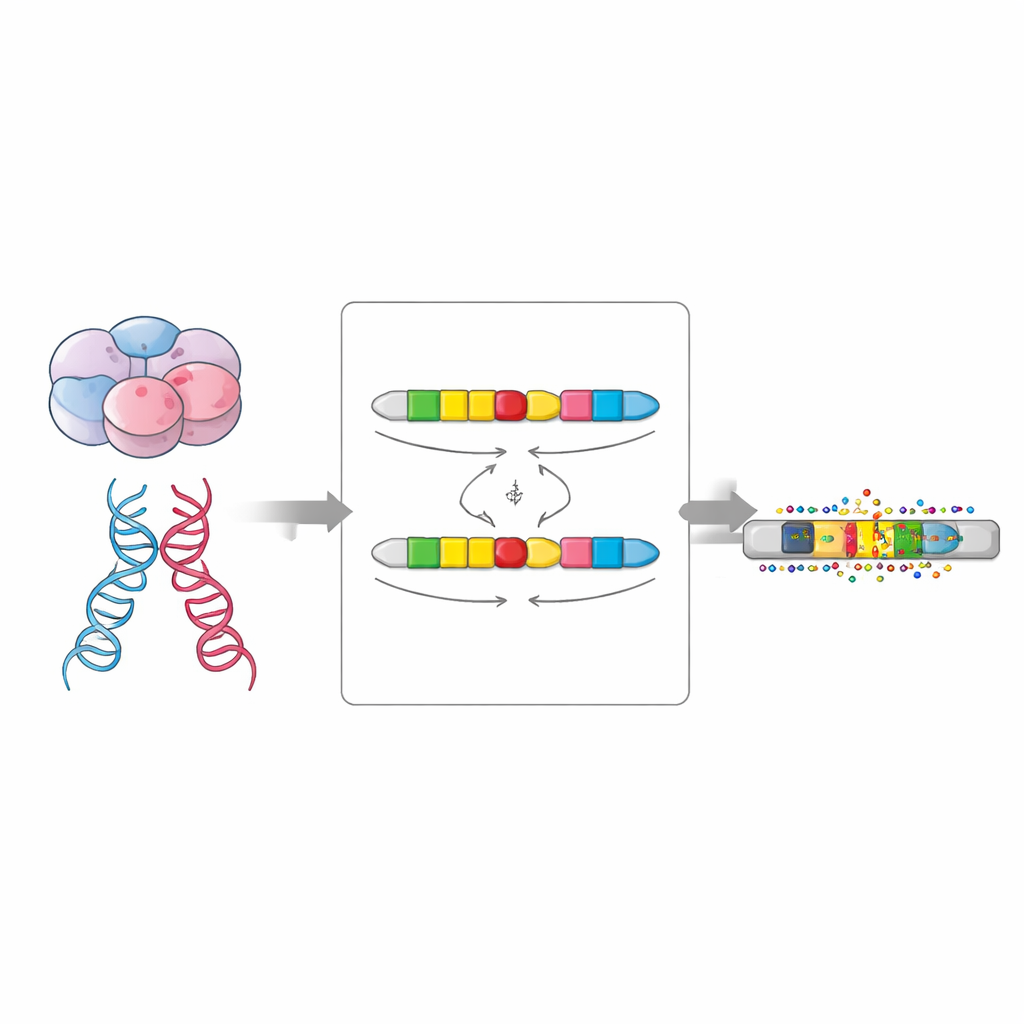
What this means for our understanding of mutation
By leveraging long‑read sequencing in real families, this work shows that our genomes accumulate more new mutations in repetitive DNA than previously appreciated, and that many of these changes arise shortly after conception rather than only in parental eggs and sperm. The overall rate of genome change per generation is modestly higher once these early embryonic mutations are counted, and classic short‑read approaches likely missed a substantial share—especially in complex repeats. For non‑specialists, the key message is that the “dark matter” of the genome, long written off as too repetitive to study, is both more active and more important for mutation than we realized, and that understanding how these regions change over time will be crucial for interpreting genetic variation and its links to disease.
Citation: Noyes, M.D., Sui, Y., Kwon, Y. et al. Long-read sequencing of families reveals increased germline and postzygotic mutation rates in repetitive DNA. Nat Commun 17, 3717 (2026). https://doi.org/10.1038/s41467-026-70342-1
Keywords: de novo mutations, long-read sequencing, repetitive DNA, segmental duplications, postzygotic mosaicism