Clear Sky Science · en
The genetic architecture of an allosteric hormone receptor
How tiny changes can reshape a biological switch
Our cells, and those of plants, rely on molecular switches that sense chemicals and convert them into action. This study explores one such switch, a plant hormone receptor called PYL1, and asks a deceptively simple question: how do changes in its genetic code reshape the way it responds to signals? Understanding this is not only key to basic biology, but could also help design crops that cope better with drought or receptors that act as custom-built sensors.
A closer look at a plant stress sensor
PYL1 helps plants respond to the stress hormone abscisic acid, which is important for surviving dry conditions. When this hormone is present, PYL1 changes shape and partners with another protein to trigger protective responses, including the activation of drought-response genes. Like many receptors, PYL1 behaves like a dimmer switch rather than a simple on–off button: as hormone levels rise, its activity follows an S-shaped curve, slowly turning on, then ramping up, and finally reaching a plateau. The researchers wanted to know how each possible single-letter change in the PYL1 protein sequence affects this curve, including how sensitive the receptor is, how strong its maximum response becomes, and how sharply it switches between low and high activity. 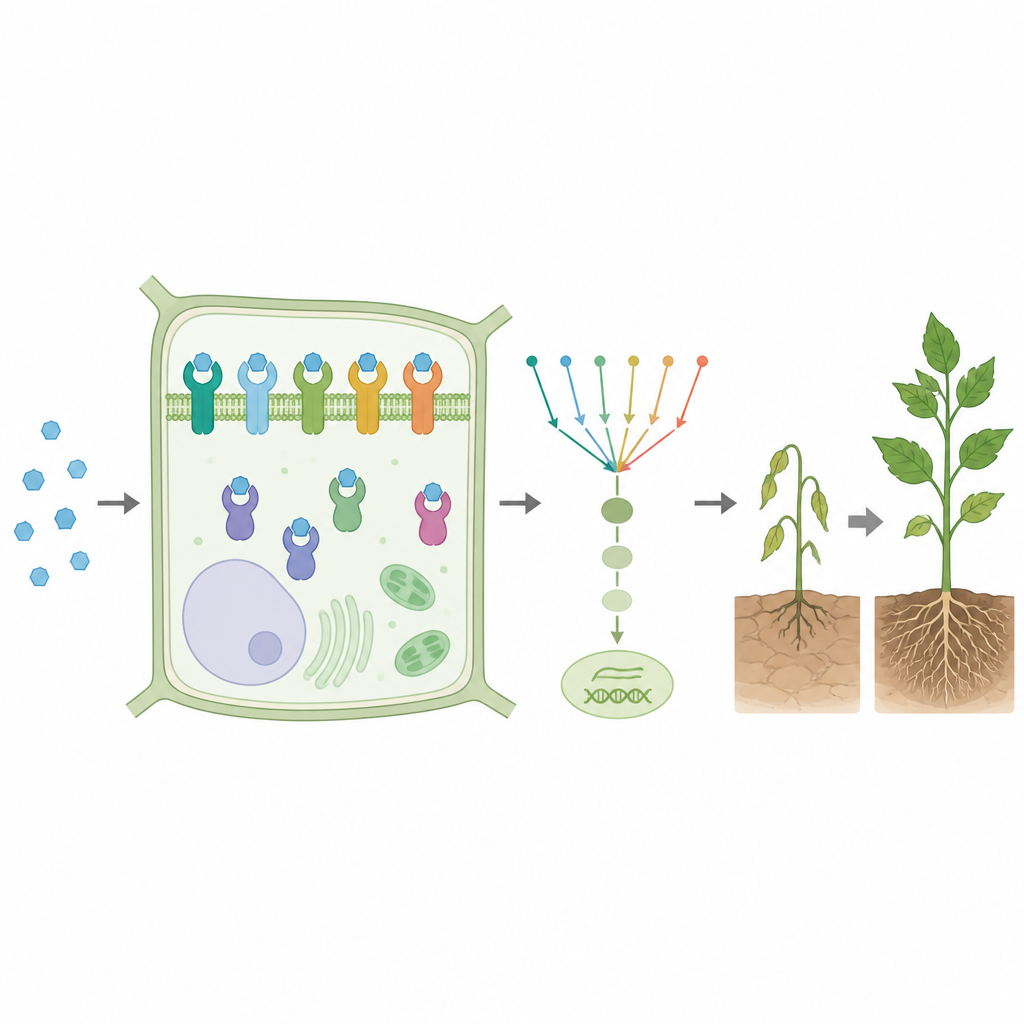
Measuring thousands of switch behaviors at once
To tackle this huge problem, the team developed a high-throughput method they call GluePCA. They fused PYL1 and its partner protein to two halves of an essential enzyme in yeast cells. When PYL1 binds its partner in the presence of hormone, the enzyme halves join, the enzyme becomes active, and the yeast cells grow better. By introducing every possible single change into PYL1 and exposing the yeast to different hormone concentrations, the researchers could use DNA sequencing to read out how strongly each mutant receptor worked. This approach yielded over 40,000 measurements and more than 3,500 full dose–response curves, effectively creating a complete map of how single amino acid changes tune the behavior of this receptor.
How stability shapes signal strength
The data revealed that almost 90 percent of missense mutations, which swap one amino acid for another, measurably adjust PYL1’s response curve. Many mutations altered several features at once, such as the hormone concentration needed to activate the receptor, the baseline activity in the absence of hormone, and the maximum activity at high hormone levels. To uncover the hidden cause behind these linked changes, the team independently measured how each mutation affected the stability and abundance of PYL1 using a separate assay that reports on receptor levels through self-pairing. They found that most mutations made the receptor less stable, reducing how much of it is present in cells. These stability shifts explained nearly three quarters of the variation in signaling behavior: less stable receptors tended to be less sensitive and weaker at full activation, while more stable versions showed higher baseline activity and gentler switching.
Fine-tuning and surprising new switch types
Stability was not the whole story. After mathematically correcting for its effects, the researchers discovered groups of positions in the receptor that could independently tune specific aspects of the response curve. Certain regions far from the hormone pocket adjusted the baseline activity, others altered the maximum response, and additional sites close to the hormone binding cavity tightened or loosened sensitivity. This modular layout means that different parts of the protein’s structure act like separate dials for shaping its behavior. Remarkably, a small number of single changes produced entirely new types of switches: some mutants flipped the normal behavior so that hormone turned the interaction off instead of on, while others created “band-stop” patterns that shut down at intermediate hormone levels but were active at both low and high doses. 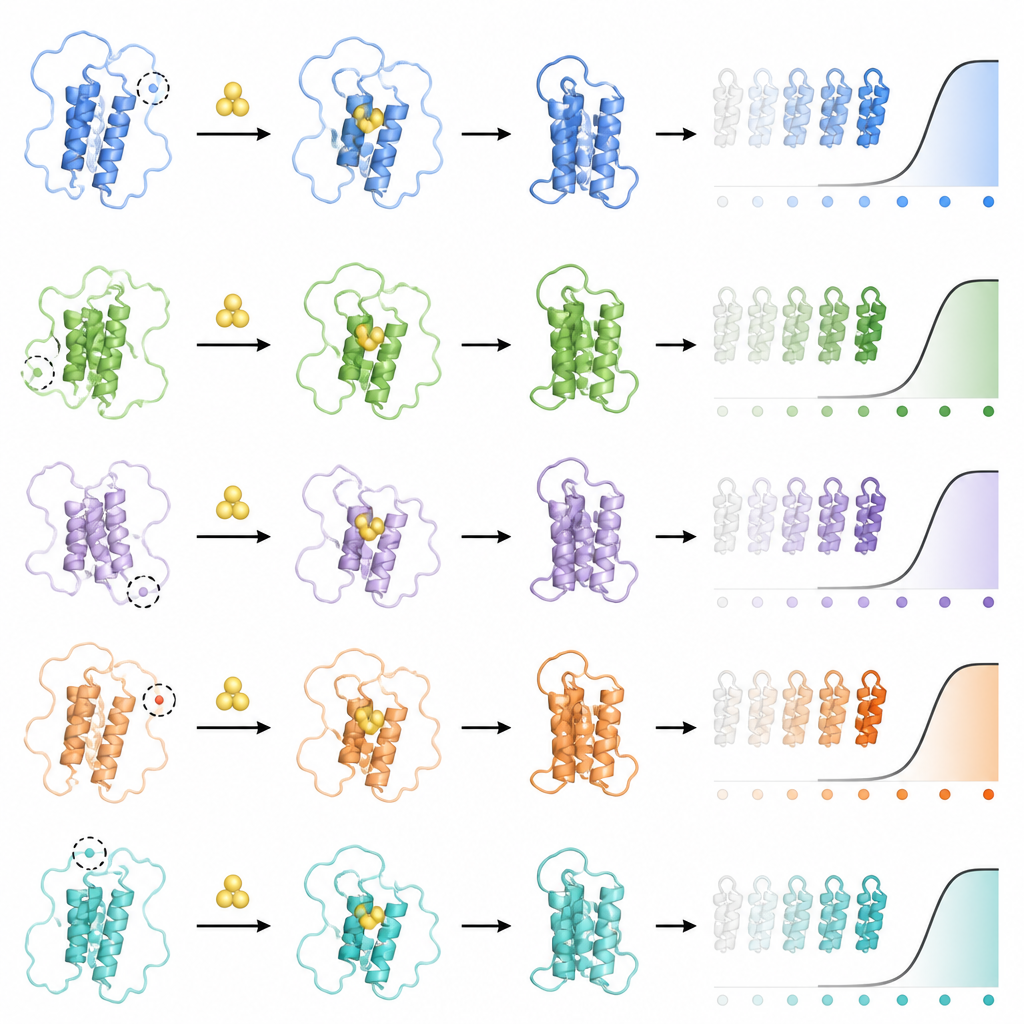
Why this matters for evolution and design
To a non-specialist, the key message is that a receptor’s behavior is far more malleable than it may appear. Most single-letter changes in the PYL1 gene subtly reshape how the receptor interprets hormone levels, largely by altering how stable the protein is, but also through targeted adjustments in distinct structural regions. A few rare changes even create entirely new types of switches. This shows that nature has a rich toolkit for evolving new signaling behaviors, and it suggests that scientists could deliberately rewire such receptors to act as custom sensors for agriculture, biotechnology, or medicine.
Citation: Stammnitz, M.R., Lehner, B. The genetic architecture of an allosteric hormone receptor. Nat Commun 17, 4735 (2026). https://doi.org/10.1038/s41467-026-70341-2
Keywords: hormone receptor, allostery, protein stability, dose response, plant drought signaling