Clear Sky Science · en
Associations of continuous glucose monitor derived time in range and glycaemic variability with diet lifestyle and demographics
Why everyday blood sugar swings matter
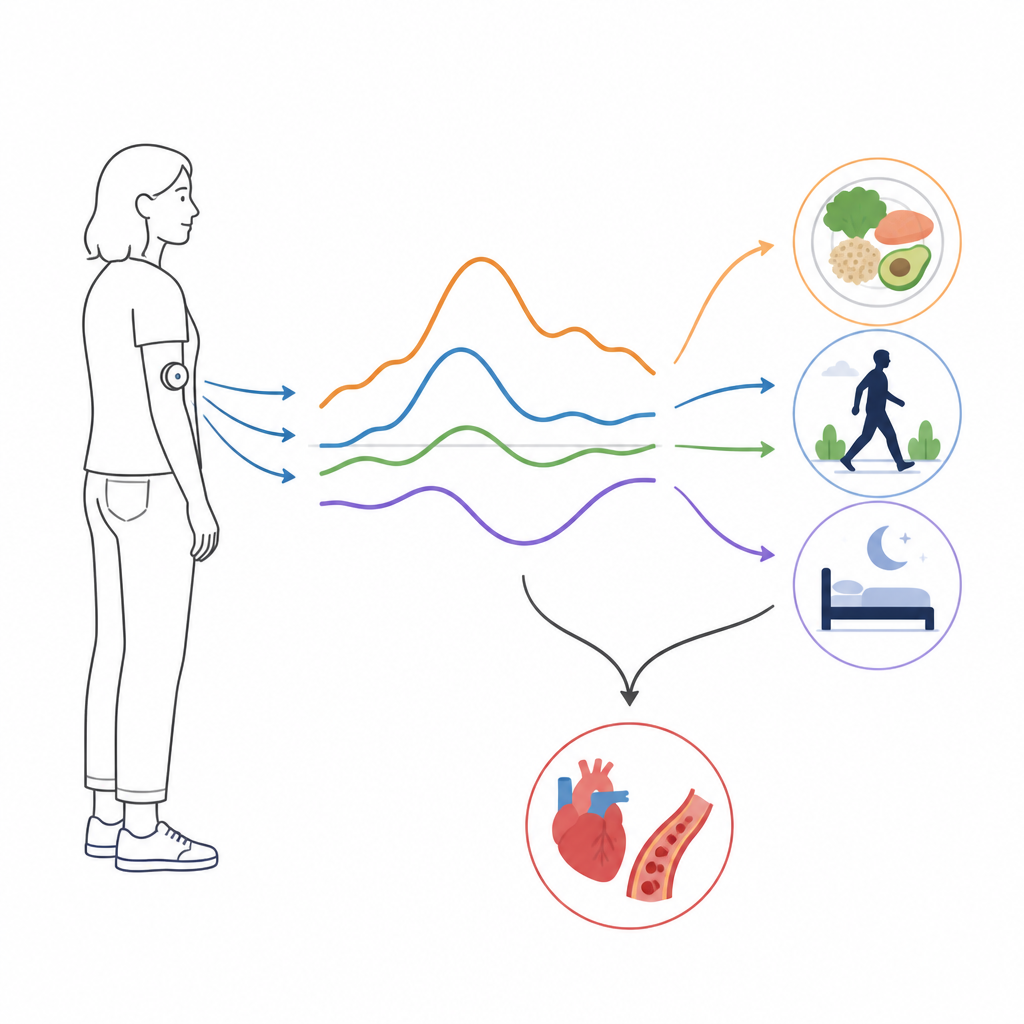
Many people now wear small sensors that track their blood sugar around the clock, even if they do not have diabetes. But it is not yet clear what these detailed readouts mean for long term health in otherwise healthy adults. This study followed more than three thousand middle aged volunteers to see how their daily blood sugar patterns relate to diet, sleep, activity, and early signs of heart and metabolic risk.
Tracking sugar levels in daily life
Volunteers in three large nutrition studies wore continuous glucose monitors on their arms for about two weeks while going about their normal routines. These devices measured sugar levels in the fluid under the skin every 15 minutes. The researchers focused on two simple measures: how much time people spent with sugar in a “tight” middle range, and how much their sugar levels bounced up and down over the day. Only people without diabetes or prediabetes were included in the main analysis, giving a detailed picture of blood sugar behavior in generally healthy adults.
How much sugar stays in the comfort zone
On average, participants spent about three quarters of their time with sugar levels in a relatively narrow range, and about 96 percent of their time within a broader target zone often used in diabetes care. Still, there was wide variation from person to person. Older adults tended to have more ups and downs and spent less time in the comfort zone. Women generally stayed in range slightly longer than men. Compared with people who had early signs of diabetes, healthy volunteers showed steadier sugar patterns, but the overlap was large, meaning that a single measure of time in range could not cleanly separate the two groups.
Food choices, movement, and sleep
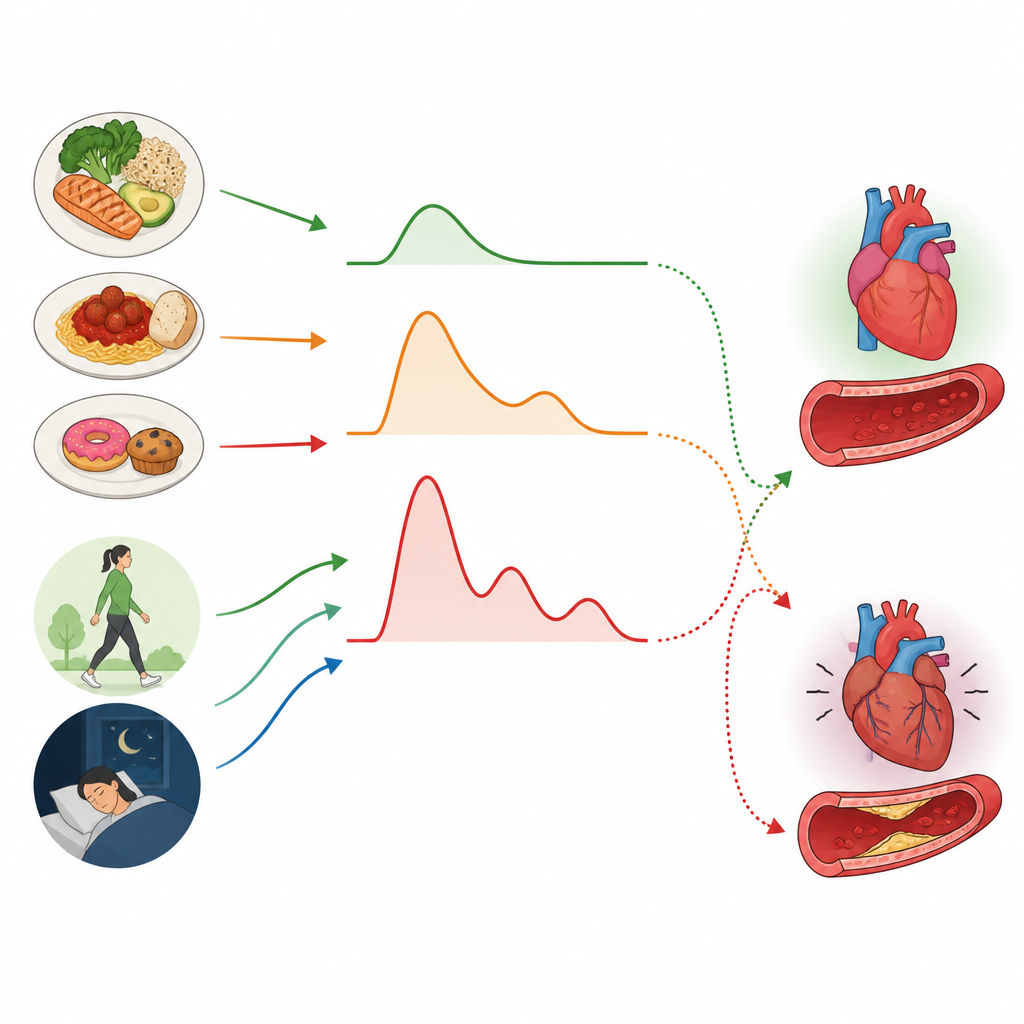
The team then asked which everyday habits lined up with steadier sugar. Using food questionnaires and detailed diet logs, they found that eating a higher share of calories from carbohydrates and sugary foods was linked to more variable sugar levels and less time in the comfort zone. In contrast, diets with a bit more protein and fat were tied to smoother sugar curves. Sleep also played a role: people who slept longer and more efficiently tended to have slightly lower average sugar and spent less time above the comfort zone. Physical activity showed a more complex picture. Those who burned more calories through movement often had a higher daily average sugar and a little less time in range, perhaps because they were also eating more or engaging in intense exercise that briefly raises sugar.
Early links to heart and liver risk
To see whether these detailed sugar readings connect to broader health, the researchers compared them with blood tests, body size, and risk scores for heart disease and fatty liver. A stricter measure of time in range showed moderate ability to flag people with a higher predicted ten year risk of major heart problems, similar to the information given by the common lab test HbA1c. However, none of the continuous sugar measures clearly identified people with greater insulin resistance or higher chance of fatty liver when compared with standard blood tests.
What this means for sensor users
For people without diabetes, continuous sugar monitors capture real time effects of meals, sleep, and movement, and they align in broad strokes with traditional lab measures. The study suggests that most healthy adults keep their sugar within a safe range most of the time, and that diet quality and sleep are tied to smoother patterns. Yet the extra detail from sensors did not strongly outperform simple blood tests or risk calculators for judging long term health. The authors conclude that while these devices can help people see how their habits affect sugar day to day, more long term studies are needed before such tracking can be relied on to guide medical decisions in otherwise healthy individuals.
Citation: Bermingham, K.M., Smith, H.A., Duncan, E.L. et al. Associations of continuous glucose monitor derived time in range and glycaemic variability with diet lifestyle and demographics. Nat Commun 17, 4496 (2026). https://doi.org/10.1038/s41467-026-70308-3
Keywords: continuous glucose monitoring, time in range, glycaemic variability, diet and lifestyle, cardiometabolic risk