Clear Sky Science · en
DDX5 orchestrates RNA homeostasis to ensure oocyte developmental competence
Why Egg Cell Quality Matters
Every human life begins with a single egg cell, yet how these delicate cells prepare themselves for fertilization is still being uncovered. This study focuses on a single molecular “caretaker” inside mouse egg cells, a protein called DDX5, and shows that without it, females become completely infertile. By revealing how DDX5 keeps the egg’s RNA molecules in balance, the work helps explain why some eggs fail to mature properly and points toward new ways to understand and potentially diagnose certain forms of female infertility.
The Cell’s RNA Balancing Act
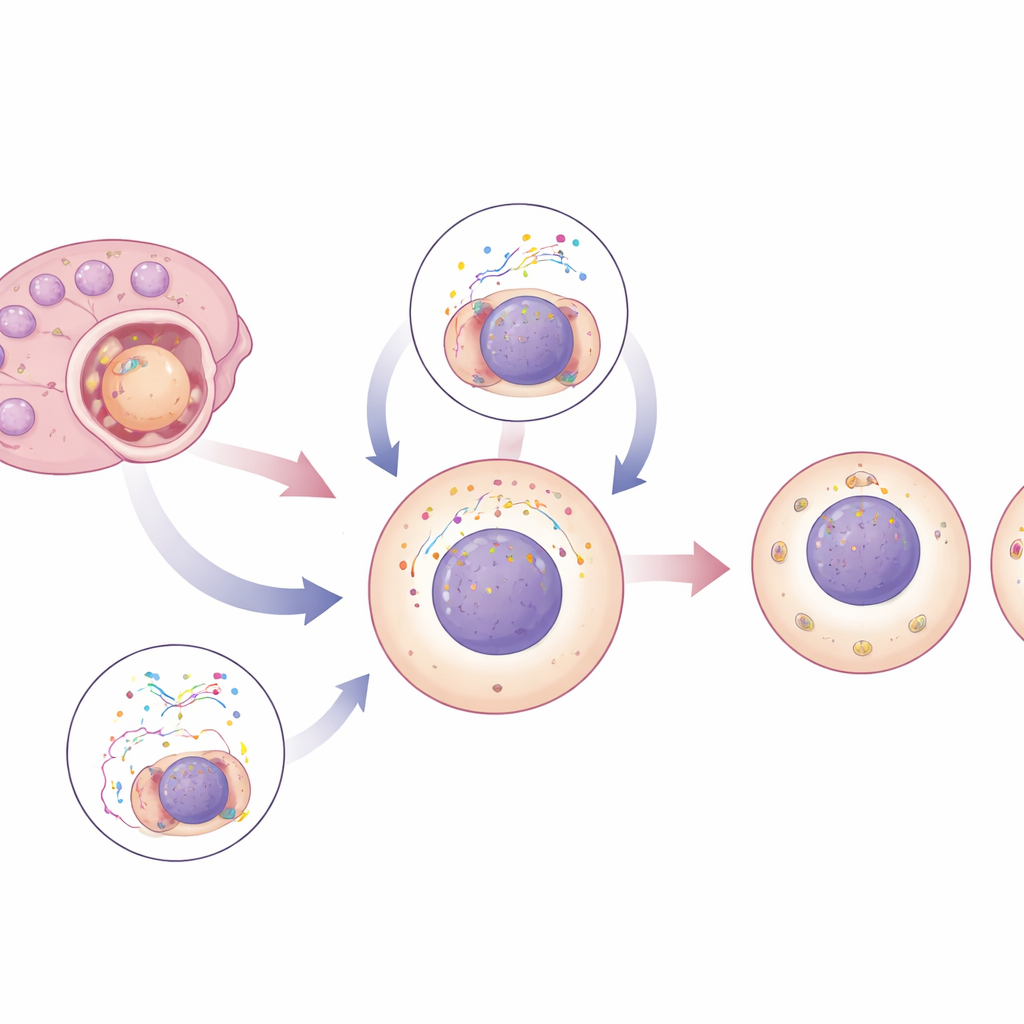
As an egg grows inside the ovary, it goes through a long preparation phase before it can be fertilized. During this time, it must produce and stockpile huge amounts of RNA, the working copies of genes that will later guide early embryo development. At the same time, the egg must get rid of faulty RNAs and silence potentially harmful “jumping gene” sequences. The authors show that DDX5, a protein that binds and unwinds RNA, sits at the center of this balancing act. When they removed DDX5 only from oocytes in mice, the females produced eggs that looked outwardly present at first, but these eggs could not complete their maturation, were prone to chromosome errors, and almost never developed into embryos after fertilization.
Keeping Genes On at the Right Time
One of DDX5’s key jobs is to help the egg make enough RNA in the first place. In healthy growing oocytes, the nucleus is highly active, reading DNA and producing fresh RNA transcripts. The researchers found that DDX5 physically associates with RNA polymerase II, the main enzyme that copies DNA into RNA. This partnership promotes a specific chemical mark on the enzyme that signals it to start transcription efficiently. In eggs lacking DDX5, this mark was reduced, overall RNA production dropped, and many genes that should have been turned on during growth were instead weakly expressed or fell silent too early. Surprisingly, even though the DNA in these mutant eggs became more open and seemingly easier to read, the expected boost in gene activity did not occur, underscoring that DDX5 is needed beyond simple DNA access to drive proper gene expression.
Guarding Against Rogue Genetic Elements
Beyond normal genes, the egg’s genome contains many repetitive elements known as retrotransposons, remnants of ancient viruses and mobile DNA. If transcribed unchecked, these RNAs can damage chromosomes and interfere with meiosis, the special division that halves the chromosome number in eggs. In normal oocytes, retrotransposon RNAs are heavily trimmed back as the egg grows. Using RNA-binding assays, the team showed that DDX5 directly attaches to many of these repeat RNAs and helps funnel them into cellular decay machinery for destruction. Without DDX5, retrotransposon RNAs piled up instead of being cleared, and neighboring genes near these elements were abnormally activated. This loss of RNA “housekeeping” likely contributes to the chromosomal chaos and meiotic arrest seen in the mutant eggs.
Storing Maternal Messages for the Future
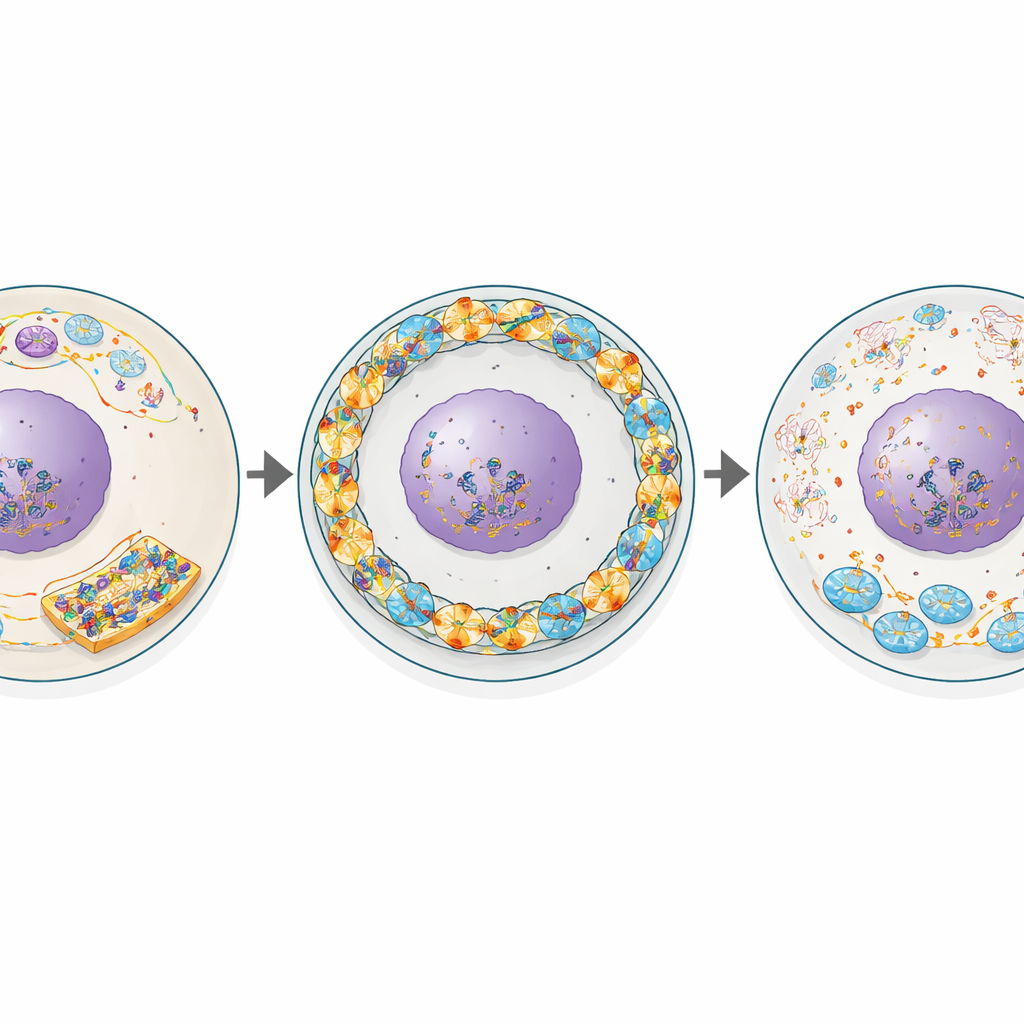
An egg’s job is not only to make RNAs, but also to store many of them in a protected, inactive state until after fertilization. In mammals, this storage occurs in a specialized, membraneless compartment that forms around clusters of mitochondria in the egg’s cytoplasm. The authors found that DDX5 is essential for building and maintaining this storage system. When DDX5 was absent, RNAs tended to get stuck in the nucleus instead of being exported to the cytoplasm, mitochondria failed to cluster properly around the nucleus, and the RNA–mitochondria storage domain was mispositioned and less efficient. As a result, previously stored RNAs were translated into protein too soon, speeding up the depletion of maternal messages the embryo would later rely on. The mutant eggs also showed higher levels of reactive oxygen species, reduced mitochondrial health, and increased signs of cell death.
From Molecular Caretaker to Fertility Clue
Taken together, the study paints DDX5 as a master coordinator of RNA life inside the oocyte: it boosts the production of needed RNAs, eliminates dangerous ones, and safeguards the rest for later use. When this single factor is removed in mice, egg development stalls at multiple checkpoints, chromosomes mis-segregate, and fertilization fails, leading to complete female sterility. Because many of the same processes operate in human oocytes, problems with DDX5 or its partners may underlie some unexplained cases of egg maturation arrest or poor embryo formation. In the future, examining DDX5 function or mutations in patients could offer new clues for diagnosing and perhaps eventually treating certain types of female infertility.
Citation: Wang, M., Wang, L., Cai, Q. et al. DDX5 orchestrates RNA homeostasis to ensure oocyte developmental competence. Nat Commun 17, 3798 (2026). https://doi.org/10.1038/s41467-026-70237-1
Keywords: oocyte development, female infertility, RNA regulation, RNA helicase DDX5, retrotransposons