Clear Sky Science · en
Distinct genomic trajectory among invasive Salmonella Typhimurium ST313 infections
Why this bloodstream infection story matters
Across many low‑income regions, especially in sub‑Saharan Africa, a dangerous form of Salmonella doesn’t just cause food poisoning – it invades the bloodstream, leading to severe disease and many deaths each year. This study asks a pressing question: how has one particular genetic type of this bacterium, called ST313, changed and spread around the world, and why are some branches becoming harder to treat? By tracing the microbe’s family tree in more than 3,000 genomes, the researchers reveal how antibiotic use, human travel, and subtle DNA changes are reshaping a major public‑health threat.
A closer look at a silent global burden
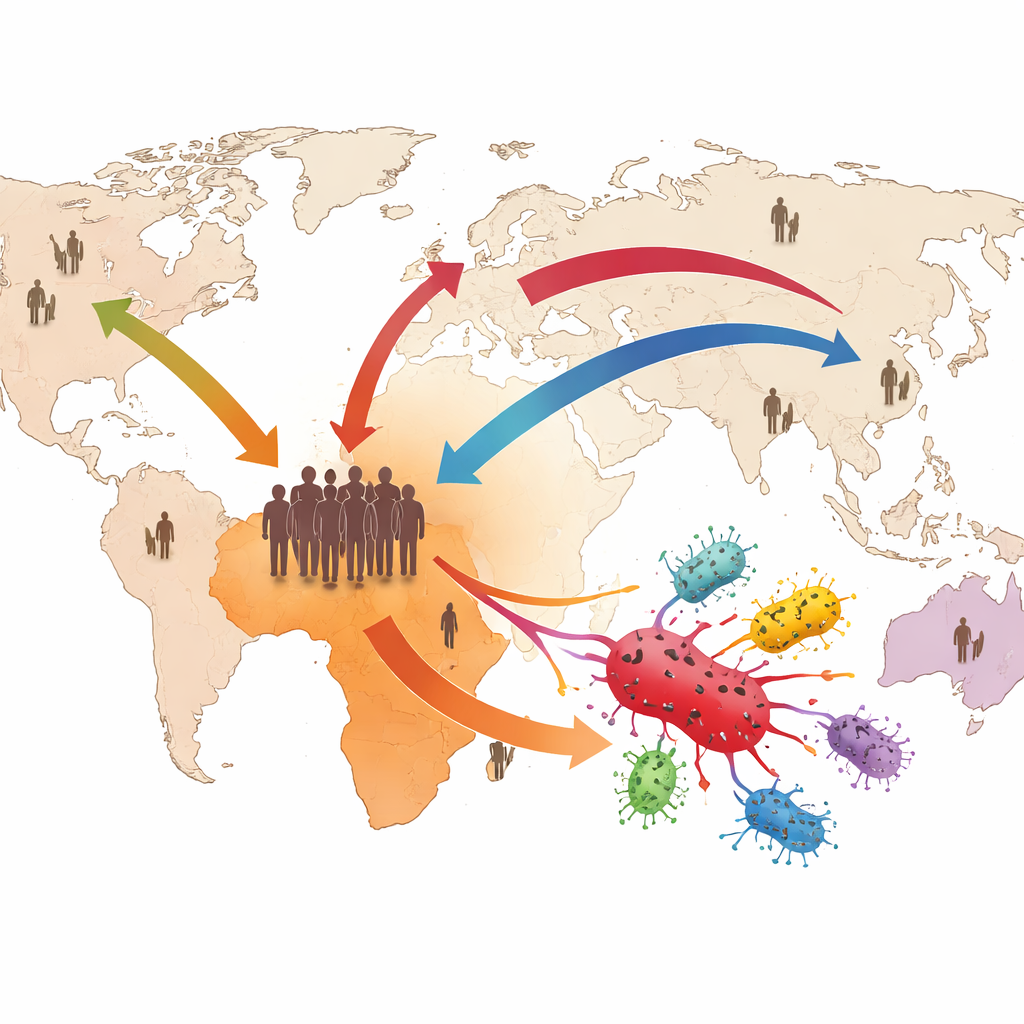
Invasive non‑typhoidal Salmonella infections occur when bacteria that usually cause gut illness manage to enter the blood or other normally sterile sites, such as the brain’s fluid. These infections are especially dangerous for young children, older adults, people living with HIV, and those who are malnourished. The researchers assembled the largest global dataset so far: over 11,000 such invasive infections, and within that, 3,115 genomes of the ST313 type of Salmonella Typhimurium collected between 1966 and 2023. Most ST313 samples came from blood, and most were from African patients, underscoring how strongly this pathogen is tied to severe bloodstream disease on that continent.
New branches on the Salmonella family tree
By comparing tiny DNA differences across all ST313 genomes, the team mapped how this bacterium is split into several major lineages and when they likely emerged. Two new variants stood out: a previously unrecognized major lineage (called L4) and a new sub‑branch within the dominant lineage 2 (named 2.4). L4 seems to have arisen centuries ago in Asia before moving into Africa, where it now maintains a sizeable population. In contrast, the 2.4 sublineage is a recent, rapidly expanding offshoot in East Africa, especially Kenya. The analysis also shows that different lineages have moved between continents multiple times, likely aided by modern human travel and trade, with most long‑distance spread happening from or to Africa.
Antibiotics as hidden evolutionary forces
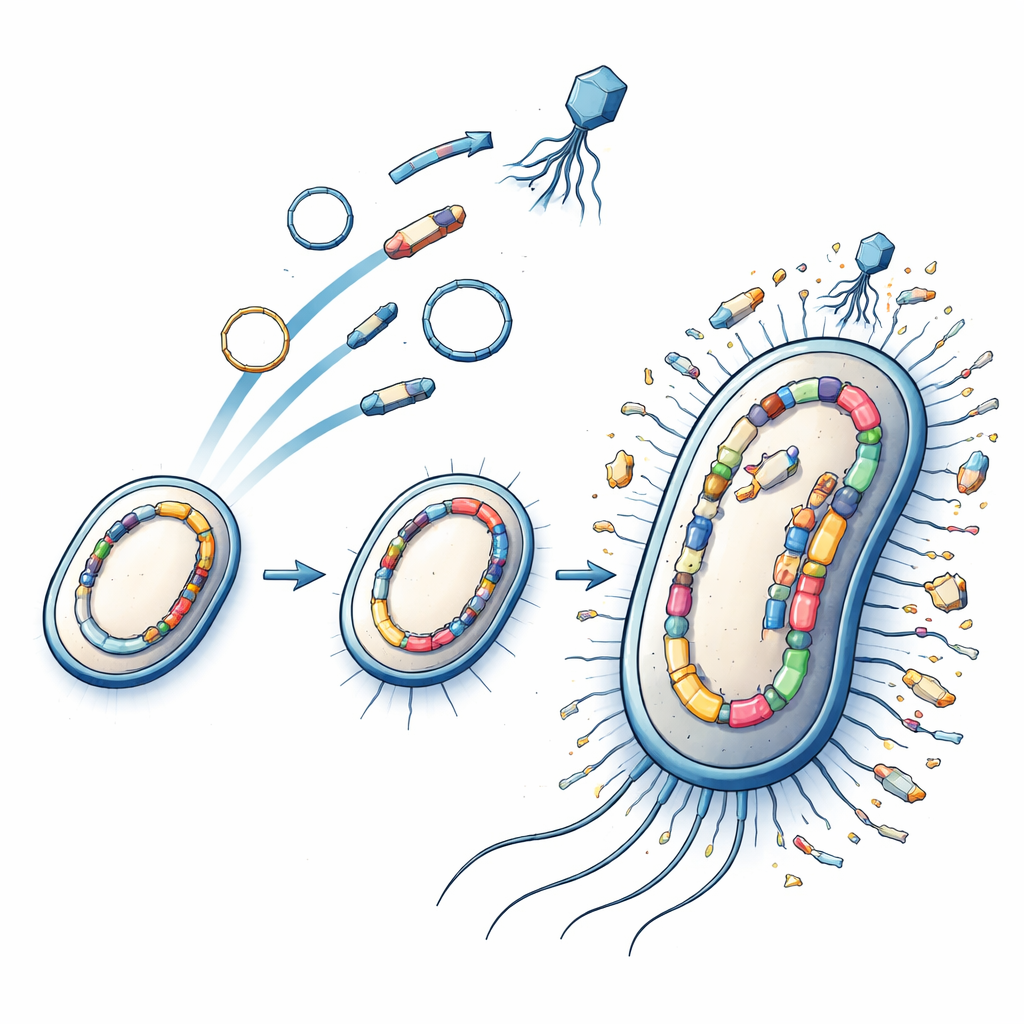
One of the strongest signals in the data is how antibiotic use has steered which lineages succeed or fade. Earlier work had shown that resistance to the drug chloramphenicol helped one lineage (L2) replace another (L1) around 2001. This study goes further by cataloging resistance genes and their mobile carriers – plasmids, transposons, and viruses that shuttle DNA between bacteria. The researchers find that L2, and especially its 2.4 sub‑branch, carries a heavy load of resistance genes, including those that break down modern drugs like extended‑spectrum cephalosporins and azithromycin. Meanwhile, the older L1 lineage gained resistance only later, then began losing key resistance elements after 2005 in Malawi, coinciding with changes in local treatment policies – and its population shrank soon afterward. This suggests that when certain antibiotics fall out of use, bacteria that pay a “cost” for carrying unnecessary resistance can lose ground.
Genome tinkering that boosts invasiveness
Drug resistance is only part of the story. The authors also tracked how other genetic changes may make ST313 more prone to leaving the gut and invading the bloodstream. They measured an “invasiveness index” based on which genes are intact, damaged, or missing, reflecting a broader pattern of genome degradation seen in host‑adapted pathogens. Some lineages, such as L3, show particularly high scores, while L4 and L5 appear to pair moderate resistance with rising invasiveness. A pan‑genome analysis – essentially a census of all genes found across the strains – revealed hundreds of accessory genes whose presence tracks with the success of specific lineages. Many of these genes belong to DNA repair and mobile‑element pathways, hinting that the same mechanisms that move resistance genes around may also fine‑tune the bacterium’s ability to survive in the human body.
What this means for future surveillance and care
Taken together, the findings paint ST313 as a pathogen whose fate is tightly bound to human behavior: which antibiotics are used, how people move across borders, and how well health systems track infections. A highly resistant, rapidly growing sublineage (2.4) and a long‑standing but now expanding lineage (L4) have both acquired genetic toolkits that may favor bloodstream invasion and treatment failure. For non‑specialists, the key message is that antibiotic policies and global surveillance do not just respond to bacterial evolution – they help shape it. Monitoring these lineages, especially in Africa but also in countries that receive travelers and food imports, will be essential for choosing effective drugs, designing future vaccines, and reducing deaths from invasive Salmonella disease.
Citation: Jia, C., Zhou, H., Cao, Q. et al. Distinct genomic trajectory among invasive Salmonella Typhimurium ST313 infections. Nat Commun 17, 3693 (2026). https://doi.org/10.1038/s41467-026-70196-7
Keywords: invasive Salmonella, antimicrobial resistance, genomic epidemiology, bacterial evolution, global health surveillance