Clear Sky Science · en
Generation of multitissue cell-cultivated meat via multidirectional differentiation of stable porcine epiblast stem cells
Why Growing Meat Without Animals Matters
For anyone who cares about the future of food, the idea of growing real meat without raising and slaughtering animals is deeply appealing. But so far, most lab-grown meat has struggled to match the complex texture, juiciness, and nutrition of a real pork chop. This study describes a way to grow miniature, meat-like pieces that contain muscle, fat, and tiny vessel-like structures from a single, well-behaved pig stem cell line, aiming to bring cultivated meat closer to the look, feel, and nutritional profile of traditional pork.
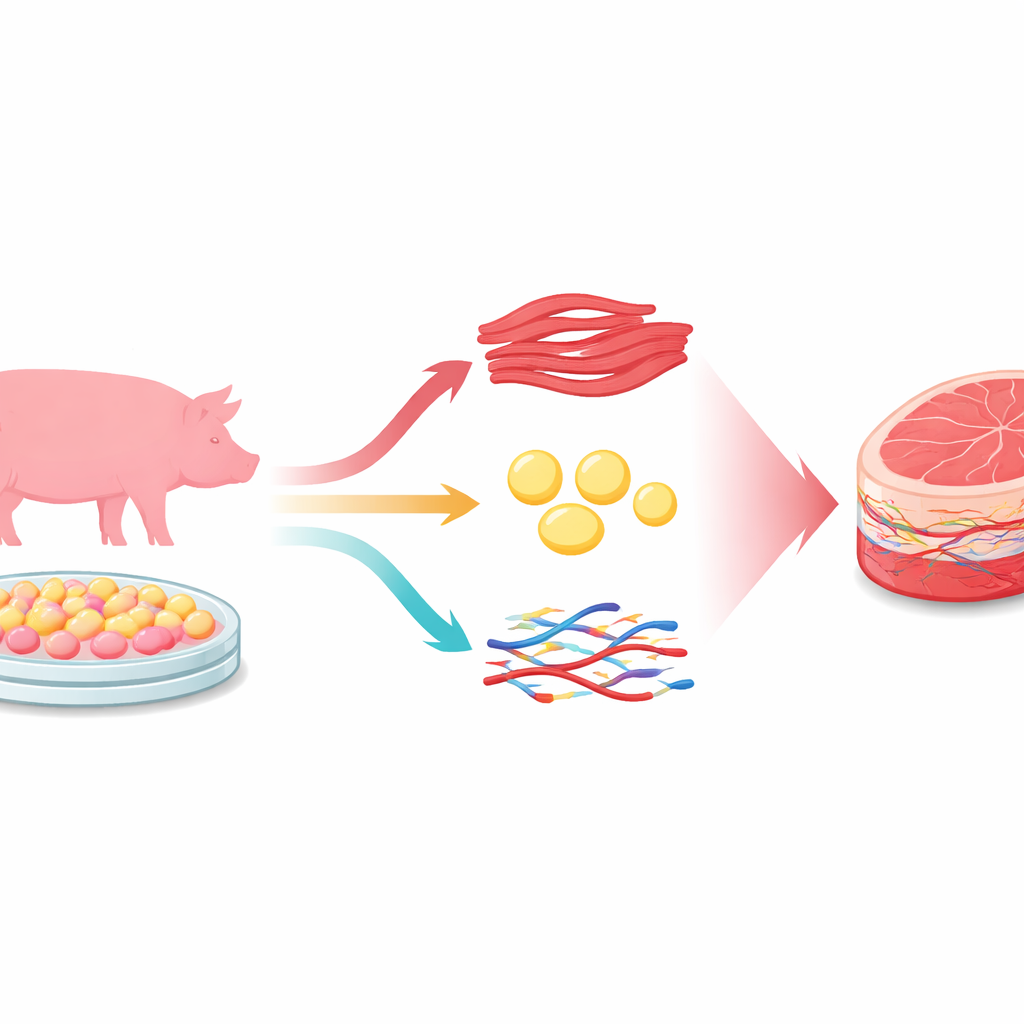
Building Meat From a Single Starting Cell
The researchers began with a special type of pig stem cell taken from an early-stage embryo, called a pregastrulation epiblast stem cell. These cells can renew themselves for long periods and can be guided to become many different tissues. Crucially, the team designed recipes of growth factors and small molecules that contain no animal serum, making the process more controllable and potentially safer for food use. With carefully timed changes in these recipes, the same stem cell line was pushed to form three essential meat components: muscle-forming cells, fat-forming cells, and vascular cells that resemble the lining of blood vessels and their supporting partners.
Crafting Fat and Vessel Tissues Without Animal Serum
To create fat, the scientists first nudged the stem cells toward a flexible, connective-tissue-like state, and then induced them to store oil droplets and take on the appearance and behavior of mature fat cells. These lab-made fat cells showed stable chromosomes and active genes involved in fat storage and metabolism, and they performed better than fat cells grown from adult pig tissue, which tend to weaken over time. In parallel, the team developed a stepwise recipe to shape the same stem cells into mixtures of vessel-lining cells and supporting pericytes. These vascular cells formed tube-like networks in a gel and took up fat particles in ways typical of healthy blood vessel cells, again without using animal-derived serum.
Letting Cells Self-Assemble Into 3D Meat-Like Pieces
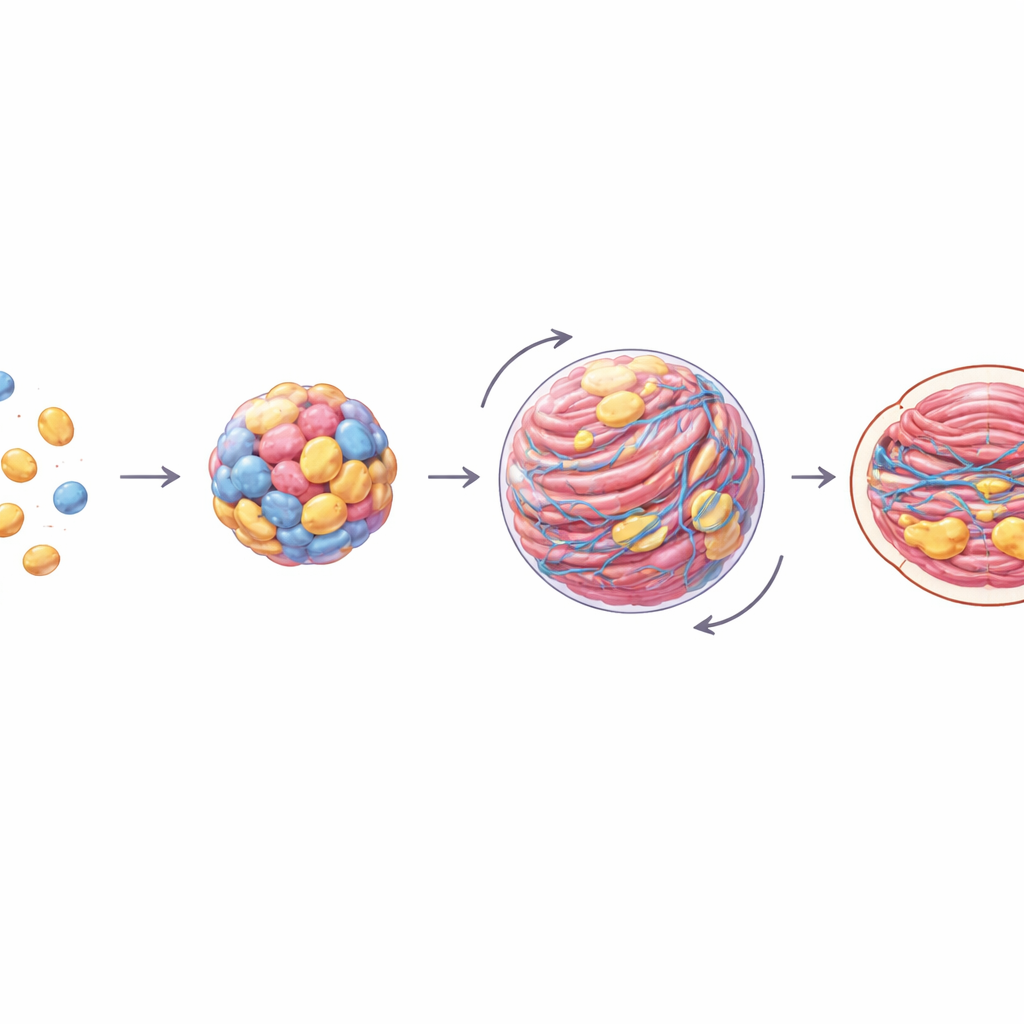
Having reliable sources of muscle, fat, and vascular progenitors, the researchers then focused on structure. Instead of relying on expensive, non-edible scaffolds, they grew these cells in a gentle, constantly moving liquid culture that prevents sticking to the dish. Under these conditions, muscle and fat progenitors spontaneously clumped into tiny spheroids. Over time, these spheroids developed fibrous interiors resembling muscle tissue or became densely packed with fat droplets. When mixed together—first muscle plus fat, and then muscle, fat, and vascular progenitors in equal proportions—the cells recognized one another and self-organized into more complex, multitissue spheroids about one millimeter across, with distinct regions of muscle fibers, fat stores, and vessel-like structures held together by their own extracellular matrix.
Taste, Nutrition, and Texture Compared With Real Pork
The team then asked how these miniature meat pieces stack up against real pork. Chemical analyses showed that the building blocks of protein (amino acids) in the cultivated meat were present in similar proportions to those in native pork, though the overall amount was lower. In contrast, the total fat content was higher, with a notably greater share of polyunsaturated fatty acids—often considered better for heart health—leading to a roughly twofold higher ratio of polyunsaturated to saturated fats. When the spheroids were processed into sausages and cooked, their texture—measured as hardness, chewiness, and resilience—was comparable to conventional pork sausages and superior to sausages made directly from undifferentiated stem cells. The cultivated sausages also displayed distinct aroma compounds, suggesting room to fine-tune flavor in future work.
What This Means for the Future of Cultivated Meat
In essence, this study shows that a single, stable pig stem cell line can be guided—without animal serum—into multiple meat-relevant tissues, expanded at scale in a simple 3D suspension system, and assembled into small pieces that mimic both the structure and many nutritional aspects of real pork. While the pieces are still tiny and not yet full-sized cuts, the approach points toward a future in which producers could dial in the ratios of muscle, fat, and vascular tissue to design meats with tailored texture and healthier fat profiles, all while reducing reliance on live animals and making large-scale cultivated meat production more realistic.
Citation: Yao, Y., Zhu, G., Zhi, M. et al. Generation of multitissue cell-cultivated meat via multidirectional differentiation of stable porcine epiblast stem cells. Nat Commun 17, 3347 (2026). https://doi.org/10.1038/s41467-026-70177-w
Keywords: cultivated meat, stem cell meat, lab-grown pork, 3D cell culture, food biotechnology