Clear Sky Science · en
Gut microbiome composition and strain-sharing in multiplex autism spectrum disorder families
Why families and gut microbes matter in autism
Autism spectrum disorder (ASD) is best known for its effects on social interaction and behavior, but many autistic children also live with stomach troubles. Over the past decade, scientists have discovered that the trillions of microbes living in our intestines—the gut microbiome—may be linked to brain health. This study asks a new question with real-world implications for families: does the structure of an autism-affected family, such as having one or several autistic children, shape the gut microbes that siblings share at home?
Different kinds of families, different gut communities
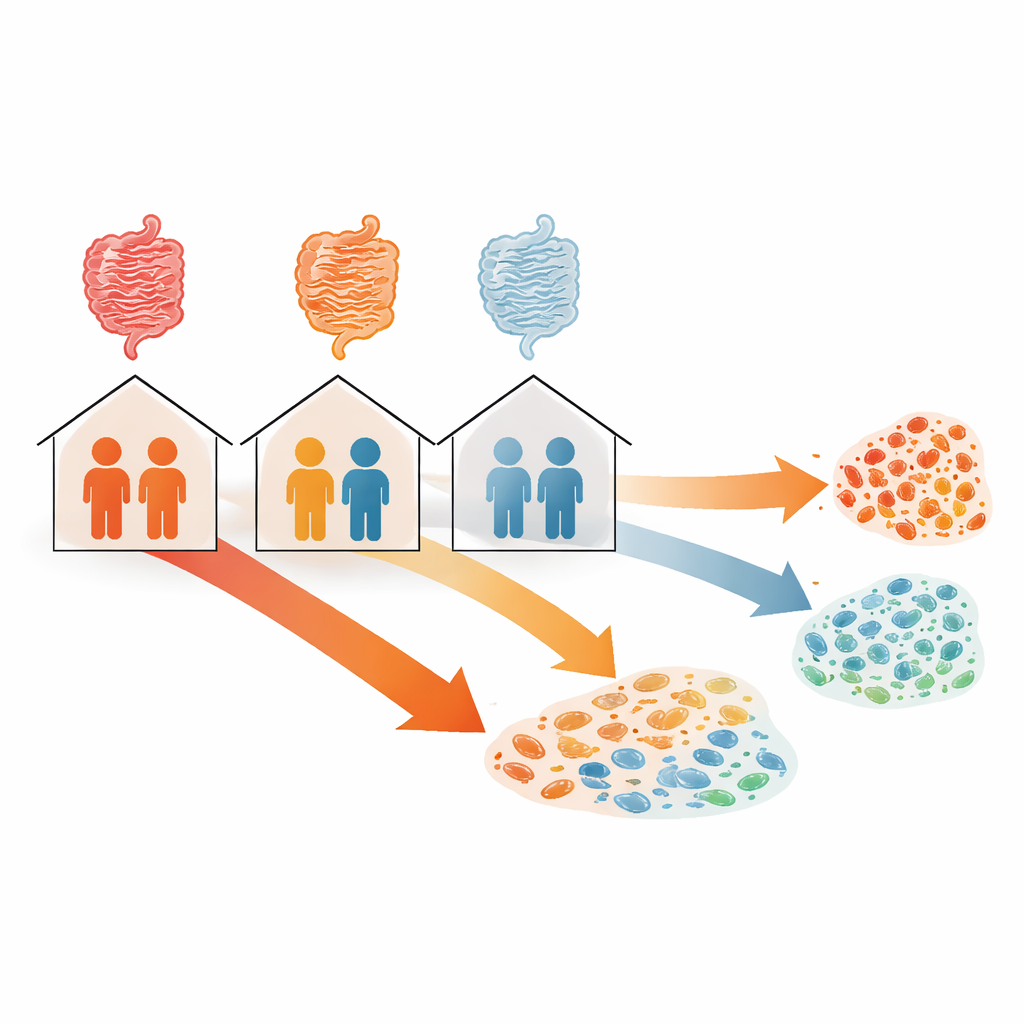
The researchers studied stool samples from 429 children in Hong Kong, grouped into several family types. Some families had two or more autistic children (“multiplex” families), some had only one autistic child plus at least one typically developing brother (“simplex” families), some had only typically developing children, and others were single-child ASD families. Using DNA sequencing, the team cataloged hundreds of bacterial species in each child’s gut and compared groups while accounting for age, sex, diet, and attention-deficit/hyperactivity disorder. They found that children from multiplex autism families had the most distinctive gut microbiomes when compared with unrelated, typically developing children. Simplex ASD children, in contrast, had gut communities that looked more similar to typically developing peers.
Helpful and harmful microbes in the balance
At a closer look, the researchers identified specific microbial species that differed between groups. In multiplex ASD children, a collection of bacteria previously linked to inflammation or disease—sometimes called opportunistic pathogens—were more common. These included species such as Coprobacillus cateniformis and Alistipes finegoldii. Meanwhile, certain microbes thought to support gut health, including Faecalibacterium prausnitzii, Bacteroides xylanisolvens, and Agathobaculum butyriciproducens, were more abundant in typically developing children. These “beneficial” bacteria tend to produce substances that help maintain the gut lining and may calm immune responses. The combination of more potentially harmful microbes and fewer protective ones in multiplex ASD children suggests a deeper imbalance, or dysbiosis, in their gut ecosystems.
Living together shapes shared microbes
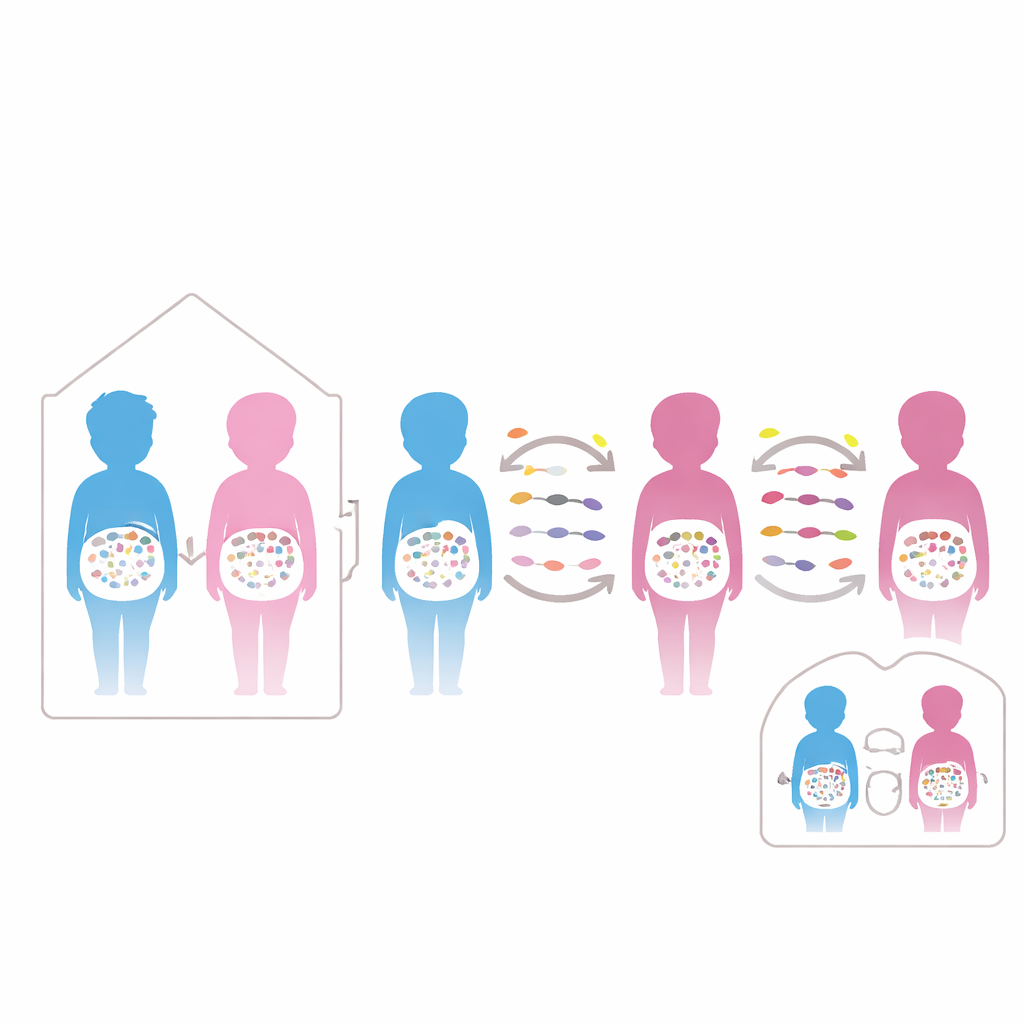
Because most gut microbes are acquired from other people and the environment rather than inherited directly like genes, the team examined how cohabiting siblings resemble each other. They measured how similar each pair’s gut communities were and how often they carried the very same microbial strains—nearly identical genetic copies of a bacterium. Siblings who lived together, regardless of diagnosis, shared more similar microbiomes than unrelated children. But this effect was strongest in autism families: both multiplex and simplex ASD siblings had more alike gut communities than typically developing siblings. At the fine-grained strain level, multiplex ASD siblings shared the highest fraction of strains, simplex siblings were intermediate, and typically developing siblings the lowest. Network analysis of these sharing patterns showed that multiplex families formed tight clusters where many strains circulated among children.
Which strains are shared most—and what that could mean
Not all microbes were shared equally. In multiplex ASD families, siblings more often shared strains of bacteria with reported opportunistic or context-dependent pathogenic potential, such as Eubacterium rectale, Dorea formicigenerans, and Acidaminococcus intestini. In contrast, they shared less of the commensal species Bacteroides xylanisolvens, which was more common in typically developing families. Some bacteria considered beneficial, including Faecalibacterium prausnitzii and Bifidobacterium pseudocatenulatum, were also shared more frequently within ASD families, hinting that the same household conditions that favor potentially harmful strains may also help friendly strains spread. Importantly, several bacteria enriched in multiplex ASD children were positively linked to higher scores on clinical measures of social difficulties, anxiety, and behavior problems, whereas the beneficial species tended to correlate with milder symptom scores.
What this means for families and future treatments
This work does not prove that gut microbes cause autism, nor does it show in which direction the influence flows between behavior, environment, and microbiome. However, it clearly indicates that family type and shared living conditions leave a strong imprint on the gut microbes of autistic children and their siblings, especially in families with more than one affected child. The findings raise the possibility that certain microbial strains—both harmful and helpful—circulate more easily within these households and may be linked to symptom severity. In the long run, carefully designed studies could test whether nurturing beneficial bacteria or limiting problematic ones might become part of a broader strategy to support autistic children’s health, alongside behavioral, educational, and medical care.
Citation: Lu, W., Wong, O.W.H., Zhu, J. et al. Gut microbiome composition and strain-sharing in multiplex autism spectrum disorder families. Nat Commun 17, 3255 (2026). https://doi.org/10.1038/s41467-026-70142-7
Keywords: autism spectrum disorder, gut microbiome, family environment, microbial strain sharing, child health