Clear Sky Science · en
Clusters of vascular aging manifestations predict incident cardiovascular events in the community
Why the Health of Our Arteries Matters
Most of us know that age, blood pressure, and cholesterol affect our chances of heart attack or stroke. But the aging of our blood vessels themselves is less visible—and may tell us who is at risk long before symptoms appear. This study looked at patterns in how neck arteries age in thousands of adults and asked a simple question with big implications: do different “styles” of artery aging translate into different chances of heart disease, stroke, and early death?
Three Ways Arteries Grow Old
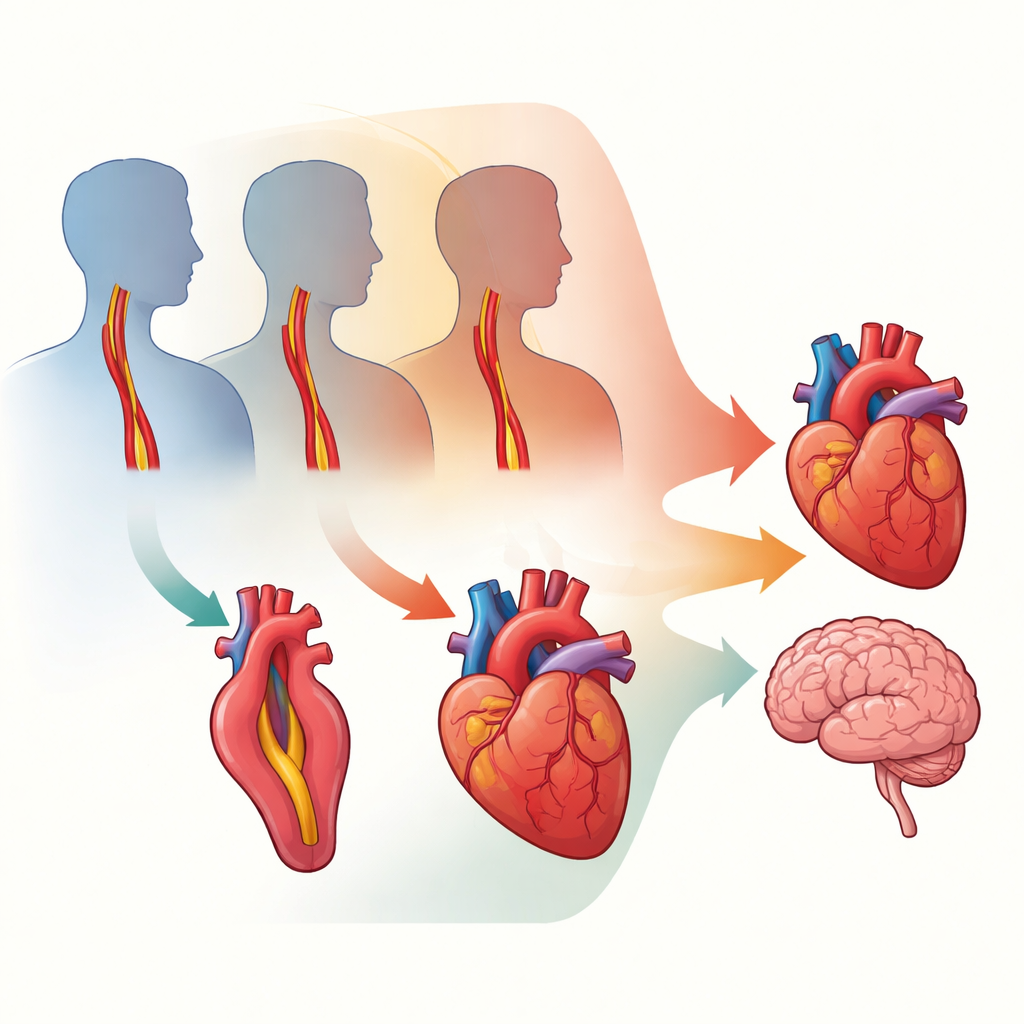
The researchers focused on the carotid arteries, large blood vessels on each side of the neck that carry blood to the brain and are easy to examine with ultrasound. Instead of looking at just one measure, they recorded a whole range of features: how thick the artery wall was, how stretchy or stiff the vessel behaved with each heartbeat, whether there were visible fatty buildups (plaques), and how wide the vessel had become. Using a statistical technique to group people with similar artery profiles, they found three clear clusters. One group had slim, flexible arteries with little or no plaque—described as healthy vascular aging. A second group showed marked stiffening of the artery wall without a lot of visible plaque, a pattern called arteriosclerosis. The third group had thicker walls, larger diameters, and many more plaques, reflecting atherosclerosis, the classic “clogged arteries” picture.
Who Fell Into Each Artery Pattern
The main analysis followed 8360 middle-aged and older adults from Paris who had no history of heart disease or stroke at the start and were tracked for nearly nine years. People with healthy vascular aging tended to be younger, more often women, leaner, and less likely to have diabetes or high blood pressure. Those in the stiff-artery cluster and the plaque-heavy cluster were older, had higher body weight and blood pressure, and more often had diabetes. Traditional risk scores that combine age, blood pressure, cholesterol, and smoking increased steadily from the healthy cluster to the plaque-heavy cluster, showing that these artery patterns lined up with known risk factors—but did not simply duplicate them.
Different Patterns, Different Future Risks
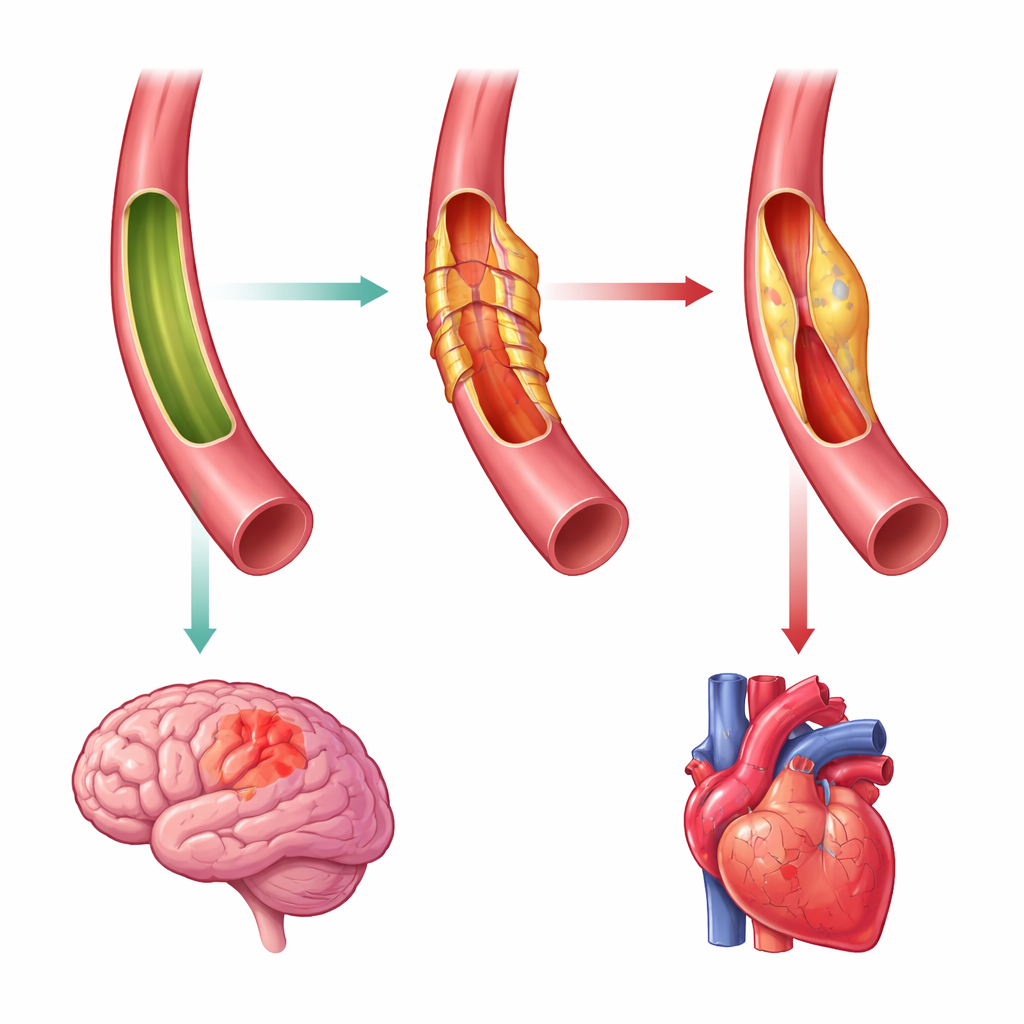
Over the follow-up period, the team recorded new strokes, heart attacks and related heart problems, and deaths from any cause. After accounting for age, sex, smoking, cholesterol, diabetes, and medications, they found that artery patterns strongly predicted future events. Compared with the healthy group, people in the stiff-artery cluster had a distinctly higher risk of stroke, while those in the plaque-heavy cluster had a higher risk of coronary heart disease. Both unhealthy clusters shared increased risk when heart and brain events were combined and also showed higher overall mortality. Crucially, these patterns held up when tested in an independent population study from Rotterdam, where participants were older and had more health problems, suggesting the findings are robust and not limited to a single city or time period.
Improving How We Judge Risk
The authors also asked whether knowing a person’s artery-aging cluster adds anything beyond standard risk calculators, especially in people whose risk is in the “moderate” range where treatment decisions are uncertain. In this group, adding cluster information improved the ability to distinguish who would go on to have a stroke, increasing a standard discrimination measure by up to about 8%. The benefit was most pronounced for stroke prediction, where traditional tools have often struggled. This suggests that combining information on both artery stiffness and plaque may better capture vulnerability of the brain’s blood supply than plaque measures alone.
What This Means for Patients and Doctors
For a layperson, the key message is that arteries do not all age in the same way, and those invisible changes matter. Some people keep relatively youthful, flexible vessels, while others develop stiff walls or plaque-filled channels, and each pattern carries its own flavor of risk for heart attack, stroke, and early death. Using a noninvasive neck ultrasound to characterize these patterns could help doctors pinpoint which patients—especially those in the gray zone of moderate risk—might benefit from closer monitoring or more intensive treatment of blood pressure, cholesterol, and other factors. While more research is needed before such clustering is used routinely, this work opens the door to more tailored prevention strategies that look not just at risk factors on paper, but at how our arteries themselves are aging.
Citation: van Sloten, T., Boutouyrie, P., Abouqateb, M. et al. Clusters of vascular aging manifestations predict incident cardiovascular events in the community. Nat Commun 17, 3508 (2026). https://doi.org/10.1038/s41467-026-70137-4
Keywords: vascular aging, carotid ultrasound, arterial stiffness, atherosclerosis, stroke risk