Clear Sky Science · en
Amphotericin B promotes respiratory viral entry by enhancing late endosomal maturation and fusion via glucocerebrosidase-mediated ceramide remodeling
When a Helpful Drug Opens the Door to Viruses
Doctors rely on strong antifungal drugs to save patients with dangerous lung infections caused by molds. One of the most trusted medicines for this, amphotericin B, has been used for decades. This study reveals a surprising and concerning twist: while amphotericin B fights fungi, it can at the same time make it easier for serious respiratory viruses like influenza and SARS-CoV-2 to invade lung cells. Understanding how and why this happens matters for anyone treating or facing severe lung infections, especially in the era of overlapping flu and COVID-19 waves.
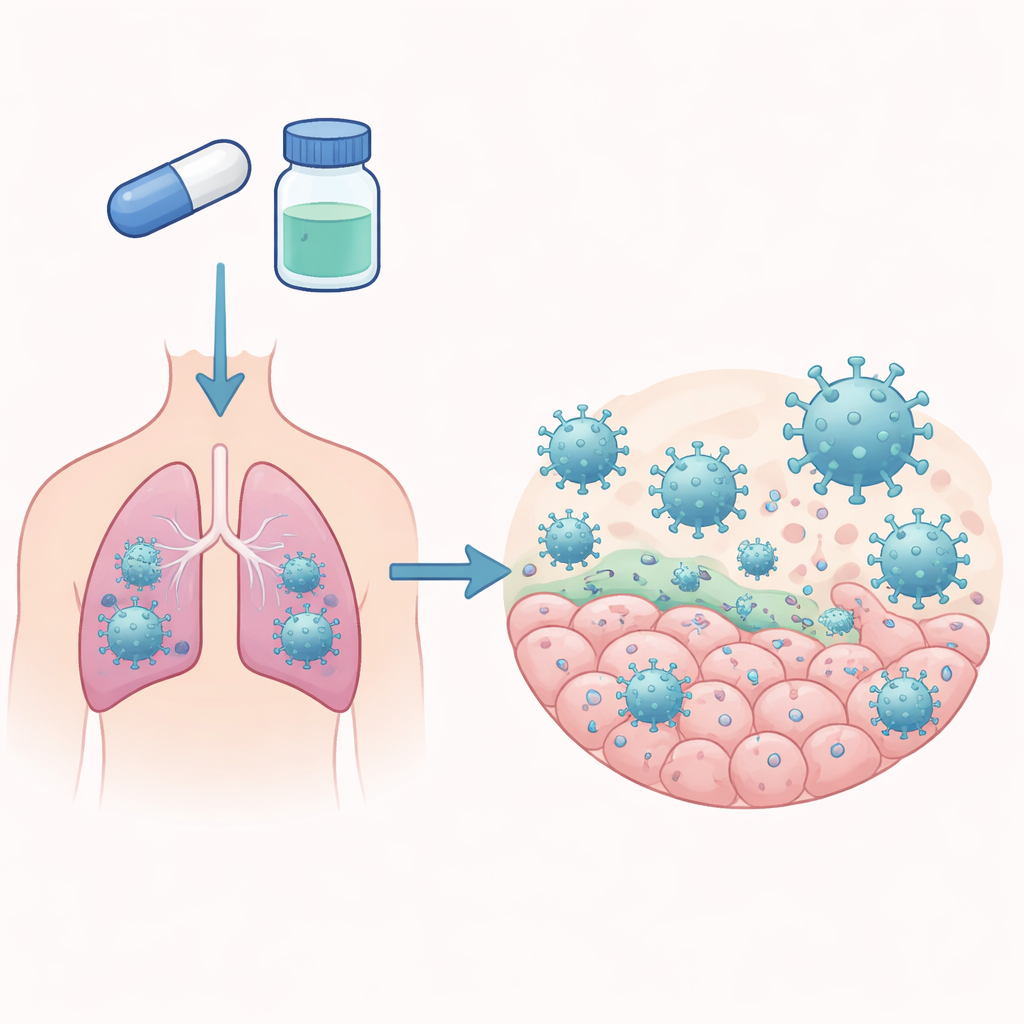
A Double Threat in Sick Lungs
Severe viral lung infections such as influenza and COVID-19 already kill hundreds of thousands of people worldwide each year. On top of that, many critically ill patients develop secondary fungal infections in their lungs, which sharply raises the risk of death. Amphotericin B is a cornerstone treatment, particularly when first-line drugs fail or the fungus is resistant. However, clinicians have noticed that some patients with established fungal disease who later catch respiratory viruses do especially poorly. This prompted the authors to ask whether amphotericin B itself might be changing the way viruses gain access to cells.
Animal Studies Show Worse Viral Disease with Treatment
The researchers first turned to animal models of influenza and COVID-19. Mice infected with influenza A virus and hamsters infected with SARS-CoV-2 were given amphotericin B at doses similar to those used in humans. Compared with infected animals that did not receive the drug, treated animals lost weight faster, carried higher amounts of virus in their lungs, and showed more extensive lung damage under the microscope. Although kidney and other organ tests suggested some drug stress, the key finding was clear: in the presence of amphotericin B, viral disease became more severe, not less.
Hospital Data Link the Drug to Later Viral Infections
To see whether this laboratory signal was reflected in real patients, the authors analyzed records from more than a thousand adults hospitalized with culture-proven pulmonary aspergillosis over nearly a decade. After carefully matching patients on age, illness severity, other diseases, and treatments, they compared those who received systemic amphotericin B with those given other antifungal drugs. People treated with amphotericin B were about three times more likely to develop a laboratory-confirmed respiratory viral infection after starting antifungal therapy. Other antifungals did not show this pattern, suggesting that amphotericin B has a distinct, unintended influence on viral risk.

How the Drug Primes Cells for Viral Entry
Digging deeper, the team studied how viruses enter human lung and other cell types in the presence of amphotericin B. They found that the drug did not help viruses stick to the cell surface or get swallowed into the cell. Instead, it sped up a later step: the escape of the virus from internal compartments called late endosomes, which normally act as waystations between the cell surface and its recycling and waste machinery. Using fluorescent labeling methods, the researchers showed that amphotericin B made the viral envelope fuse more readily with the membrane of these late endosomes, allowing the viral genetic material to reach the nucleus earlier and kick off replication more efficiently.
A Hidden Lipid Switch Inside Cellular Compartments
The key to this effect lies in fats within the endosomal membrane. The authors used chemical fishing tools to identify proteins in late endosomes that physically bind amphotericin B. They uncovered glucocerebrosidase, an enzyme that transforms one type of fat into another called ceramide. Amphotericin B directly activated this enzyme, causing ceramide levels to rise inside late endosomes. Ceramide has a shape that favors bending and destabilizing membranes, making them more prone to fuse. When the team blocked or removed glucocerebrosidase, amphotericin B could no longer boost viral entry. The drug also increased levels of RAB7, a protein that helps late endosomes mature and fuse with other compartments, further priming them as launch pads for viruses that rely on this route.
What This Means for Patients and Future Medicines
Taken together, the work paints a coherent picture: in patients with severe fungal lung infections, amphotericin B not only attacks fungi but also reshapes the internal membranes of lung cells in a way that favors the entry and spread of certain respiratory viruses. For clinicians, this raises the possibility that, when alternatives exist, avoiding or carefully timing amphotericin B could reduce the risk of dangerous viral co-infections. For drug developers, glucocerebrosidase and the ceramide pathway emerge as promising levers to either design safer antifungals or create new antiviral strategies that work by making cellular gateways less friendly to invading viruses.
Citation: He, D., Zuo, W., Xiang, Z. et al. Amphotericin B promotes respiratory viral entry by enhancing late endosomal maturation and fusion via glucocerebrosidase-mediated ceramide remodeling. Nat Commun 17, 3670 (2026). https://doi.org/10.1038/s41467-026-70095-x
Keywords: amphotericin B, respiratory viruses, endosomes, ceramide, antifungal therapy