Clear Sky Science · en
Supramolecular coiled-coil peptide platform for site-specific antibody drug conjugate engineering
Building Smarter Cancer-Fighting Antibodies
Antibody-drug conjugates are some of the most powerful new tools in cancer treatment, acting like guided missiles that deliver toxic drugs directly to tumor cells. But today’s versions are often chemically messy, with drugs attached in random places on the antibody, which can limit how well they work and how safe they are. This study introduces a streamlined way to snap drugs and other useful cargo onto antibodies at precise positions, using tiny self-assembling peptide “zippers,” with the goal of making these medicines more effective and easier to customize.
A Molecular Zipper for Precision Attachment
Traditional methods for modifying antibodies rely on common chemical handles found all over the protein surface, so the resulting products contain a jumble of different attachment sites and drug loads. The team behind this work instead borrows a design from nature: coiled-coil peptide pairs, short protein segments that prefer to twist around each other like two strands of rope. They engineered antibodies so that two identical “receiving” peptide strands are added to the tail end (the Fc region) of each antibody, far away from the antigen-binding tips. Matching “docking” peptide strands are made separately and linked to a desired payload. When mixed in water, receiving and docking peptides recognize each other and zip together into a stable coiled-coil, positioning exactly two payloads per antibody in a controlled, plug-and-play fashion. 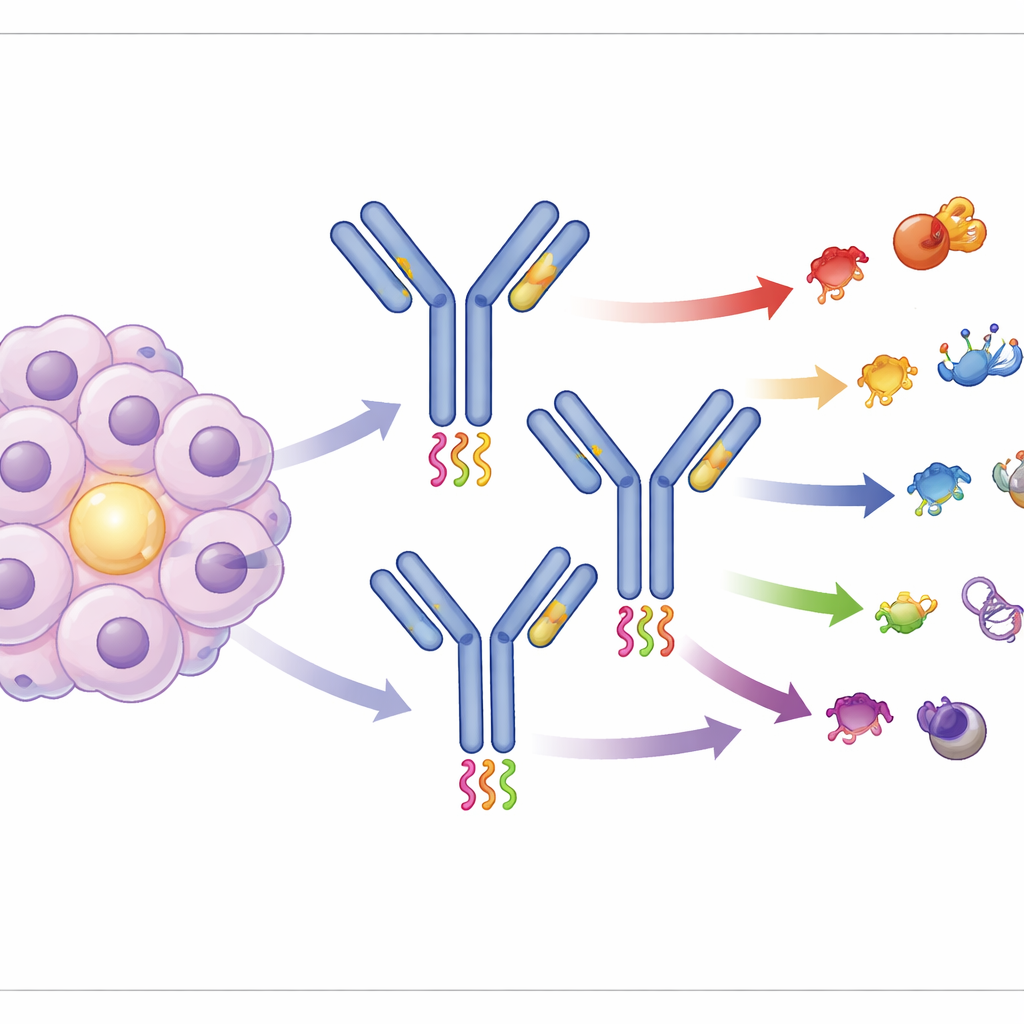
Keeping the Antibody Working as Intended
Altering a complex protein such as a therapeutic antibody always risks disrupting its shape or vital functions, so the researchers rigorously checked that their modifications did no harm. They compared the engineered antibodies to unmodified trastuzumab, a well-known antibody that targets the ErbB2/HER2 marker on certain tumors. Tests of protein folding, size, and binding showed that adding the coiled-coil peptide did not disturb the antibody’s overall structure or its ability to recognize the HER2 target. It also still interacted appropriately with the body’s recycling receptor (FcRn), which helps antibodies persist in the bloodstream. Measurements of how tightly the peptide pairs associated revealed very strong, specific pairing with almost no cross-talk between mismatched partners.
A Versatile Plug-and-Play Platform
Once the basic “receiving” antibody was validated, the researchers demonstrated how flexible the system could be. Using a simple click-style reaction, they attached an array of cargos to the docking peptide: fluorescent dyes for imaging, chemotherapy drugs (including the potent agent monomethyl auristatin E), DNA strands, polymers like PEG, lipids, biotin tags, and even an enzyme. Mixing these payload–peptide constructs with the modified antibodies led to rapid self-assembly into well-defined conjugates. Functional tests confirmed that each cargo remained active: fluorescent antibodies selectively lit up HER2-positive cells, DNA-bearing antibodies could hybridize with complementary strands, enzyme-bearing antibodies still catalyzed reactions, and drug-bearing antibodies selectively killed cancer cells in proportion to HER2 levels.
Stronger Links and Double Loading
Because earlier coiled-coil designs sometimes fell apart in the body, the team systematically strengthened their molecular zippers. By lengthening the peptide pair and introducing a disulfide bond between the two strands, they produced coiled-coils that remained mostly intact for at least four weeks in human plasma, outperforming a standard covalent linkage used in current antibody-drug conjugates. They also showed that two different receiving peptides could be chained in series on the same antibody tail, allowing precise loading of two distinct payloads at fixed ratios. This opens the door to combination therapies in which a single antibody could co-deliver, for example, two drugs or a drug plus an imaging agent in a controlled, site-specific manner. 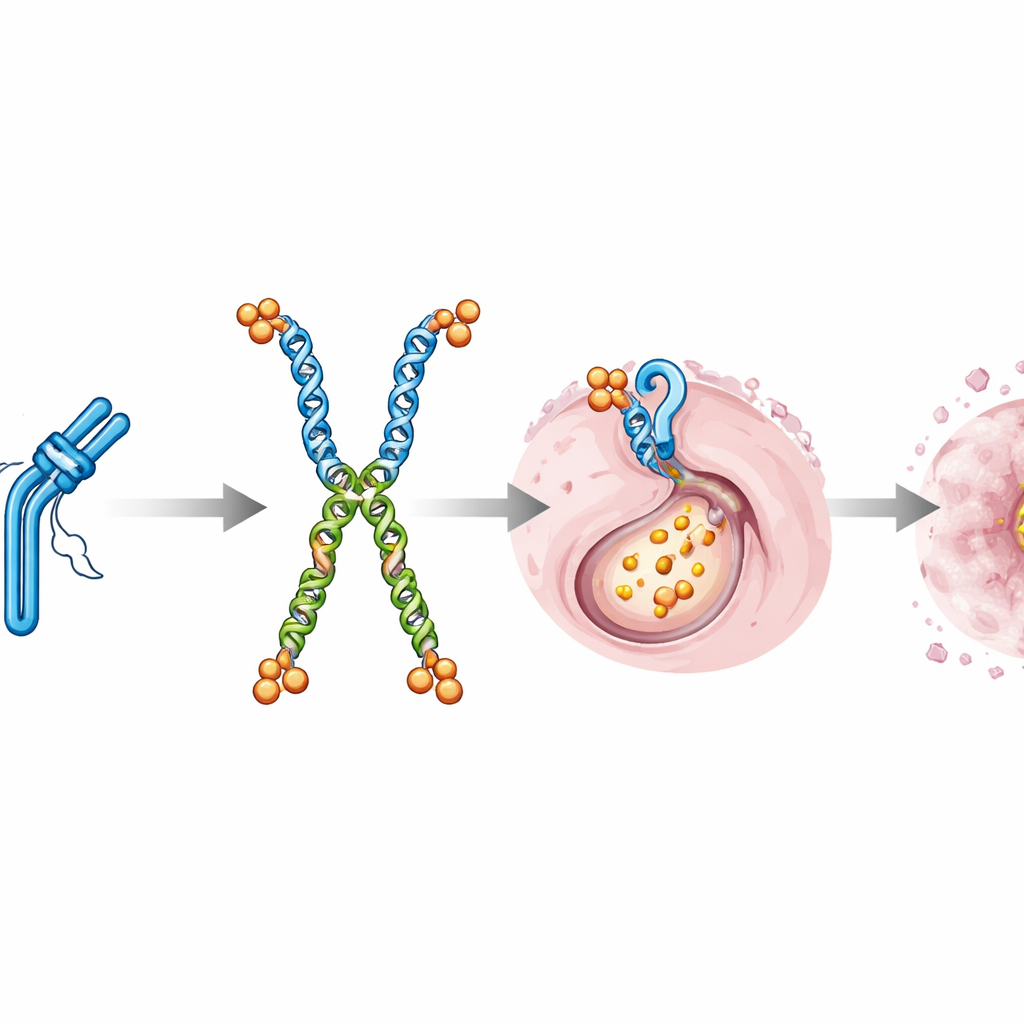
Turning Design into Tumor Control
To test whether this elegant chemistry translates into real therapeutic benefit, the researchers built an antibody-drug conjugate carrying two MMAE molecules per antibody and targeted it to HER2-positive ovarian tumors in mice. The new conjugate circulated in the body with a half-life similar to the original antibody and accumulated in tumors while also showing expected uptake in organs that clear antibodies. In an ovarian cancer model, a single dose significantly shrank tumors and, at higher dosing, performed on par with two leading HER2-targeted conjugates that are already in late-stage clinical development, despite carrying a lower drug load per antibody. Importantly, these effects depended on HER2 expression: tumors with low HER2 levels did not respond, underscoring the specificity of the approach.
What This Could Mean for Future Medicines
Overall, this work presents a modular, self-assembling way to decorate antibodies with exactly defined numbers and types of cargos without harsh chemistry or loss of function. By treating the antibody as a reusable scaffold and the peptide–payload units as interchangeable parts, the method could speed the creation of tailored therapies and diagnostic tools, from next-generation cancer drugs to multifunctional imaging agents. While questions remain about long-term safety and immune responses to the added peptides, the strong tumor control and stability seen in mice suggest that these coiled-coil molecular zippers may become a powerful new standard for engineering smarter antibody-based treatments.
Citation: Ringaci, A., Shih, TY. & Grinstaff, M.W. Supramolecular coiled-coil peptide platform for site-specific antibody drug conjugate engineering. Nat Commun 17, 3603 (2026). https://doi.org/10.1038/s41467-026-70094-y
Keywords: antibody-drug conjugates, coiled-coil peptides, targeted cancer therapy, bioconjugation, HER2-positive tumors