Clear Sky Science · en
Systematic review and meta-analysis of the evidence for an illusory truth effect and its determinants
Why Repeated Messages Matter
In an age of nonstop news feeds and viral posts, the same claim can cross our screens again and again. This paper asks a simple but troubling question: does repetition alone make information feel more true, even when it is false? By pulling together nearly five decades of experiments with more than thirty thousand volunteers, the authors take a deep look at the so‑called “illusory truth effect” and what shapes it. Their findings matter for everyone who scrolls, shares, or tries to separate fact from fiction online.
Hearing It Twice Feels More True
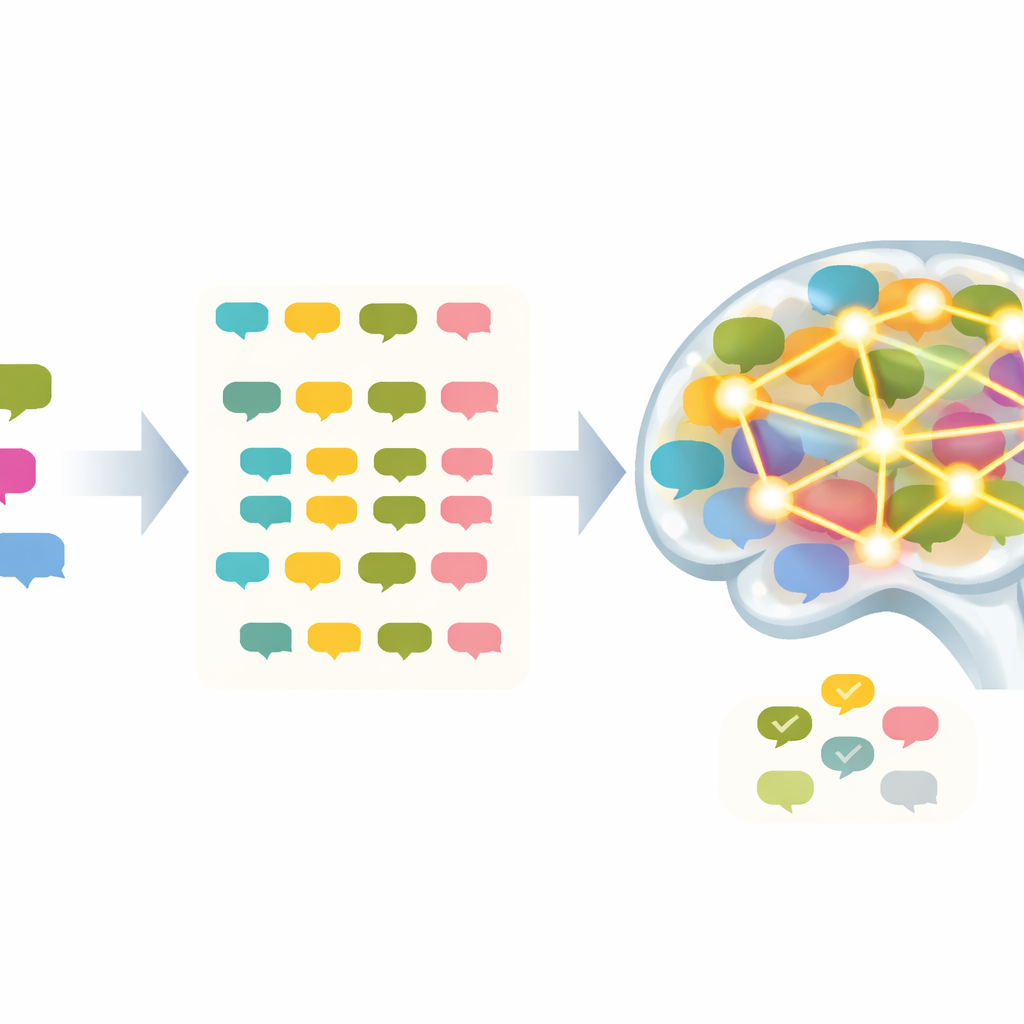
Across 182 studies, people were first exposed to a set of statements — such as trivia facts, news headlines, rumors, opinions, or advertising claims — and later asked to judge how true similar statements were. Consistently, statements seen before were rated as truer than brand‑new ones, even when participants had reasons to doubt them or knew many correct facts. After correcting for biases in the published record, the authors find a small but reliable effect: repetition nudges truth ratings upward in a measurable way. This “truth boost” shows up in children and adults, in clinical and typical populations, and across different ways of presenting information, from spoken sentences to social‑media‑style headlines.

What Changes the Power of Repetition
Although the effect is widespread, it is far from uniform. The size of the truth boost varied substantially from one study to another. The authors show that much of this variation can be traced to what people see and do when they first encounter a statement. Repetition worked especially well for simple, neutral sentences, and somewhat less for news headlines, which often carry political or emotional baggage. Whether statements were actually true or false made surprisingly little difference: hearing a false claim again could make it feel more believable, just as for a true one. The format of the response scale, the testing environment (lab versus online), and even whether the statement was repeated word‑for‑word or only in its gist had little influence on the overall pattern.
First Impressions Shape Later Belief
The strongest moderators all involved the initial exposure. When people were simply reading, listening, or doing an unrelated task (such as judging how interesting a statement was), repetition created a clear increase in perceived truth. But when they were asked, right away, to think about whether each statement was accurate, the later truth boost almost disappeared. In other words, an early focus on accuracy seemed to inoculate them against the pull of familiarity. The amount of time spent with a statement during first exposure also mattered: longer viewing tended to strengthen the later truth effect, probably because it gave the brain more opportunity to encode and connect the information. These patterns fit with theories that link truth judgments either to the ease of processing (fluency) or to how smoothly a statement fits into our existing web of knowledge.
Signals That Something Is False
Another powerful influence was whether people received cues about a statement’s factual status the first time they saw it. When statements were explicitly tagged in ways that suggested they were wrong — through warnings, source reliability hints, or corrective feedback — the usual pattern could even reverse, with repeated statements judged as less true than new ones. By contrast, cues that something was true tended to amplify the illusory truth effect, although these results were somewhat less stable. Interestingly, simple written warnings that “some of these items may be false”, especially when given only just before the final test, showed little impact. Together, these findings suggest that clear, concrete signals of falsity at the moment of first contact are more effective than general cautions delivered later.
What This Means for Everyday Misinformation
The authors conclude that repetition alone provides only a modest push toward believing a statement, but this push is remarkably robust and hard to undo. Because the effect operates equally on true and false content, it creates a background risk whenever misleading claims are widely and repeatedly shared. The good news is that the meta‑analysis also points to practical defenses. Encouraging people to think about accuracy when they first see information, and providing strong cues when something is likely false, can blunt or even reverse the effect of repetition. In the fight against misinformation, shaping those first moments of exposure may be more important than trying to correct beliefs after the fact.
Citation: Ye, S., Attali, D., Ghazi, M. et al. Systematic review and meta-analysis of the evidence for an illusory truth effect and its determinants. Nat Commun 17, 3270 (2026). https://doi.org/10.1038/s41467-026-70041-x
Keywords: illusory truth effect, misinformation, repetition and belief, meta-analysis, debunking strategies