Clear Sky Science · en
Rank signaling drives basal cell-lineage infidelity leading to mammary tumorigenesis
When Helpful Signals Go Off Course
Breast tissue is constantly reshaped during puberty, menstrual cycles, pregnancy, and breastfeeding. To manage these changes, cells rely on chemical signals that tell them when to grow and what role to play. This study shows that when one of these signals, called Rank, acts too strongly on a specific group of support cells in the breast, it can confuse their identity. Over time, that confusion can interfere with milk production and set the stage for breast cancer.
The Two Main Cell Types in the Breast
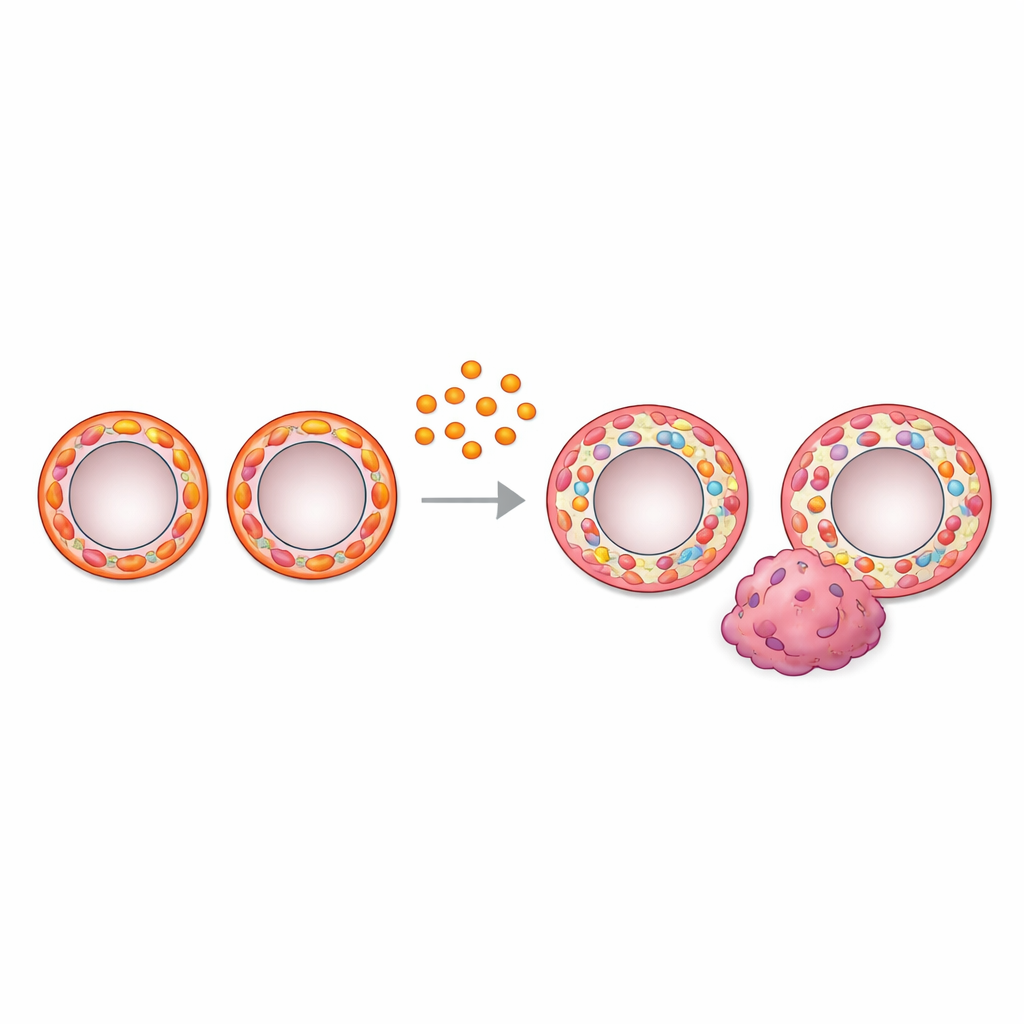
The mammary gland is built like a tiny tree of hollow tubes and sacs. The inner layer of this tree is made of luminal cells, which line the ducts and eventually form the milk-producing units. Wrapped around them is an outer layer of basal cells, which support and shape the ducts and can act as a small reserve of more flexible cells in adulthood. Under normal conditions, each layer largely sticks to its own job, and this division of labor helps keep the tissue healthy and organized.
What Happens When Rank Talks to the Wrong Cells
Rank is a signal that normally helps the breast prepare for pregnancy and breastfeeding by encouraging growth and differentiation. Earlier work focused mostly on its effects on inner luminal cells. In this study, the researchers built mouse models that allowed them to turn Rank on or off specifically in basal cells and to track what those cells and their descendants became. When Rank activity was artificially boosted in basal cells, those outer cells started to activate genetic programs typical of luminal cells and lost many of their own defining features, even though the tissue still looked roughly normal at first glance.
From Mixed Identity Cells to Poor Lactation and Early Lesions
The team then examined what this identity mix-up meant for breast function. During pregnancy and early breastfeeding, mice with extra Rank in basal cells showed smaller, poorly formed milk-producing structures, and many of their pups failed to thrive. Microscopy and cell-sorting experiments revealed unusual “hybrid” cells that carried both basal and luminal markers. These mixed-identity cells accumulated inside ducts, forming preinvasive growths resembling ductal carcinoma in situ, a known early stage of human breast cancer. When the researchers mimicked strong hormone stimulation or allowed the mice to age, these lesions became more common and more pronounced.
Epigenetic Rewiring Inside Confused Cells
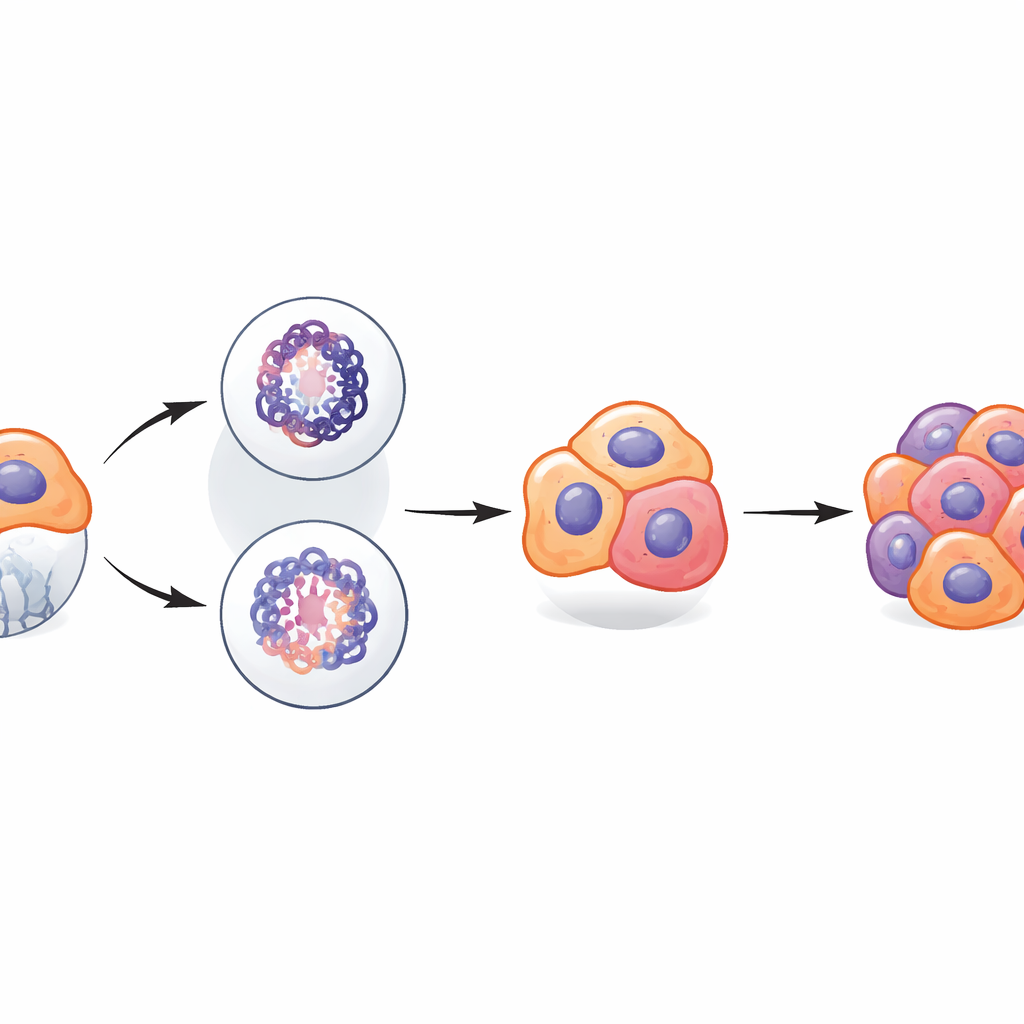
To understand how a signal at the cell surface could so deeply alter cell identity, the scientists explored the cells’ epigenetic landscape, the system of chemical tags and chromatin structures that control which genes are switched on or off. They found that Rank activation in basal cells reshaped chromatin accessibility around many key identity genes, making luminal and milk-producing programs easier to turn on and basal programs harder to access. Proteomic and phosphoproteomic analyses pointed to changes in several enzymes that write or erase epigenetic marks, and the outer cells showed high levels of a repressive histone mark linked to lineage control. When the team used drugs that tweak these epigenetic marks, they could shift how many hybrid cells formed and how often early lesions contained such mixed cells.
From Mouse Models to Human Breast Disease
The consequences of this disturbed identity extended beyond early lesions. Mice with enhanced Rank in basal cells developed spontaneous mammary tumors, most of them adenocarcinomas with features of both basal and luminal cancers. Even normal levels of Rank in basal cells contributed to tumor formation in a chemical cancer model, while removing Rank from basal cells delayed or reduced tumor development. The researchers then created a “basal Rank” gene signature based on the altered genes in mouse basal cells and tested it in human datasets of ductal carcinoma in situ and invasive breast cancers. Tumors with higher scores for this signature were more likely to recur and, in patients with luminal breast cancers, were linked to worse survival.
Why This Matters for Breast Cancer Risk
Overall, the study suggests that when Rank signaling is abnormally strong in basal cells, it blurs the boundaries between cell types, creates unstable hybrid cells, and primes the breast for both early preinvasive lesions and later invasive cancers. For a lay reader, this means that some breast cancers may start not simply because cells grow too fast, but because the signals that tell them “who they are” go wrong. Recognizing and measuring this basal Rank-driven identity confusion in early lesions might help identify which cases are more likely to progress, and targeting the Rank pathway or its epigenetic effects could offer new avenues to prevent or slow certain breast cancers.
Citation: Redondo-Pedraza, J., Santamaría, P.G., Sanchez-Juan, A. et al. Rank signaling drives basal cell-lineage infidelity leading to mammary tumorigenesis. Nat Commun 17, 4163 (2026). https://doi.org/10.1038/s41467-026-70020-2
Keywords: Rank signaling, basal breast cells, cell identity, epigenetic remodeling, ductal carcinoma in situ
See more on the researcher's website: https://www.cnio.es/investigacion-e-innovacion/programas-cientificos/programa-de-biologia-de-tumores/grupo-de-transformacion-y-metastasis/