Clear Sky Science · en
Discovery of an ITK and TRK kinase inhibitor for the potential topical treatment of atopic dermatitis
Calming the Itch of Angry Skin
Itchy, inflamed skin from conditions like atopic dermatitis—often called eczema—can keep people awake at night, disrupt daily life, and strain mental health. Today’s treatments can help, but many patients still struggle with redness, scratching, and flare‑ups. This study describes a new experimental cream, PF‑07245303, designed to quiet both the immune cells that inflame the skin and the nerve signals that drive relentless itch, all while acting mainly where it’s applied rather than throughout the body.
Why Eczema Is So Hard to Tame
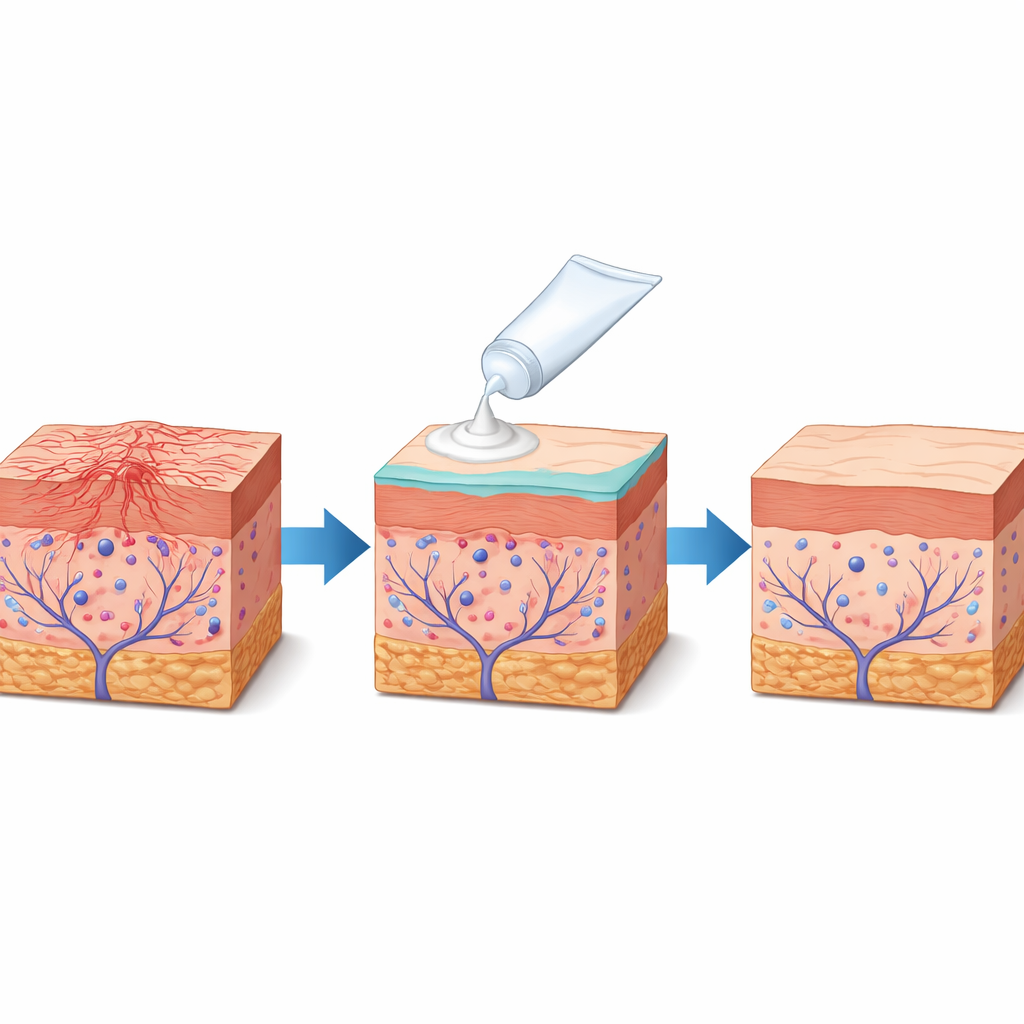
Atopic dermatitis is the most common chronic inflammatory skin disease, affecting up to a quarter of children and millions of adults. People develop dry, red, and intensely itchy patches of skin when the outer barrier of the skin is weakened and the immune system becomes overactive. Several types of immune cells, especially T cells, crowd into the skin and release chemical messengers called cytokines that drive swelling, redness, and further damage. At the same time, nerve fibers in the skin become more sensitive and send powerful itch signals to the brain, feeding an itch–scratch cycle that worsens the disease.
Targeting Two Troublemakers at Once
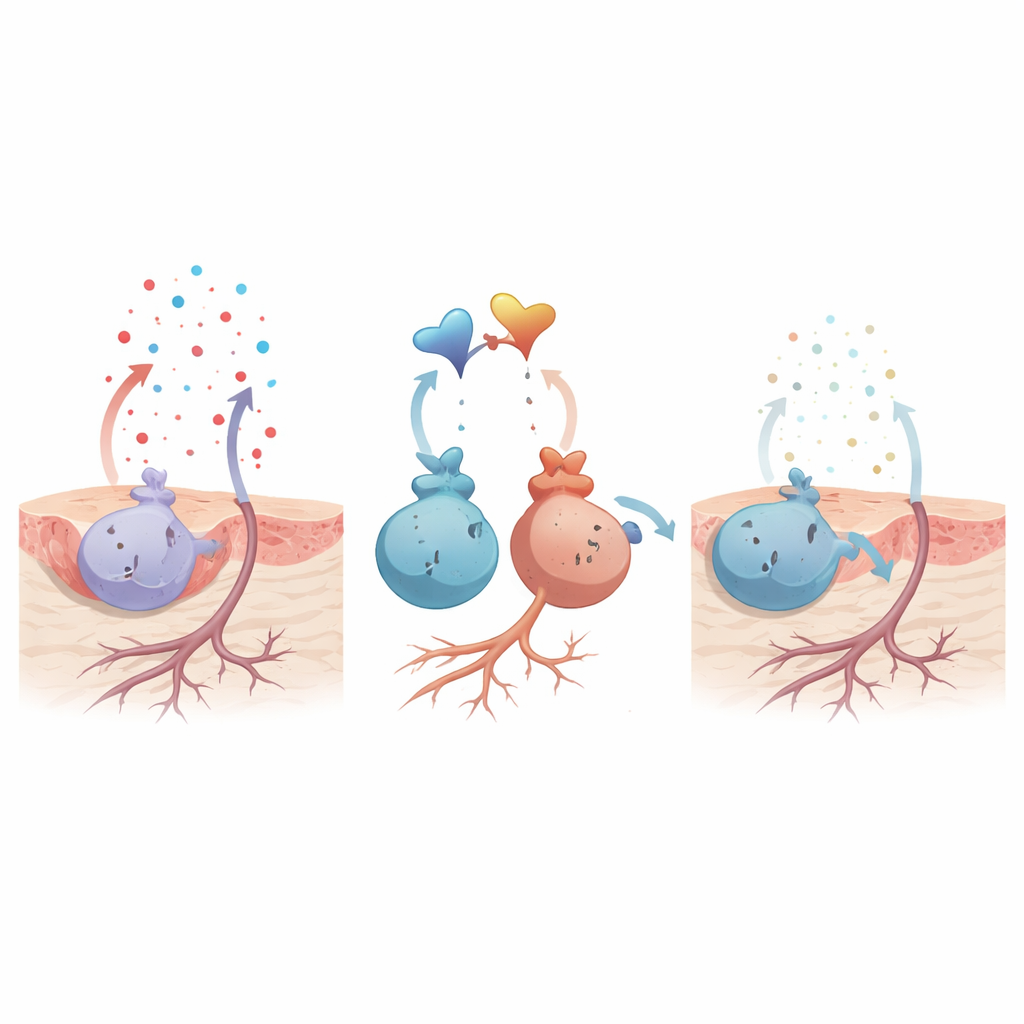
The researchers focused on two key protein “switches” that sit inside skin and immune cells. One, called ITK, helps T cells respond strongly when they are triggered, boosting the production of many inflammatory cytokines linked to atopic dermatitis. The other group, called TRK kinases, includes receptors on nerves and other skin cells that respond to nerve growth factor, a molecule that can heighten itch and inflammation. PF‑07245303 was deliberately built as a small molecule that blocks both ITK and the TRK family while being well suited for use in a topical cream—able to penetrate skin but cleared quickly from the bloodstream to limit whole‑body side effects.
From Enzymes in a Dish to Human Skin
In biochemical tests, PF‑07245303 tightly latched onto ITK and the three major TRK kinases and shut down their activity at very low concentrations, while largely sparing hundreds of other related enzymes. When added to human T cells in the laboratory, the compound sharply reduced activation signals and cut production of a wide range of cytokines, including IL‑4 and IL‑13, which are central to eczema, as well as other inflammatory messengers like IFN‑γ and IL‑17A. The team then moved to thin slices of donated human skin kept alive in culture. There, PF‑07245303 prevented activation of TRK by nerve growth factor, blocked activation of resident T cells, and reversed many of the gene‑expression changes that make eczema skin look different from healthy skin, including genes tied to both inflammation and skin‑barrier strength.
Testing a Topical Cream in a Mouse Model
To see whether these molecular effects translate into visible improvement, the scientists used a standard mouse model of dermatitis in which a chemical irritant produces eczema‑like thickening, redness, and immune cell infiltration in the ears. When a cream containing PF‑07245303 was applied to the ears during repeated challenges, ear swelling was reduced by roughly half compared with vehicle alone. Treated skin showed fewer inflammatory cells, milder changes in the outer skin layers, and lower levels of several inflammatory cytokines. These results suggest that delivering the drug directly onto the skin can blunt both immune overactivity and tissue damage in a living organism.
What This Could Mean for People With Eczema
Taken together, the findings show that PF‑07245303 can dampen the overactive T cells that fuel atopic dermatitis and, at the same time, block nerve‑related signals that contribute to itch—all through a cream designed to act mainly in the skin. While this work is still preclinical and does not yet prove benefit or safety in patients, it offers a promising blueprint for future topical treatments that tackle both inflammation and itch in one step. If similar effects are seen in human trials, such a medicine could help break the itch–scratch cycle and provide more durable relief for people living with atopic dermatitis and related inflammatory skin diseases.
Citation: Duffen, J.L., Crouse, K.K., Ji, L. et al. Discovery of an ITK and TRK kinase inhibitor for the potential topical treatment of atopic dermatitis. Nat Commun 17, 3676 (2026). https://doi.org/10.1038/s41467-026-70000-6
Keywords: atopic dermatitis, topical therapy, T cell signaling, itch pathways, kinase inhibitors