Clear Sky Science · en
An engineered linear cap-independent mRNA vaccine with intrinsic adjuvanticity induces potent anti-tumor immunity in mice
Why this new cancer vaccine idea matters
Cancer vaccines based on messenger RNA (mRNA) have moved from theory to real patients in the last few years, offering hope that we can train the immune system to recognize and destroy tumors. Yet today’s mRNA cancer vaccines are relatively expensive and complex to manufacture, and they often need added ingredients to rouse the immune system. This study describes a new kind of mRNA vaccine molecule, called a linear cap-independent RNA (LciRNA), that is simpler to make, naturally wakes up immune cells, and powerfully shrinks tumors in mice.
Building a leaner vaccine molecule
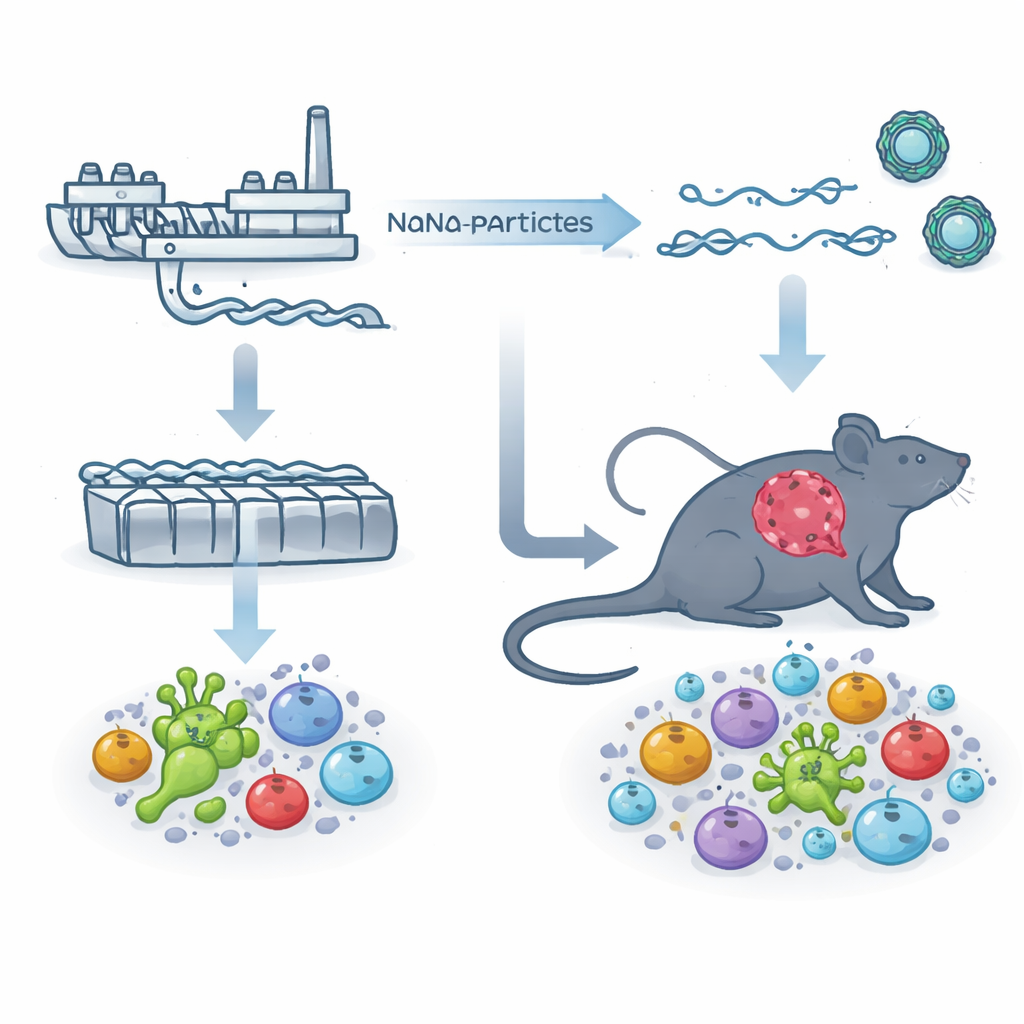
Standard mRNA vaccines carry a chemical “cap” on one end and use specially modified building blocks so that cells will read them efficiently and so the RNA will not fall apart too quickly. Those extras add cost and manufacturing steps. The researchers asked whether they could design an RNA that needs no cap and no chemical tweaks, yet still persists in the body and drives strong protein production. They drew inspiration from viruses, which have evolved compact RNA structures that resist cellular shredding. By borrowing a protective segment from a mosquito-borne virus and pairing it with a short sequence that attracts stabilizing RNA-binding proteins, they built a composite element they call UPA and placed it at the front of the vaccine RNA, ahead of a translation “landing pad” known as an internal ribosome entry site.
How the new design outperforms conventional mRNA
In cell tests, dozens of variations of these viral-like structures were screened using a luciferase reporter, a protein that glows when produced. A particular structure named UX1, combined with the UPA arrangement and optimized flanking regions, gave uncapped RNA that was surprisingly stable and highly active. Doubling this UPA unit produced an even hardier molecule: in mouse muscle, the two-UPA LciRNA kept generating light for days and outlasted even a leading clinical-style mRNA that carried the usual cap and a widely used stabilizing base modification. Biochemical experiments showed why. The UPA segment physically blocks a major RNA-degrading enzyme and also recruits natural cellular proteins that usually guard and prolong the life of important messages, acting like a built-in shield and support scaffold for the vaccine RNA.
A vaccine that carries its own immune booster
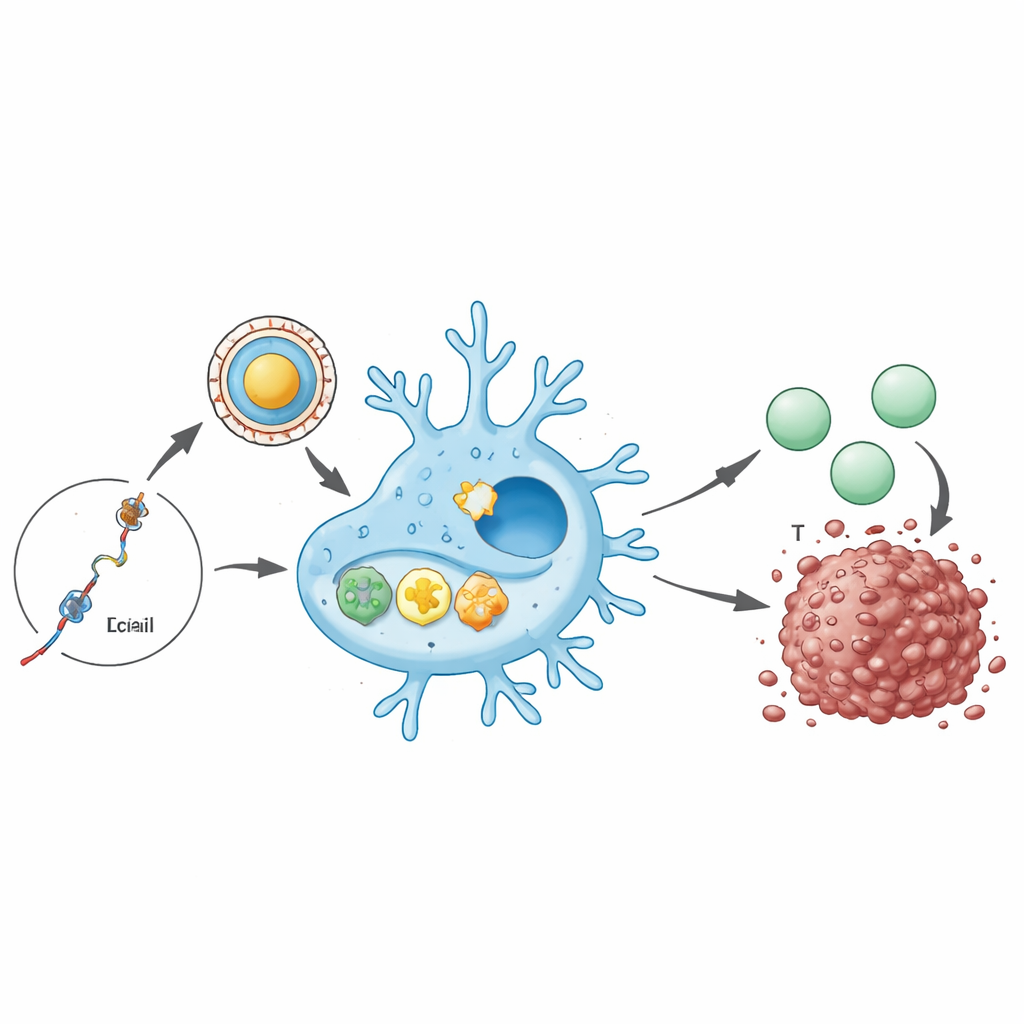
Most vaccines need an added adjuvant, a substance that alerts the immune system that danger is present. The LciRNA design turns the vaccine molecule itself into an adjuvant. Because it is uncapped and contains structured regions borrowed from viruses, cellular sensors that normally detect viral infection latch onto it. In mouse immune cells grown in the lab, LciRNA strongly switched on genes involved in antiviral defense, inflammatory signals, and the machinery that displays protein fragments to T cells. Dendritic cells exposed to LciRNA increased surface markers that are crucial for T cell activation and secreted chemical attractants that call T cells into tumors. Despite this intense immune stirring, mice given repeated doses showed normal body weight, healthy liver enzyme levels, and no tissue damage under the microscope, suggesting a good safety margin at doses equivalent to those used in people.
Turning cold tumors hot in mouse models
The team then tested whether this molecular engineering translates into better cancer control. In a melanoma model where tumors express a model antigen, mice received vaccines encoding that antigen as either capped, chemically modified mRNA or as UPA-based LciRNA. All vaccines slowed tumor growth, but the version with two UPA units produced the smallest tumors and the highest numbers of antigen-specific killer T cells in blood, spleen, and inside the tumor itself. In another model that mimics human papillomavirus–driven cancers, LciRNA vaccines encoding viral oncoproteins not only shrank established tumors but also prevented relapse over the entire observation period, outperforming conventional mRNA vaccines. These results suggest that by combining durable antigen production with strong innate immune stimulation, LciRNA can convert poorly inflamed "cold" tumors into "hot" ones teeming with active T cells.
What this could mean for future cancer vaccines
To a non-specialist, the key message is that the authors have rethought the basic structure of an mRNA vaccine so that a simple RNA sequence can both survive long enough to be read by cells and simultaneously act as its own alarm bell for the immune system. This removes the need for several costly chemical modifications and separate adjuvants, while actually improving tumor control in mice. If the same principles hold in humans, LciRNA vaccines could make personalized and off-the-shelf cancer immunotherapies more powerful, more affordable, and easier to manufacture at scale, opening the door to broader access around the world.
Citation: Yu, H., Yang, Y., Lin, P. et al. An engineered linear cap-independent mRNA vaccine with intrinsic adjuvanticity induces potent anti-tumor immunity in mice. Nat Commun 17, 3205 (2026). https://doi.org/10.1038/s41467-026-69972-2
Keywords: mRNA cancer vaccines, RNA vaccine design, tumor immunotherapy, innate immune activation, HPV and melanoma models