Clear Sky Science · en
Evolving epigenomics of immune cells at single-nucleus resolution in children en route to type 1 diabetes
Why early immune changes in children matter
Type 1 diabetes is often thought of as a sudden disease, appearing when a child begins to need insulin. In reality, the body’s immune system can quietly attack the insulin-producing cells in the pancreas for years before any symptoms show. This study follows children who were genetically at risk, tracking their immune cells in great detail over time to see what happens long before diabetes appears. By watching how their immune systems evolve, the researchers hope to uncover early warning signs that might one day allow doctors to prevent the disease instead of simply treating it.
Following children on the road to diabetes
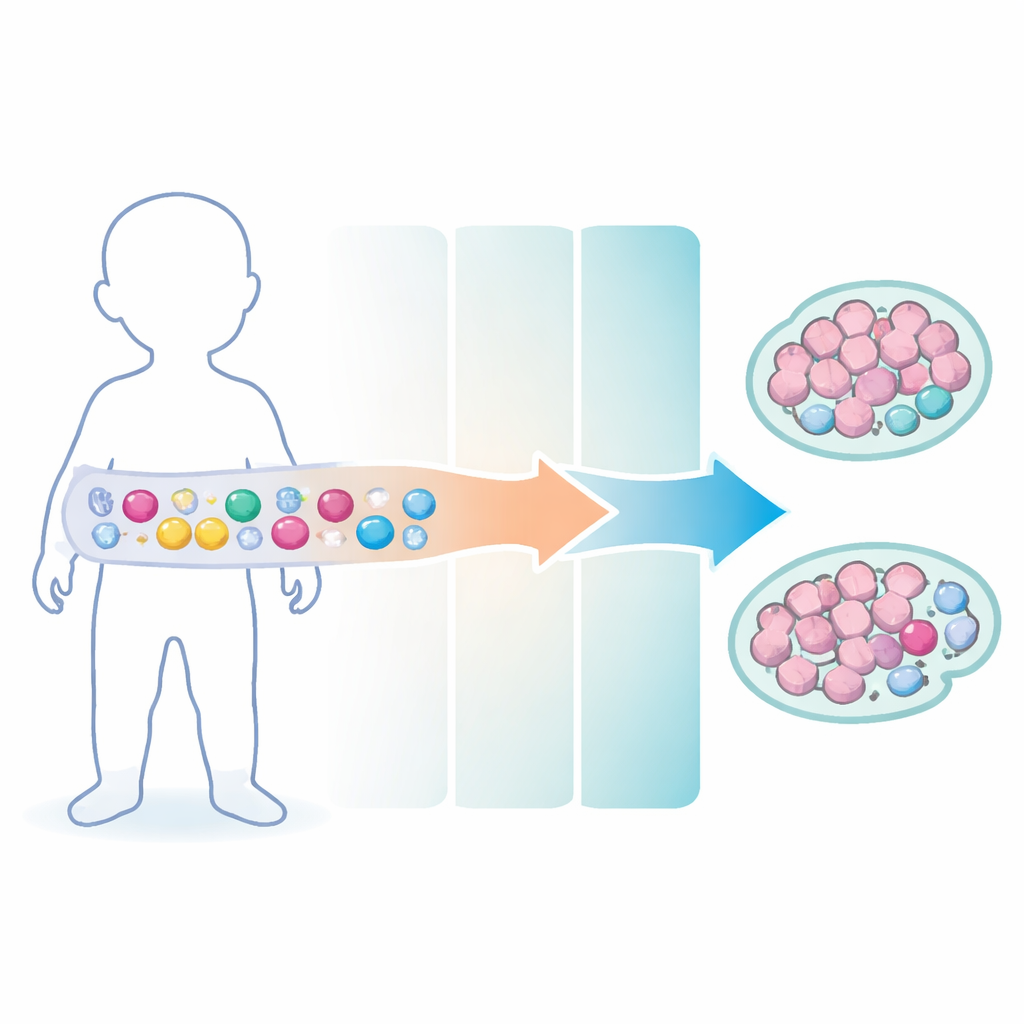
The researchers drew on a large international study called TRIGR, which followed children with a strong genetic predisposition to type 1 diabetes. From this cohort they selected 98 European participants: 49 children who eventually developed type 1 diabetes and 49 matched children who did not. For each child, blood samples were collected at three key stages: early in life before any diabetes-related antibodies appeared, soon after those antibodies first emerged, and again close to the time of clinical diagnosis. In these samples, they focused on immune cells circulating in the blood, looking not only at which cell types were present but also at which genes were switched on and how the DNA was packaged and made accessible inside each cell.
Peering inside immune cells one nucleus at a time
To achieve this, the team used cutting-edge single-cell and single-nucleus methods. Instead of averaging signals across millions of cells, they measured gene activity and DNA accessibility in hundreds of thousands of individual cells. This allowed them to sort cells into major families such as monocytes, T cells, B cells, and natural killer cells, then analyze each group separately. They mapped almost 100,000 regulatory regions of DNA that were open and active in these cells and linked those regions to nearby genes. Most of the time, open DNA went hand in hand with higher gene activity, helping to chart a detailed regulatory map of the developing immune system in early childhood.
Monocytes show early signs of trouble
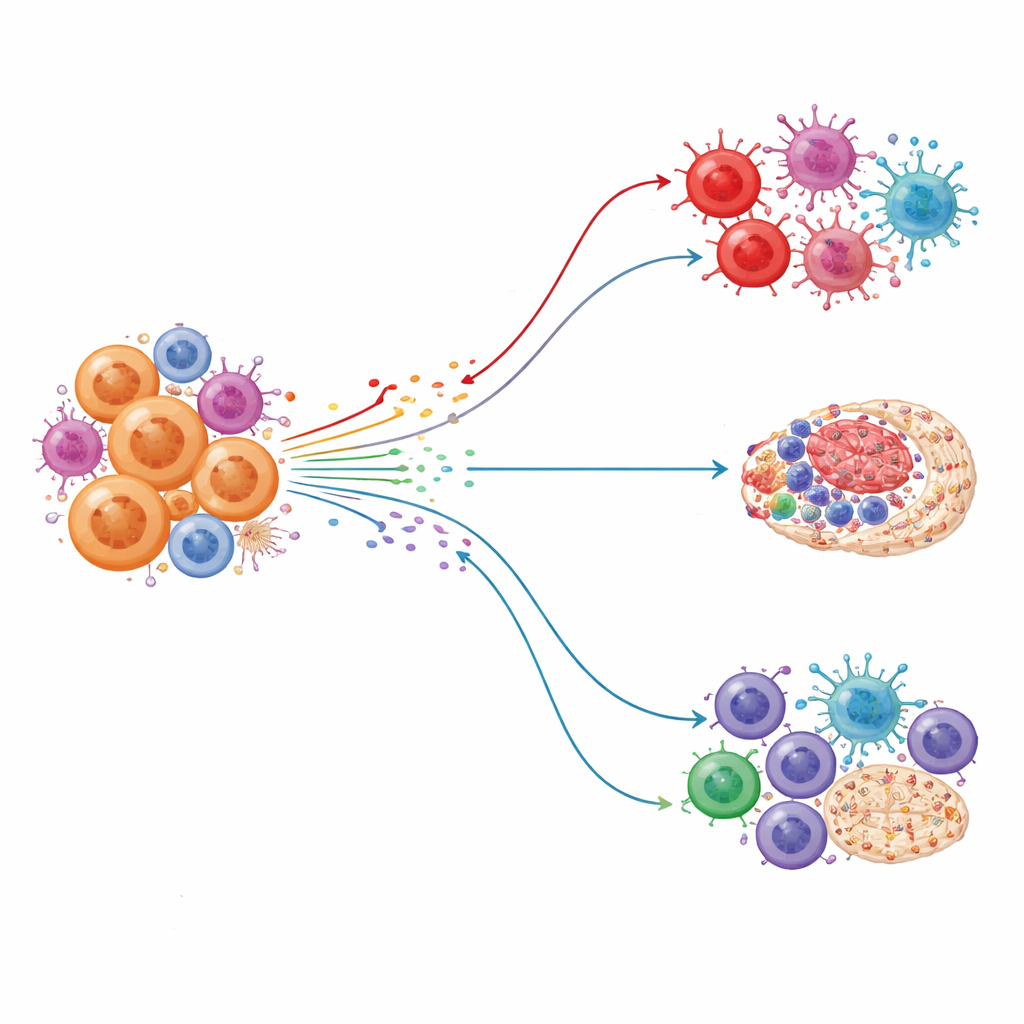
When the scientists compared children who progressed to diabetes with those who did not, a striking pattern emerged. The biggest and earliest differences appeared in monocytes, a type of white blood cell that helps coordinate inflammation. Before any diabetes-related antibodies were detectable, monocytes in future patients already showed stronger activation of gene networks involved in inflammation, interferon responses, and cytokine signaling. Many of these signals were driven by well-known regulatory factors such as NFKB1 and IRF1, which are central to the body’s response to infection and injury. Over time, the contrast between cases and controls in these pathways became weaker near the point of diagnosis, suggesting that the most informative signals may occur very early in life rather than right before symptoms appear.
Different immune paths to the same disease
The study also probed why not all children follow the same immunological path toward type 1 diabetes. One clue lies in which autoantibody appears first in the blood. Some children first develop antibodies against insulin itself, while others first develop antibodies against a protein called GAD. When the researchers separated the future patients into these two groups, they found distinct immune patterns. Children whose first antibody targeted GAD tended to show particularly strong early monocyte activation, mirroring the inflammatory signature seen in the overall case group. In contrast, children whose first antibody targeted insulin showed stronger early changes in CD4 T cells, which are key players in the adaptive arm of the immune system. These findings support the idea that type 1 diabetes is not a single disease but a family of related conditions with different immune starting points.
Genes set the stage, but early regulation may decide the outcome
Because type 1 diabetes has a strong inherited component, the team examined how known genetic risk sites interacted with these immune changes. They linked genetic variants associated with diabetes to both gene activity and DNA accessibility in specific immune cell types. While they did find some overlaps—such as risk regions near genes like NFKB1 and BACH2 showing differences between cases and controls—the overall genetic risk map did not fully explain the early immune signatures. Instead, many of the most pronounced early differences appeared to reflect how the immune system responded to environmental triggers on top of a genetic background of risk.
What this means for preventing type 1 diabetes
For non-specialists, the main message is that the immune system of a child destined to develop type 1 diabetes begins to diverge from that of other at-risk children years before diagnosis, and even before standard blood tests turn positive. Monocytes, which help kick off inflammatory responses, appear to play a leading role, especially in one subgroup of children defined by their first autoantibody. By mapping how genes and DNA regulation shift in specific immune cells over time, this work points toward new kinds of early-life biomarkers. In the future, such markers could help identify which at-risk children are on a high-risk trajectory and might benefit most from preventive therapies long before their pancreas is irreparably damaged.
Citation: Pastinen, T., Grundberg, E., Bradley, T. et al. Evolving epigenomics of immune cells at single-nucleus resolution in children en route to type 1 diabetes. Nat Commun 17, 3168 (2026). https://doi.org/10.1038/s41467-026-69923-x
Keywords: type 1 diabetes, childhood autoimmunity, immune cell profiling, epigenomics, monocyte inflammation