Clear Sky Science · en
Conditional BCL-2 Expression in Fibroblasts Promotes Persistent Pulmonary Fibrosis which is Reversible by Therapeutic BCL-2 Inhibition
Why Stubborn Lung Scars Matter
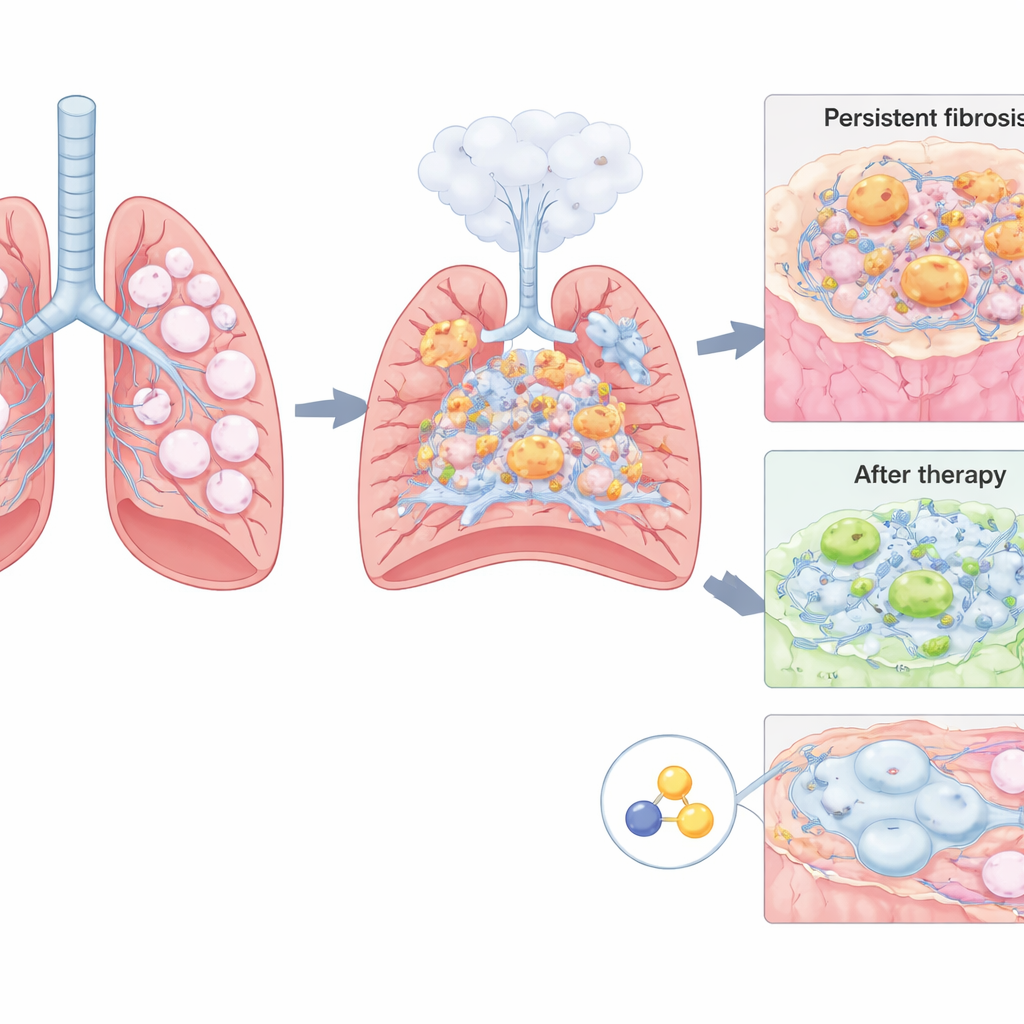
Idiopathic pulmonary fibrosis is a relentless lung disease in which once-flexible air sacs are slowly replaced by stiff scar tissue, making every breath harder. Doctors can sometimes slow this scarring, but actually reversing it remains rare. This study explores why scar-forming cells in the lung refuse to die when they should—and shows that a cancer drug already in use might coax damaged lungs to heal instead of harden.
The Cells That Won’t Let Go
In healthy lungs, special support cells called fibroblasts rush in after injury to lay down a temporary scaffold of tissue. Once the damage is patched, most of these cells quietly self-destruct and are cleared away, allowing normal lung architecture to return. In idiopathic pulmonary fibrosis, however, fibroblasts accumulate and refuse to die, continually producing collagen and other fibers that thicken and distort the delicate air sacs. The authors suspected that a survival protein inside these cells, called BCL-2, helps them resist this programmed self-destruction.
Engineering Stubborn Scars in Mice
To test this idea, the researchers created mice in which fibroblasts could be switched into a “high BCL-2” state after lung injury. When these mice were exposed to a chemical that normally causes temporary lung scarring, their fibroblasts no longer underwent the usual wave of cell death. Instead, fibroblasts piled up and remained in the lung for months. The result was long-lasting scarring, distorted airways, and cyst-like spaces resembling features seen in people with advanced pulmonary fibrosis. In contrast, normal mice exposed to the same injury developed fibrosis that largely faded as their lungs repaired themselves.
From Helpful Repair Cells to Aged Trouble-Makers
Persistent fibroblasts in these engineered mice were not simply overabundant; they also took on features of cellular old age, or senescence. Senescent cells stop dividing but secrete a cocktail of signals that can fuel chronic damage and remodeling. By analyzing gene activity, the team found that fibroblasts with high BCL-2 expressed many markers of senescence and pro-scarring behavior, while fibroblasts from healing lungs activated programs linked to tissue repair, matrix breakdown, and wound resolution. In human lung samples from patients with idiopathic pulmonary fibrosis, the researchers saw a similar pattern: clusters of scar-forming cells in damaged regions often expressed BCL-2 alongside markers of senescence, underscoring the clinical relevance of the mouse findings.
Turning Survival Against the Scar
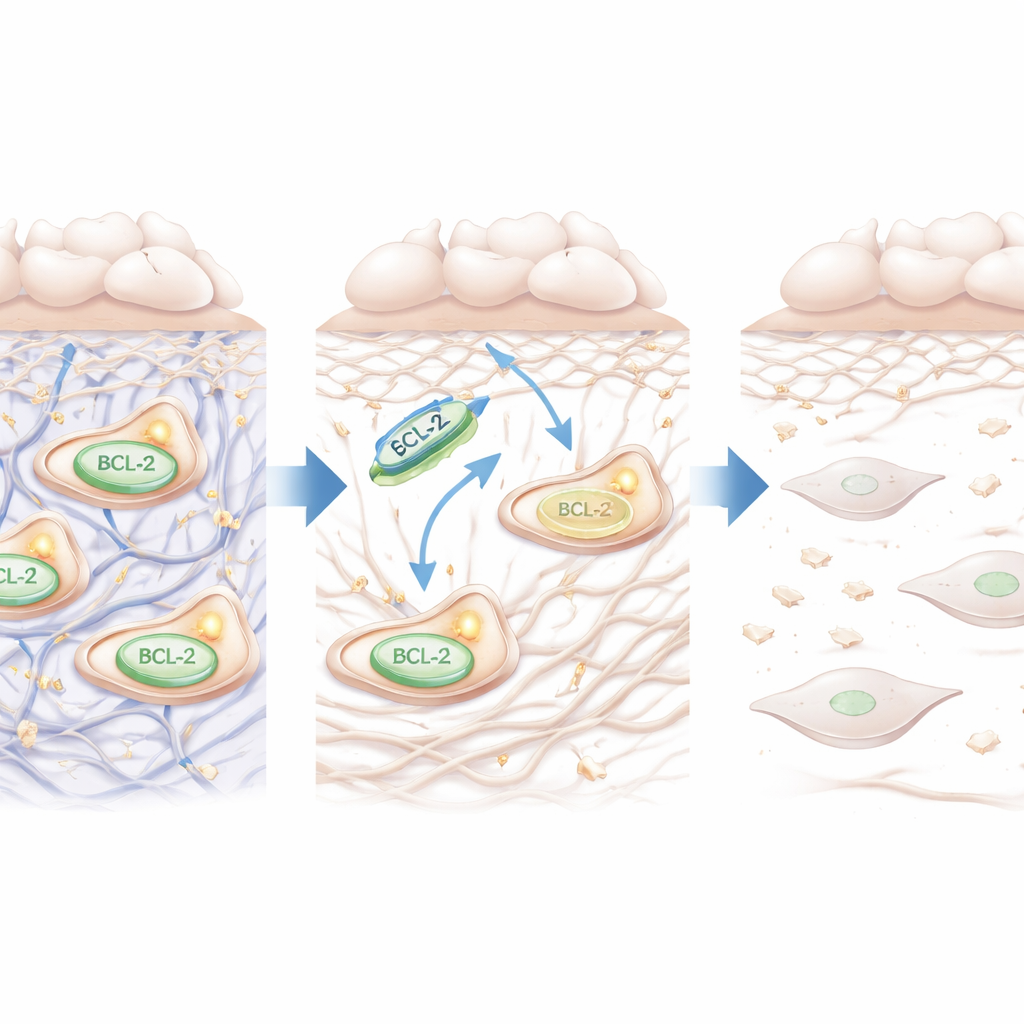
Because BCL-2 is already a target in certain blood cancers, the team asked whether a clinically approved BCL-2–blocking pill could disarm these persistent scar-forming fibroblasts. They treated fibrotic mice with the drug Venetoclax after scarring was firmly established. Over the next four weeks, fibroblast numbers dropped, markers of senescence decreased, and collagen levels fell. Scans and microscope images showed that previously solidified lung regions became more open and airy, and measurements of blood oxygen improved. Importantly, not all supporting cells were equally affected, suggesting that the treatment preferentially eliminated the most survival-dependent, scar-driving fibroblasts.
What This Means for Future Breathing
This work supports a simple but powerful idea: when fibroblasts are allowed to ignore normal death signals, they linger, grow old in place, and help drive unrelenting scarring in the lung. By blocking their key survival protein, BCL-2, it may be possible not just to slow fibrosis but to actively clear out the most harmful cells and reopen damaged tissue. While more studies are needed to test safety and timing in people, the findings raise the possibility that an existing drug class could be repurposed to turn stubborn, permanent lung scars into something the body can finally begin to undo.
Citation: Redente, E.F., Song, T., Javkhlan, N. et al. Conditional BCL-2 Expression in Fibroblasts Promotes Persistent Pulmonary Fibrosis which is Reversible by Therapeutic BCL-2 Inhibition. Nat Commun 17, 3317 (2026). https://doi.org/10.1038/s41467-026-69865-4
Keywords: pulmonary fibrosis, fibroblasts, cell senescence, BCL-2 inhibition, lung regeneration