Clear Sky Science · en
Immunometabolic determinants of long-term response in leukemia patients receiving CD19 CAR T cell therapy
Why some cancer patients stay in remission
For many people with an aggressive blood cancer called B‑cell acute lymphoblastic leukemia, a personalized treatment known as CD19 CAR T cell therapy can wipe out visible disease. Yet in a large fraction of patients, the cancer returns months later. This study asks a simple but critical question: what is different about the engineered immune cells in patients who enjoy long‑lasting remissions compared with those who relapse quickly—and can we deliberately build better cells before they ever reach the patient?
Engineered cells that run like endurance athletes
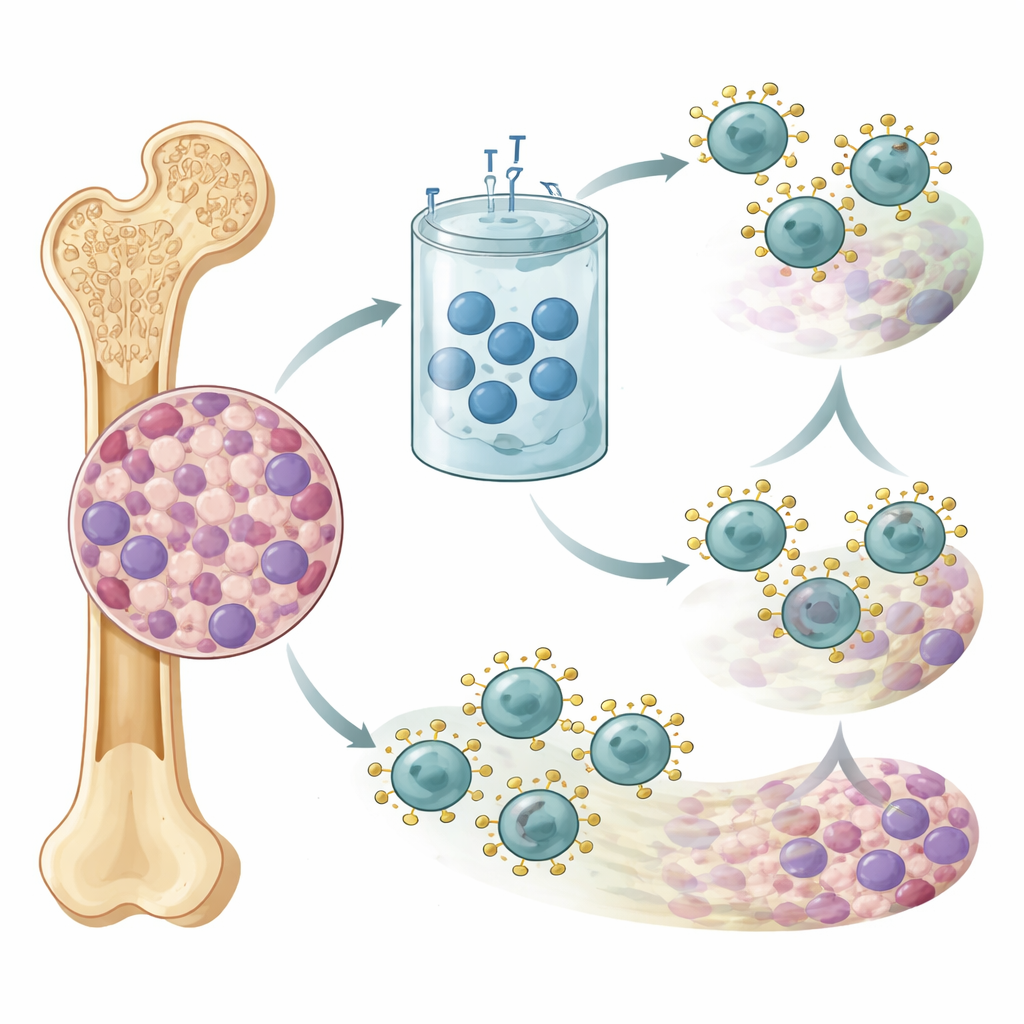
The researchers followed sixteen adults with hard‑to‑treat leukemia who all initially responded to CD19 CAR T cell therapy. Half stayed in remission long term, while the others relapsed within about four to five months. By comparing the infused cell products from these two groups, the team found that the long‑term responders’ CAR T cells were metabolically fitter. Rather than relying mainly on quick, sugar‑burning bursts, these cells favored slower, more efficient “endurance” energy systems. They showed higher oxidative phosphorylation (the cell’s power‑plant pathway), greater use of fats as fuel, and more activity in a side route of sugar breakdown that feeds building blocks into DNA and antioxidant production. In contrast, cells from short‑term responders showed signs of heavier activation but less of this balanced, fuel‑flexible state.
Powerhouse structures inside the cells
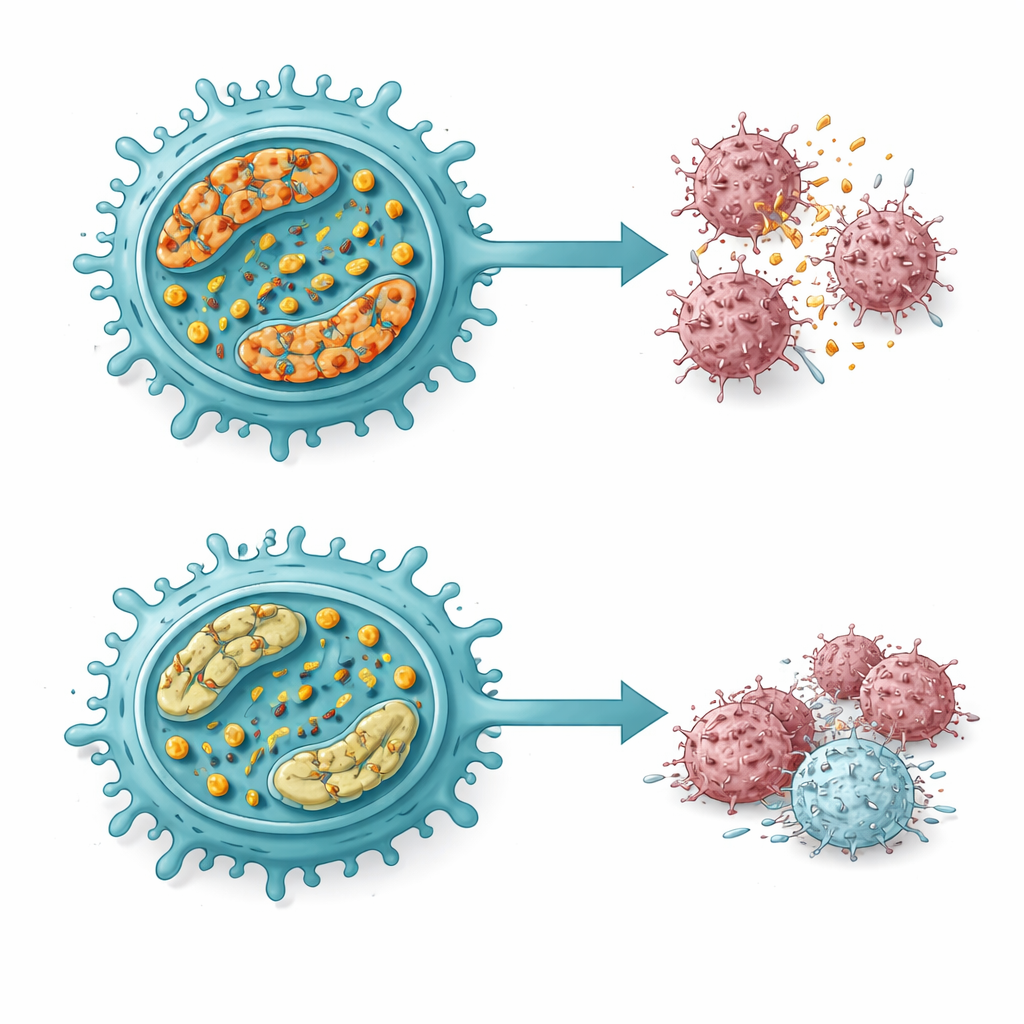
Zooming in on the tiny powerhouses inside CAR T cells—the mitochondria—the scientists saw striking structural differences. Long‑term responders’ cells carried more mitochondria overall, and the internal folds of these organelles were tighter and more compact, a shape linked in earlier work to efficient energy production and robust immune function. These features appeared not only in the engineered cells but also in non‑engineered T cells from the same patients, hinting that some people may bring an inherently more resilient immune “hardware” into therapy. Yet, surface markers that usually distinguish short‑lived “fighter” cells from long‑lived “memory” cells looked similar between groups, suggesting that standard tests can miss crucial aspects of cell quality that lie in their metabolic wiring.
Bone marrow as a nurturing or limiting neighborhood
The story did not end once the cells were infused. The team analyzed bone marrow samples a month after treatment, when CAR T cells are battling any remaining leukemia. In long‑term responders, these cells had shifted into a highly active yet adaptable state, marked by strong signaling through a nutrient‑sensing pathway centered on the protein mTOR and its partners. At the same time, the surrounding bone marrow fluid in these patients contained higher levels of specific amino acids and other metabolites known to boost that pathway and support T cell growth and function. Short‑term responders, by contrast, showed CAR T cells with more signs of exhaustion and a marrow environment that was less metabolically supportive, implying that both the cells’ intrinsic fitness and their neighborhood shape the durability of the response.
Teaching therapeutic cells to rest and reset
Armed with these clues, the researchers tested whether they could deliberately reshape CAR T cells made from short‑term responders. During the manufacturing process, they briefly exposed the cells to rapamycin, a drug that dampens mTOR activity and is already used clinically in other settings. This temporary “metabolic brake” reduced immediate overactivation, shifted the cells toward a more rested, memory‑like profile with greater spare energy capacity, and altered their mitochondrial structure. When these modified cells were given to mice carrying human leukemia, they expanded better, controlled tumors more effectively, and prolonged survival compared with standard CAR T cells. The same manufacturing tweak also improved cells derived from long‑term responders, and worked in both bone marrow and central nervous system leukemia models.
What this could mean for future patients
For non‑specialists, the key takeaway is that not all engineered immune cells are created equal. The long‑lasting therapies behave more like well‑trained endurance runners than sprinters who quickly burn out. Their inner power systems, mitochondrial structures, and the nutrient landscape they encounter in the body all help determine whether they can patrol for months or years to keep cancer at bay. This study shows that a short, carefully timed dose of an existing drug during manufacturing can nudge CAR T cells into a more resilient state, improving their performance in preclinical leukemia models. If confirmed in larger patient groups, tuning the metabolism of these living drugs could become a practical way to extend remissions and make powerful cell therapies work for more people, for longer.
Citation: Goldberg, L., Haas, E.R., Wu, J. et al. Immunometabolic determinants of long-term response in leukemia patients receiving CD19 CAR T cell therapy. Nat Commun 17, 2967 (2026). https://doi.org/10.1038/s41467-026-69857-4
Keywords: CAR T cell therapy, leukemia, immunometabolism, mTOR, rapamycin