Clear Sky Science · en
Ambient synthesis of single-atom catalysts on catalytically active cells for chemoenzymatic cascades
Living cells as tiny chemical factories
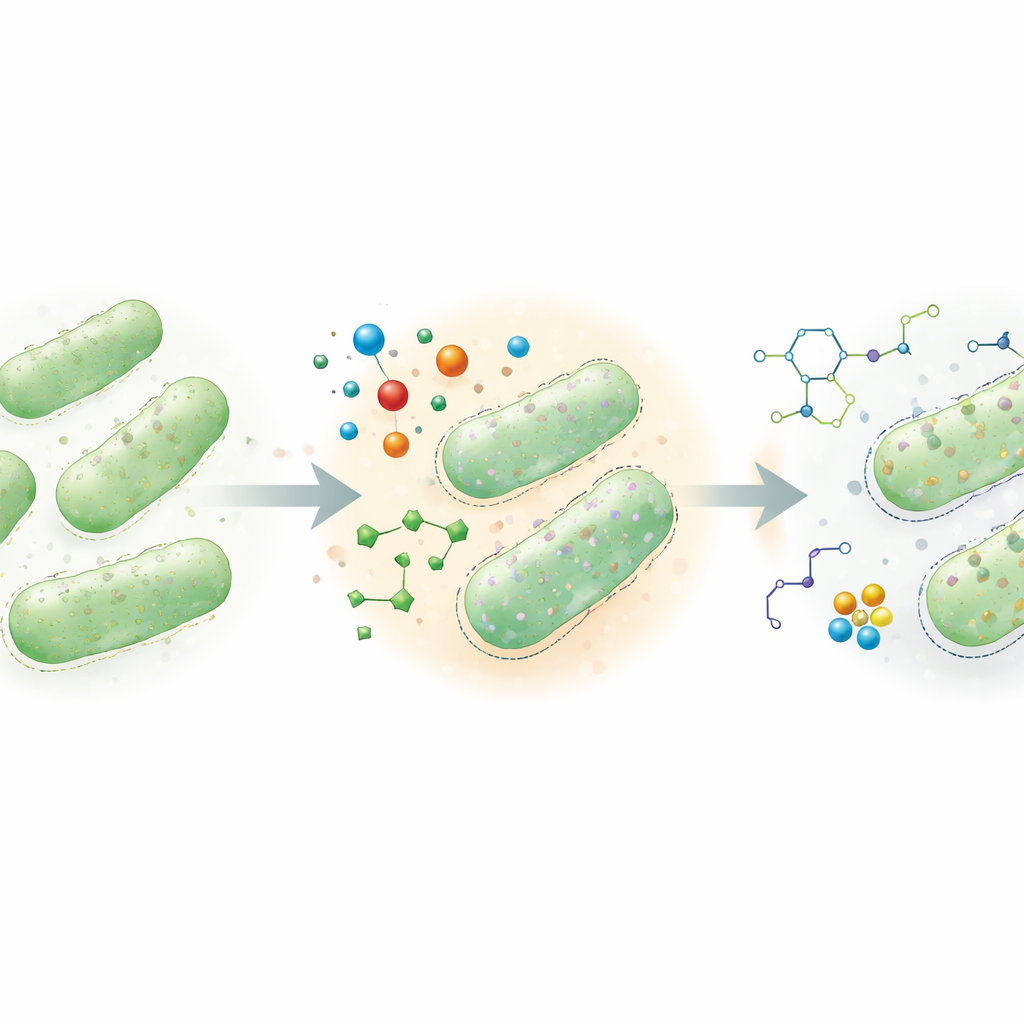
Chemists are always searching for cleaner, more efficient ways to make valuable molecules such as medicines and fine chemicals. This study shows that ordinary bacteria can be turned into tiny, reusable chemical factories that host powerful metal atoms on their surfaces while keeping natural enzymes alive inside. By combining these two worlds—hard-working metal catalysts and delicate biological machinery—the researchers create a new kind of “chemo-bio” catalyst that works in water, at room-like conditions, with high precision.
Why single atoms matter
Modern catalysts often rely on precious metals like palladium or gold. Usually, these metals are used as nanoparticles or larger clusters, which means many atoms are hidden inside and do not participate in the reaction. Single-atom catalysts spread metal atoms one by one across a support, so every atom can work. This boosts activity and selectivity but comes with a big drawback: isolated atoms are unstable and tend to clump together into particles, especially when scientists try to load large amounts of metal onto a support. Conventional ways to prevent this clumping often require high temperatures, complex equipment or energy-intensive steps, limiting how easily such catalysts can be made and used.
Turning bacteria into supports
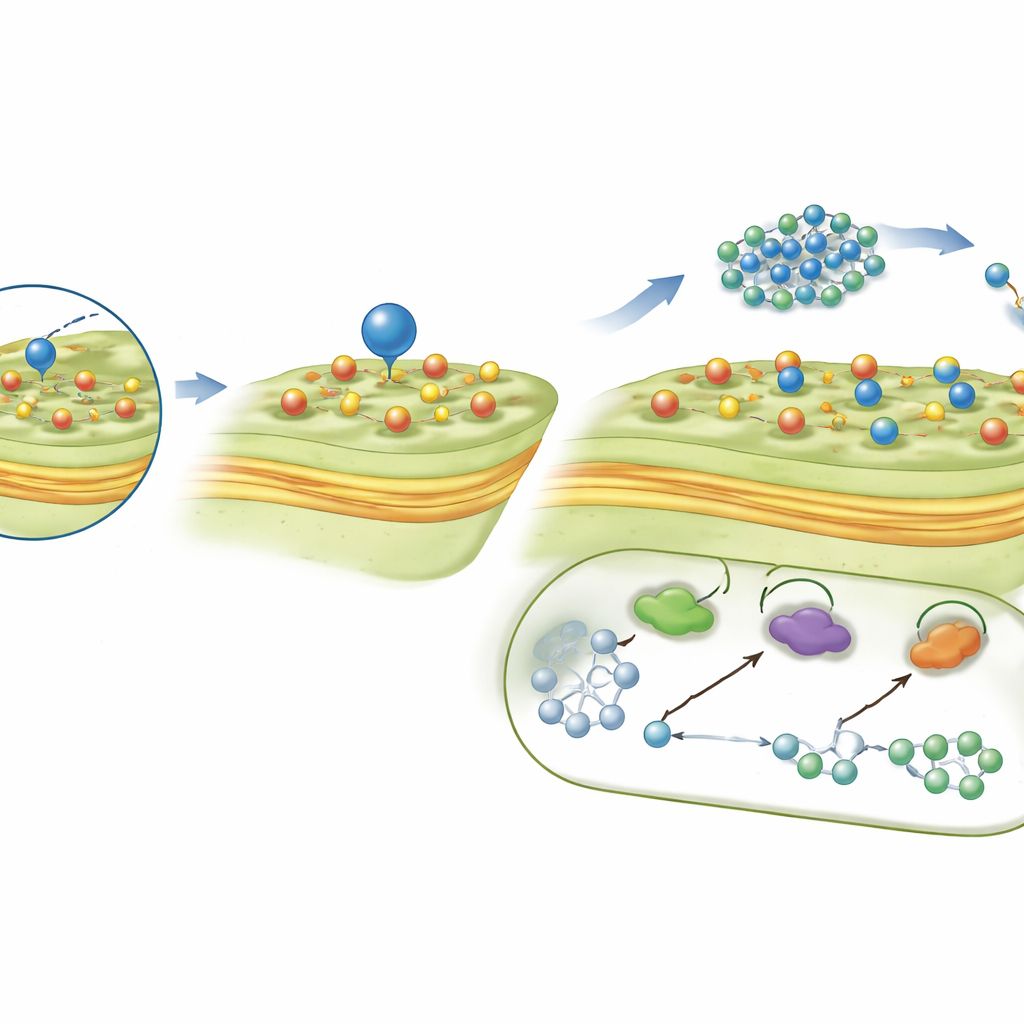
The authors realized that the surfaces of microbial cells provide an unusually rich landscape of chemical groups—such as hydroxyls and carboxyls—that can grab and hold metal ions. They worked with engineered E. coli bacteria that overproduce specific enzymes, using the cell surface as a built-in support for palladium and gold. Metal ions first bind to oxygen-containing sites in the outer layers of the cell wall, and then a carefully controlled dose of a strong reducing agent quickly converts them into single metal atoms. Computer simulations and spectroscopic measurements reveal that palladium prefers to coordinate with clusters of oxygen atoms in the cell envelope, forming stable, isolated sites instead of particles. In this way, the team achieves unusually high single-atom loadings—over 4% by weight—under mild, “ambient” conditions in water.
Joining metal chemistry with enzyme skills
Because the metal atoms sit on the outside and the engineered enzymes remain active inside, each cell becomes a two-in-one catalyst. The researchers tested this idea on a difficult reaction: fully reducing a class of molecules called α,β-unsaturated enones to optically pure alcohols. Metal catalysts alone or enzymes alone typically struggle to reduce both key bonds in the right order and with high selectivity. In the new hybrid system, surface palladium first reduces a carbon–carbon double bond, and then an internal alcohol dehydrogenase enzyme completes the job by reducing a carbon–oxygen bond. By fine-tuning how much palladium is loaded, the team balances the speeds of these two steps so that the reaction follows the desired pathway and avoids side products. The result is near-quantitative yields and more than 99% preference for a single mirror-image form of the product, something previous approaches had not achieved.
Strengthening tiny factories with a glassy coat
Although the bare hybrid cells are very active, they lose performance after several uses and under harsh conditions such as extreme pH, high temperature or vigorous stirring. To solve this, the researchers coat each cell with a thin, porous silica shell—essentially a protective glassy armor that still allows small molecules to pass. By adjusting the thickness of this shell, they preserve activity while greatly improving stability. The optimized version keeps more than 70% of its initial performance even after 18 reaction cycles and withstands challenging mechanical and storage conditions much better than uncoated cells or traditional palladium-on-carbon catalysts.
What this means for future green chemistry
In simple terms, this work turns living microbes into sturdy, high-precision chemical tools by decorating them with single metal atoms and shielding them with a breathable mineral coat. The approach is flexible: the team also demonstrates similar hybrids using other enzymes and gold-based single-atom sites to carry out different multi-step reactions. Together, these results suggest a new route to sustainable manufacturing, where inexpensive, self-replicating cells provide the scaffold and biological activity, while carefully positioned single metal atoms deliver the raw catalytic power needed for challenging transformations.
Citation: Zhang, Y., Yue, X., Zhang, S. et al. Ambient synthesis of single-atom catalysts on catalytically active cells for chemoenzymatic cascades. Nat Commun 17, 2935 (2026). https://doi.org/10.1038/s41467-026-69812-3
Keywords: single-atom catalysts, microbial catalysis, chemoenzymatic cascades, palladium on cells, silica-coated biocatalysts