Clear Sky Science · en
Coronaviruses reprogram the tRNA epitranscriptome to favor viral protein expression
How Viruses Hack the Cell’s Reading System
When coronaviruses invade our cells, they face a basic but serious challenge: their genetic "spelling" is poorly matched to the way human cells usually read and translate genetic information into proteins. Yet these viruses still churn out huge amounts of viral proteins and spread efficiently. This study uncovers how coronaviruses quietly rewire a subtle layer of the cell’s decoding machinery—the chemical decorations on transfer RNAs (tRNAs)—to tilt the playing field in favor of viral protein production. 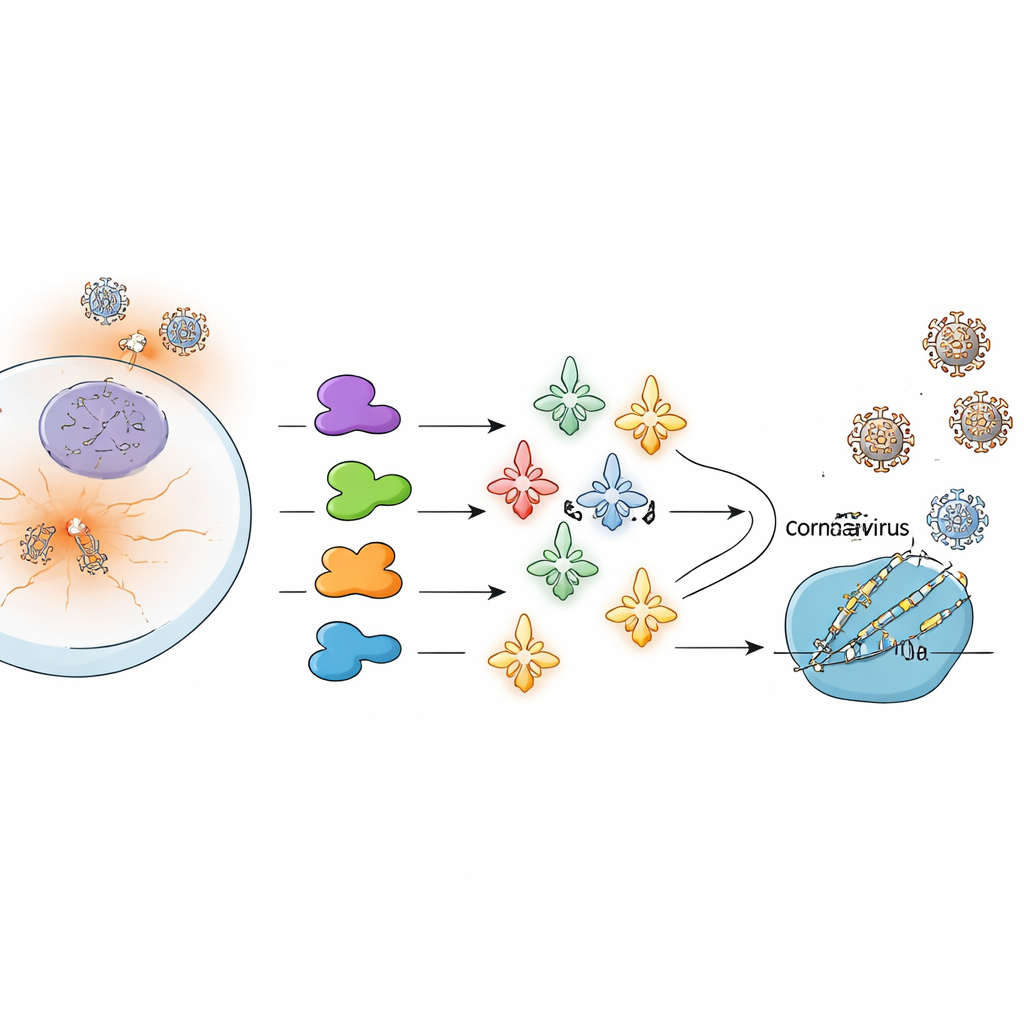
The Hidden Language of Genetic Spelling
Our genetic code uses three-letter words, called codons, to specify amino acids, the building blocks of proteins. Many amino acids can be spelled in more than one way, and cells normally favor certain spellings over others because matching tRNAs are more plentiful. Human cells tend to prefer codons ending in the letters G or C, while coronavirus genomes are unusually rich in A- and U-ending codons, which should be translated less efficiently. At the same time, tRNAs themselves carry small chemical tags at key positions that fine-tune how well they recognize particular codons. These modifications form a dynamic “epitranscriptome” that can be reshaped during stress to prioritize the production of certain proteins.
Viruses Align with the Cell’s Stress Mode
The authors examined the codon usage of human coronaviruses and mapped it onto known tRNA modifications. They identified four specific tRNA marks—called inosine (I), queuosine (Q), mcm5U/mcm5s2U, and m5C/f5C—that are especially important for decoding the very A- and U-ending codons enriched in coronavirus genomes. They then infected human lung-derived cells with SARS-CoV-2 (a highly pathogenic virus) and HCoV-OC43 (which usually causes mild colds). In both cases, infection triggered strong DNA damage and oxidative stress responses inside the cells. These are the same stress pathways known to reshape tRNA modifications in ways that favor the translation of stress-response proteins. The viral genomes, it turns out, are already tuned to this stressed-state decoding landscape.
Rewriting tRNA Decorations to Favor the Virus
Using highly sensitive mass spectrometry and specialized tRNA sequencing, the researchers measured tRNA modifications and abundance during infection. They found that both viruses reduced levels of the I modification and increased mcm5U at a key “wobble” position where tRNAs read the third base of codons. These shifts make tRNAs better at recognizing the A- and U-ending codons that coronaviruses overuse, while making them less biased toward host-preferred codons. In HCoV-OC43 infection, levels of Q were also boosted, further strengthening decoding of several U-ending codons common in viral genes. Some other modifications that affect tRNA stability and folding were reduced, likely loosening quality control just enough to speed translation. Importantly, these changes mostly occurred on existing tRNAs; the total amounts of the key tRNAs hardly changed, making this a fast, reversible chemical reprogramming rather than a slow rewriting of tRNA inventories. 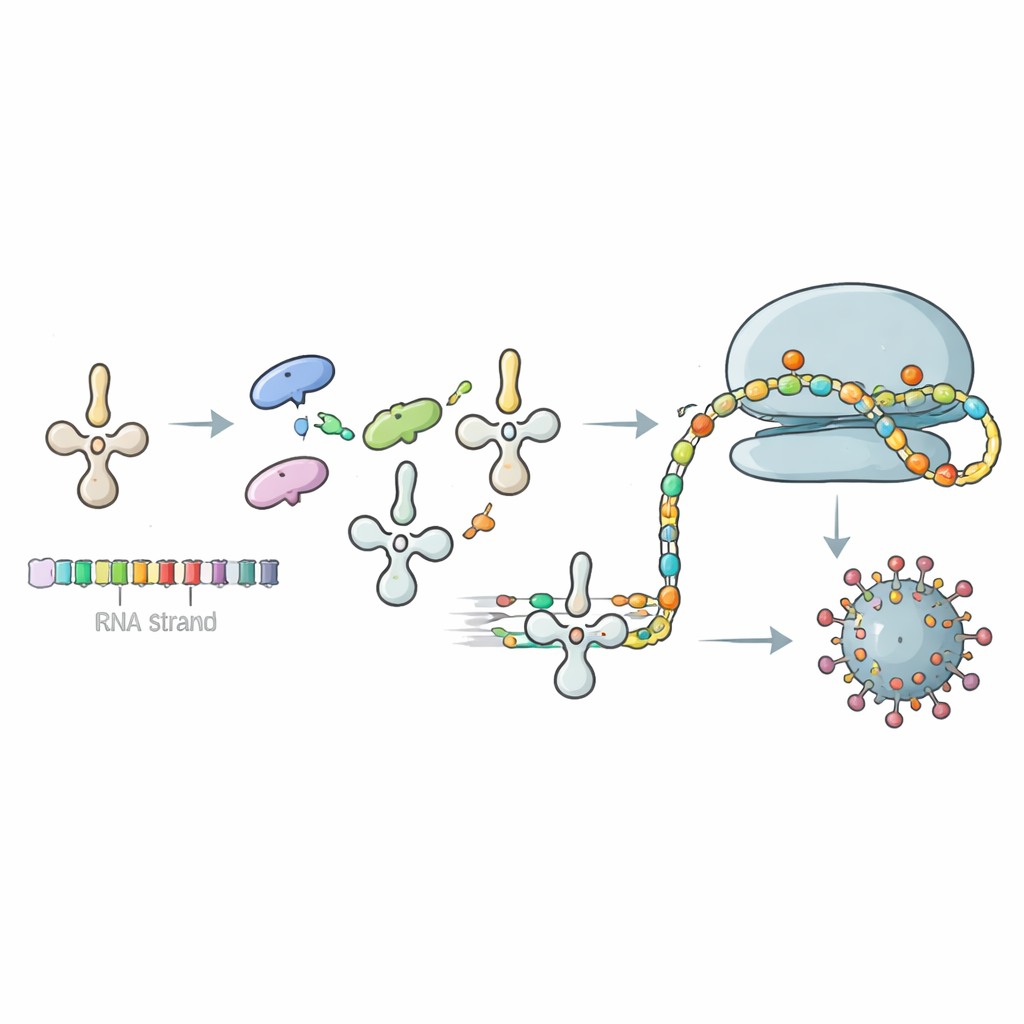
Enzymes as Viral Accomplices—and Drug Targets
The team next looked at the enzymes that install or remove these tRNA modifications. During infection, the cell’s levels of several such enzymes shifted in ways that matched the observed modification changes—for example, enzymes that add mcm5U and Q became more abundant, while those that promote f5C or I were dialed down. When the researchers experimentally reduced enzymes that support “virus-favored” modifications, viral protein levels dropped. Conversely, forcing cells to overproduce enzymes that restore the less favorable I or f5C states also suppressed viral protein synthesis. The encoding of these enzymes themselves is biased toward the codons they help favor, creating self-reinforcing loops once the system is pushed in one direction.
Why This Matters for Future Outbreaks
In plain terms, the study shows that coronaviruses have evolved to match their genetic spelling to the way stressed human cells read RNA. By inducing stress responses, they nudge the tRNA modification system into a state where viral messages are read more efficiently than many host messages. This codon- and modification-specific hijacking appears to be shared across diverse coronaviruses and likely other RNA viruses with similar codon biases. Because the key steps are carried out by host enzymes rather than viral ones, they offer promising targets for broad antiviral drugs. In principle, future therapies could blunt viral replication by blocking or reversing the particular tRNA modifications that give viral genomes a decoding advantage, potentially working even against newly emerged coronaviruses whose behavior is not yet fully understood.
Citation: Muscolino, E., Puig-Torrents, M., Buigues Bisquert, J. et al. Coronaviruses reprogram the tRNA epitranscriptome to favor viral protein expression. Nat Commun 17, 2944 (2026). https://doi.org/10.1038/s41467-026-69700-w
Keywords: tRNA modifications, coronavirus translation, codon usage, viral stress response, broad-spectrum antivirals