Clear Sky Science · en
Male obesity causes adipose mitochondrial dysfunction in F1 mouse progeny via a let-7-DICER axis
Fathers’ Weight and Children’s Health
Obesity is often framed as a matter of personal choice and genes, but this study shows that a father’s body weight can leave a lasting biological fingerprint on his children. Working with mice, the researchers uncover how extra pounds in males can quietly rewire offspring metabolism—specifically the energy factories inside fat cells—through tiny RNA molecules carried in sperm. The work hints that lifestyle changes before conception may help protect the next generation’s metabolic health.
From Heavy Fathers to Vulnerable Sons
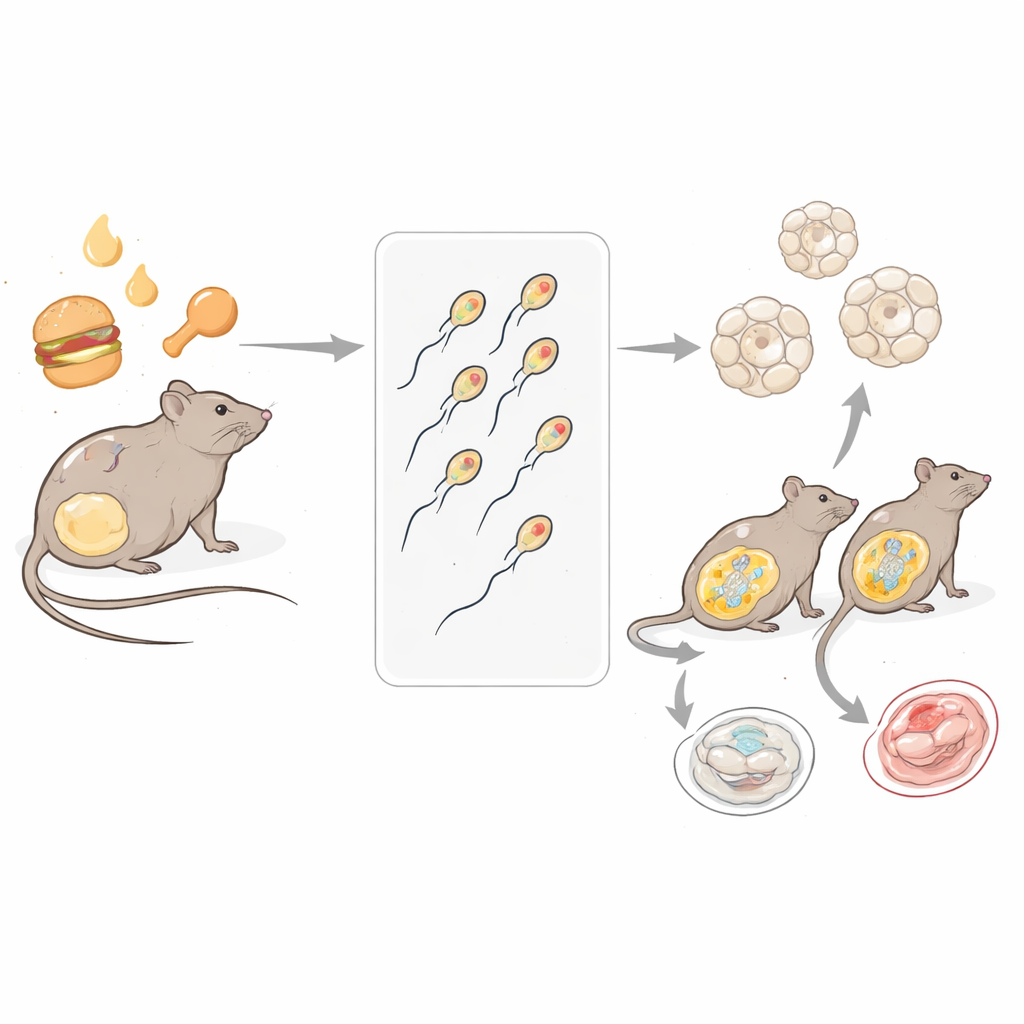
The team began by feeding male mice either a lean diet, a high-fat diet that caused obesity, or a high-fat diet followed by weight loss on a lean diet. These "founder" males were then mated with lean females, and all offspring were raised on a normal, low-fat diet. Despite similar body weights, male offspring of obese fathers showed poorer control of blood sugar and reduced sensitivity to insulin—hallmarks of type 2 diabetes risk. Their fat depots were heavier, their fat cells were larger, and blood levels of the hormone leptin were higher, mirroring patterns seen in their obese fathers. Notably, these changes were much weaker in daughters, suggesting a strong sex-specific vulnerability in male offspring.
Broken Powerhouses in Fat Tissue
To understand what was going wrong inside the body, the researchers focused on white fat tissue, an organ that stores surplus calories and communicates with the rest of the body via hormones and lipids. Using large-scale protein and gene measurements, they found that in both obese fathers and their sons, many components of the mitochondria—the cellular “powerhouses”—were dialed down in fat tissue. Proteins involved in burning fuel, generating ATP (energy currency), and running the electron transport chain were consistently reduced. Metabolic by-products that reflect healthy mitochondrial activity declined, while certain lipid species linked to mitochondrial stress and damage accumulated. Weight loss in the fathers reversed many of these changes, pointing to a surprisingly flexible mitochondrial program in fat.
Tiny RNAs Carry a Metabolic Memory
The team then looked for a molecular messenger that could explain how a father’s diet history reaches his children’s fat cells. They homed in on microRNAs—short RNA snippets that fine-tune which genes are turned on. In obese fathers, both sperm and epididymal fat showed a similar pattern: microRNAs that normally support mitochondrial function in fat were reduced, while members of the let-7 family were increased. The same let-7 signals appeared in the sons’ fat tissue. Because microRNAs can travel between tissues in small vesicles and are loaded into sperm during their journey through the male reproductive tract, the authors propose that obesity reshapes the sperm’s microRNA cargo, encoding a metabolic “memory” of the father’s lifestyle.
Recreating the Effect in Embryos
To test whether let-7 microRNAs were active drivers rather than innocent bystanders, the researchers injected physiological amounts of two forms, let-7d and let-7e, into one-cell mouse embryos from lean parents. Offspring from these embryos grew up with normal body weight but showed impaired glucose tolerance, insulin resistance, and reduced expression of mitochondrial genes in their fat tissue—closely echoing the pattern seen in progeny of obese fathers. Single-cell analysis of early embryos revealed that these added microRNAs altered gene programs related to oxidative metabolism within just a few cell divisions, suggesting that let-7 can redirect developmental pathways in ways that later influence whole-body metabolism.
How Let-7 Silences Fat-Cell Energy
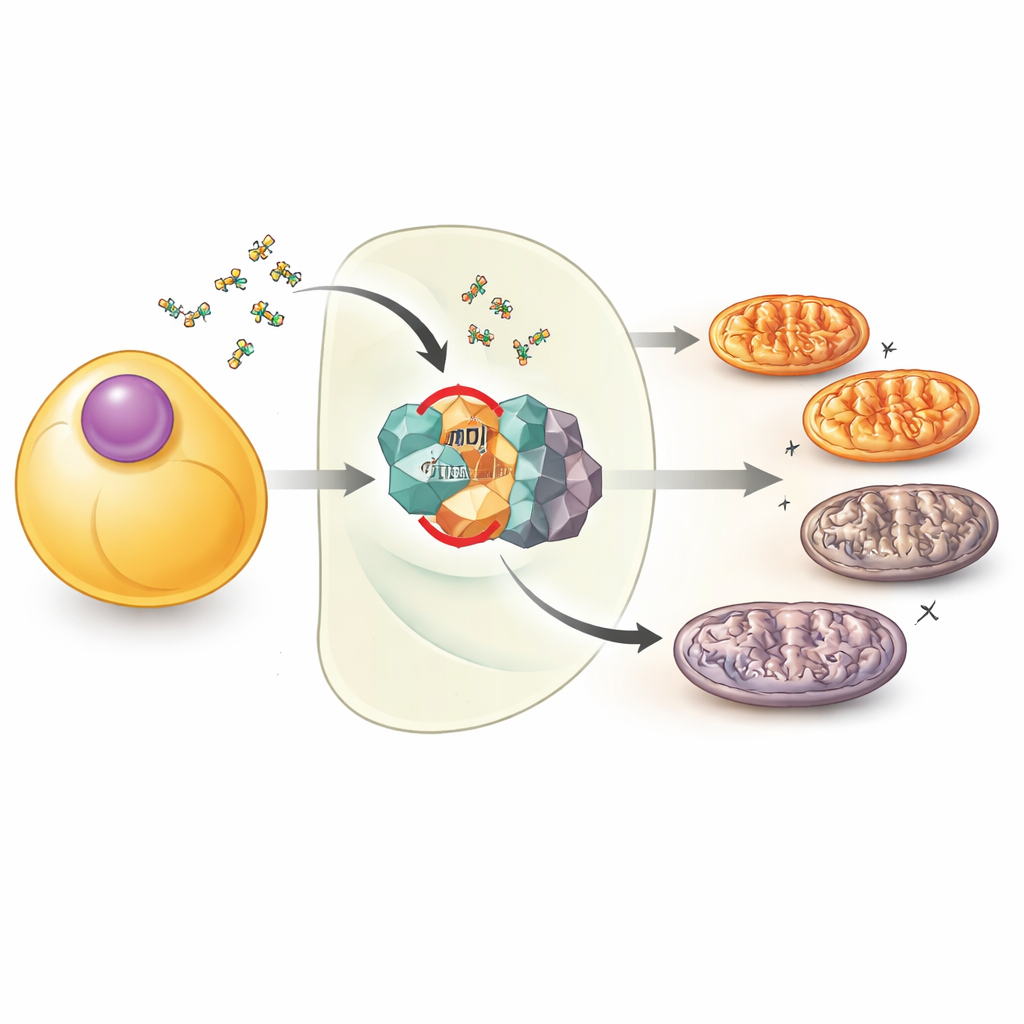
Diving deeper into fat cells, the team discovered a key target of let-7: DICER1, an enzyme essential for producing most microRNAs. In cultured adipocytes, raising let-7 levels reduced DICER1 and a suite of genes that support fuel breakdown and energy generation. When DICER1 itself was experimentally knocked down, mitochondrial respiration and glycolysis dropped, closely mimicking the mitochondrial sluggishness seen in obesity. In fat depots from obese fathers and their sons, DICER1 and important mitochondrial proteins were reduced, and many of these changes were partially restored after weight loss. This points to a self-reinforcing let-7–DICER1 axis: obesity boosts let-7, which dampens DICER1, which in turn reshapes the broader microRNA landscape and undermines mitochondrial health.
Implications for Human Health
The researchers also examined a small group of men with obesity undergoing lifestyle-based weight loss. As the men lost weight, levels of human LET-7D and LET-7E in semen tended to fall, echoing the mouse findings and hinting that a similar mechanism may operate in humans. While much remains to be learned, the study suggests that paternal obesity can program offspring metabolism via microRNAs in sperm, with mitochondrial dysfunction in fat tissue as a key outcome. In plain terms, a father’s diet and weight before conception may influence how well his children’s fat cells can burn energy, potentially shaping their long-term risk of diabetes—and healthier choices before fatherhood might help break that cycle.
Citation: Huang, C., Park, JH., Altıntaş, A. et al. Male obesity causes adipose mitochondrial dysfunction in F1 mouse progeny via a let-7-DICER axis. Nat Commun 17, 3125 (2026). https://doi.org/10.1038/s41467-026-69686-5
Keywords: paternal obesity, sperm microRNA, mitochondrial dysfunction, adipose tissue, intergenerational inheritance