Clear Sky Science · en
Design-driven optimization of low-cost reagent formulations for reproducible and high-yielding cell-free gene expression
Making Complex Medicines Without Living Cells
Many modern medicines, from cancer therapies to vaccines, are proteins that are usually grown inside living cells in huge stainless-steel tanks. This approach works, but it is slow, costly, and difficult to move out of centralized factories. In this study, researchers show how to re‑engineer a "cell‑free" protein‑making system so that it produces large amounts of protein at a fraction of the usual chemical cost, opening doors for cheaper and more flexible manufacturing of vital biologic drugs.
Why Skip the Cell Altogether?
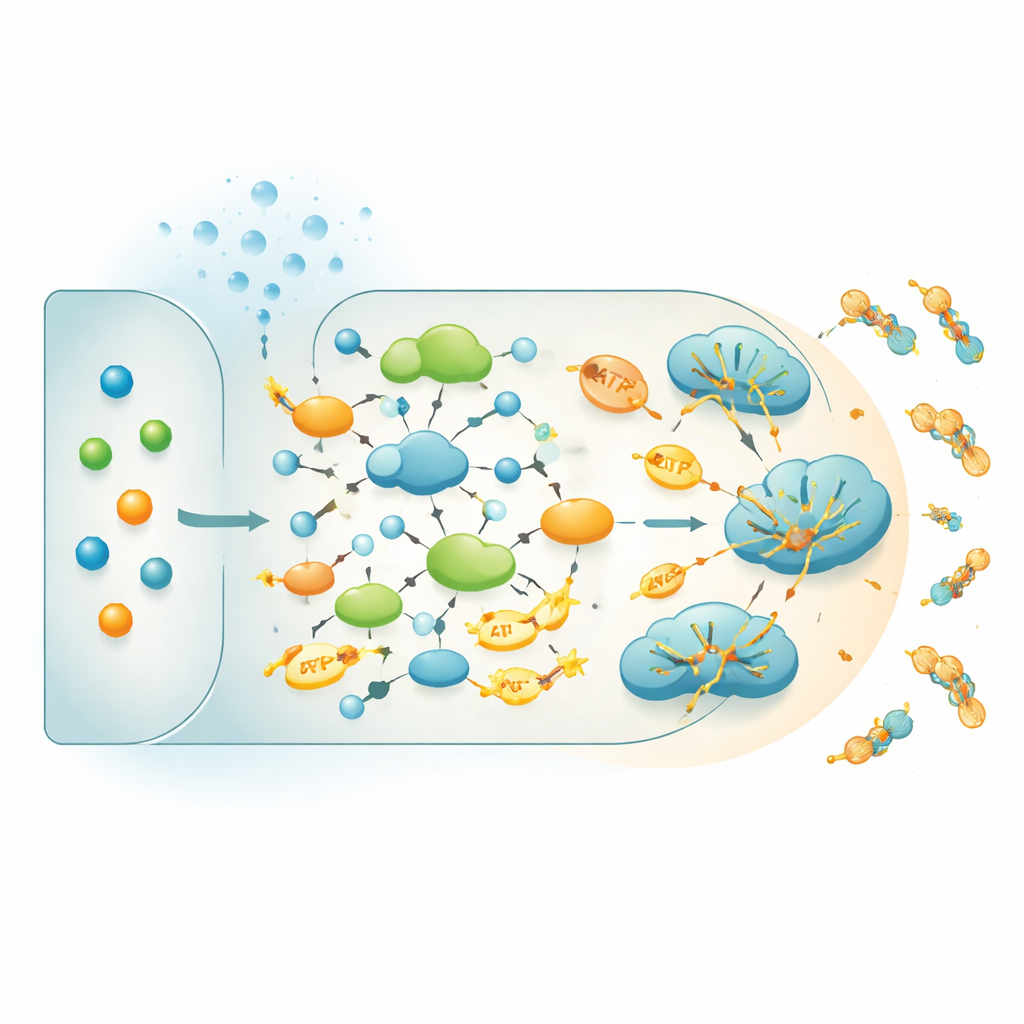
Instead of relying on whole cells, cell‑free gene expression uses broken‑open cells, keeping only the internal machinery that reads DNA and builds proteins. When mixed with the right small molecules and a DNA blueprint, this soupy extract can act like a tiny protein factory. Cell‑free systems are attractive because they are modular and portable: the same extract can make many different proteins just by swapping the DNA, and the mixtures can be dried, shipped, and later reactivated with water. However, the chemical "recipe" that feeds these extracts is often complicated and expensive, dominated by high‑priced energy sources that replenish the cell’s fuel, making widespread use hard to justify.
Designing a Simpler, Cheaper Recipe
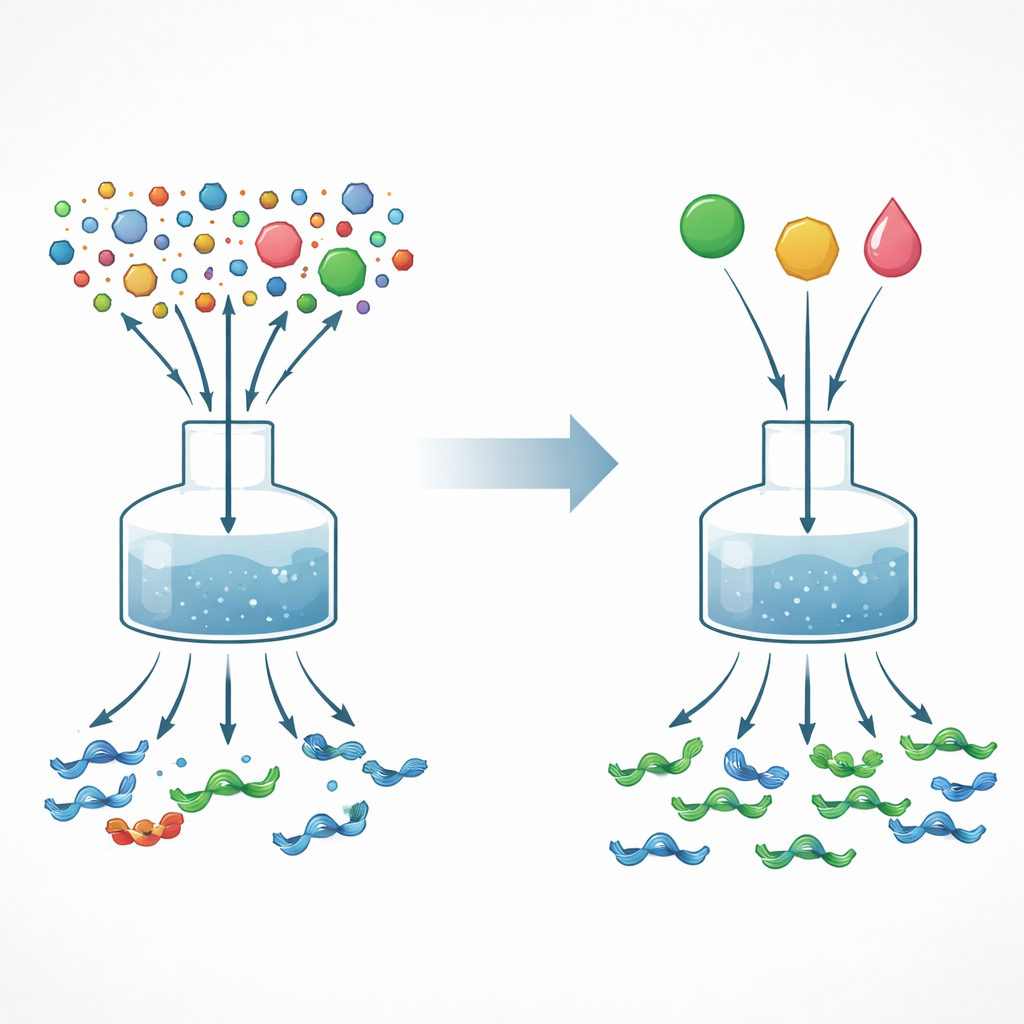
The team set out to design a leaner chemical recipe that still drives strong protein production. Instead of tweaking one ingredient at a time, they used systematic design methods and machine‑learning‑guided searches to test 1,231 different combinations of 58 possible ingredients. Step by step, they discovered which salts, building blocks, and energy sources truly mattered and which could be removed without hurting performance. They first arrived at an ultra‑minimal mix that used only a key salt, amino acids, and basic DNA building blocks, then gradually re‑introduced a small number of low‑cost helpers to boost output.
From Costly to Cost‑Cutting Protein Factories
The result was an optimized formulation containing just 12 components that could reliably churn out a fluorescent model protein at over 2 grams per liter in tiny 15‑microliter reactions. Importantly for real‑world use, the chemical cost to make one gram of protein dropped by about 95 percent compared with leading older recipes, approaching or beating the cost range of traditional cell‑based manufacturing. When the researchers improved how much oxygen reached the reaction—using a small bioreactor that supplied pure oxygen—they pushed yields to about 3.7 grams per liter while lowering the cost even further. Careful measurements showed that this recipe supported a steadier balance of energy and central metabolism than older systems, helping the protein factory run longer and harder.
Robust Across Labs, Strains, and Many Proteins
Low cost alone is not enough; a practical system must also be dependable and versatile. The scientists showed that their new mix produced nearly the same protein amounts when used with separate batches of cell extract, in different lab spaces, and by different researchers, indicating strong robustness. They also adapted the conditions to support proteins that need disulfide bonds—internal chemical links important for many antibodies—by carefully tuning the reaction’s acidity and adding supportive helper proteins. In this mode, the system successfully made more than 20 different proteins, including fifteen medically relevant products such as vaccine carriers and full‑length versions of the cancer drug trastuzumab, many at over 100 micrograms per milliliter and often at higher soluble yields or lower cost than earlier recipes.
Active Medicines on Demand
To confirm that these proteins were not just present but functional, the team tested several of them in activity assays. A clot‑dissolving enzyme cut its target molecule as expected; an antibacterial protein killed test bacteria; a designer mini‑protein bound to the SARS‑CoV‑2 spike protein; and the antibody trastuzumab recognized its specific capture partner. Together, these results show that the streamlined, low‑cost cell‑free system can make complex, working biologic molecules, not just simple test proteins.
Bringing Protein Production Closer to the Patient
In plain terms, this work turns a once finicky and costly cell‑free protein system into a much simpler, cheaper, and more powerful tool. By cutting the chemical recipe down to its essentials while boosting output, the researchers move cell‑free manufacturing closer to practical use in settings far beyond major factories—such as regional hospitals, field clinics, or rapid‑response facilities during outbreaks. With further refinements in DNA preparation, purification, and stability, the same strategy could help democratize the production of advanced protein medicines around the world.
Citation: Olsen, M.L., Copeland, C.E., Sundberg, C.A. et al. Design-driven optimization of low-cost reagent formulations for reproducible and high-yielding cell-free gene expression. Nat Commun 17, 3478 (2026). https://doi.org/10.1038/s41467-026-69605-8
Keywords: cell-free protein synthesis, low-cost biologics, synthetic biology, on-demand biomanufacturing, antibody production