Clear Sky Science · en
FOXJ1 mediates taxane resistance through regulation of microtubule dynamics
Why some cancer drugs suddenly stop working
Many men with advanced prostate cancer initially benefit from taxane chemotherapy drugs like docetaxel, which can shrink tumors and extend life. Yet, almost inevitably, the cancer learns to evade these medicines and begins to grow again. This study asks a simple but crucial question: what, inside the cancer cells themselves, allows them to dodge a drug that once worked so well?
A closer look at the cell’s inner scaffolding
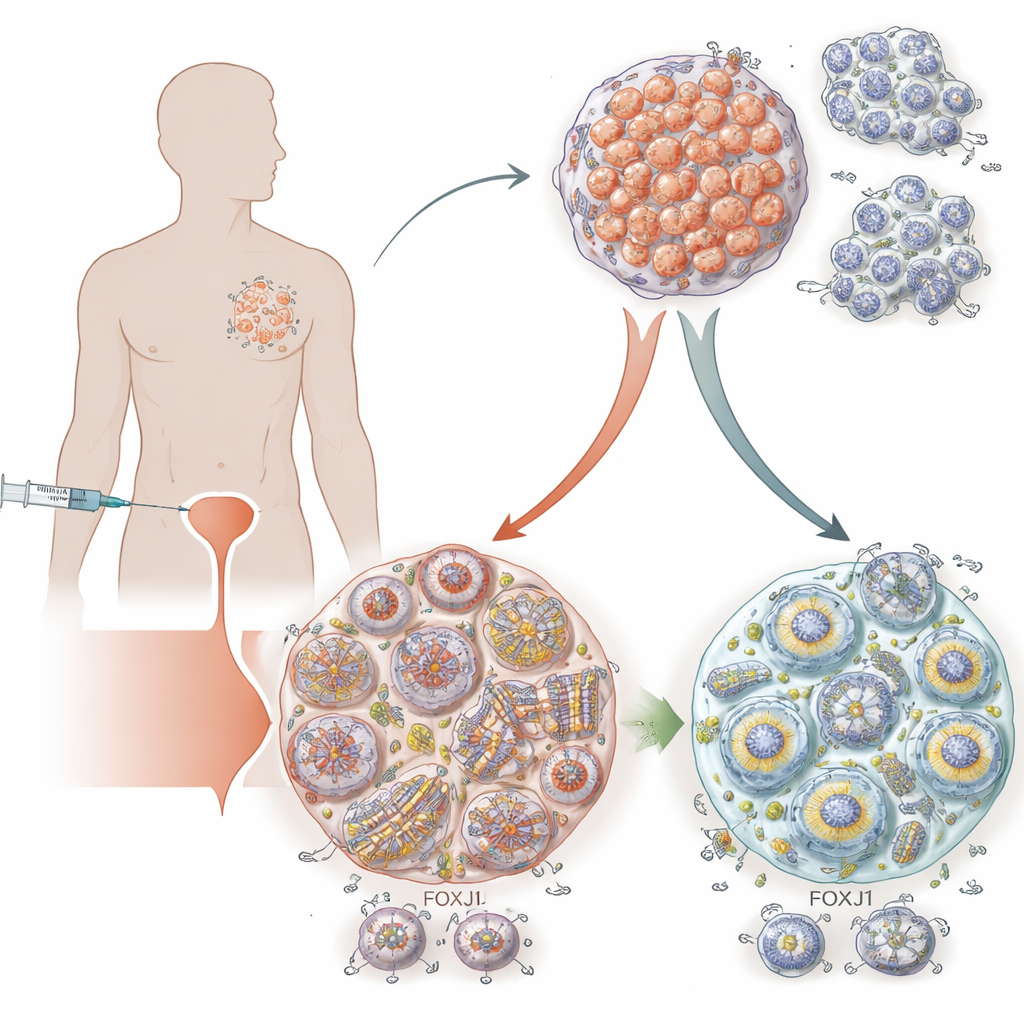
Taxane drugs work by targeting microtubules, tiny hollow rods that act as the cell’s internal scaffolding and railway system. When taxanes latch onto these structures, they stiffen and bundle the microtubules, jamming cell division and many other vital processes until the cancer cell dies. The researchers used tumor samples grown in mice from real prostate cancer patients to mimic what happens in the clinic: tumors first shrank with docetaxel and then became resistant. By comparing resistant tumors to those that remained sensitive, they looked for genes whose activity changed in a way that might explain the escape.
A master switch that rewires drug response
The team discovered that resistant tumors ramped up a gene called FOXJ1, best known for helping cells grow tiny hairlike structures called cilia. Many of the genes activated downstream of FOXJ1 encode proteins that interact directly with microtubules. In prostate cancer cells grown in the lab, artificially boosting FOXJ1 made them harder to kill with docetaxel and a related drug, cabazitaxel. Under the microscope, these FOXJ1-rich cells showed less of the thick, bundled microtubules that normally appear when taxanes bind, suggesting the drug was no longer gripping its target effectively. When the scientists reduced FOXJ1 levels instead, the opposite happened: microtubules bundled more strongly after treatment, more drug bound to them, and the cells became easier to kill.
How microtubule behavior tilts the balance
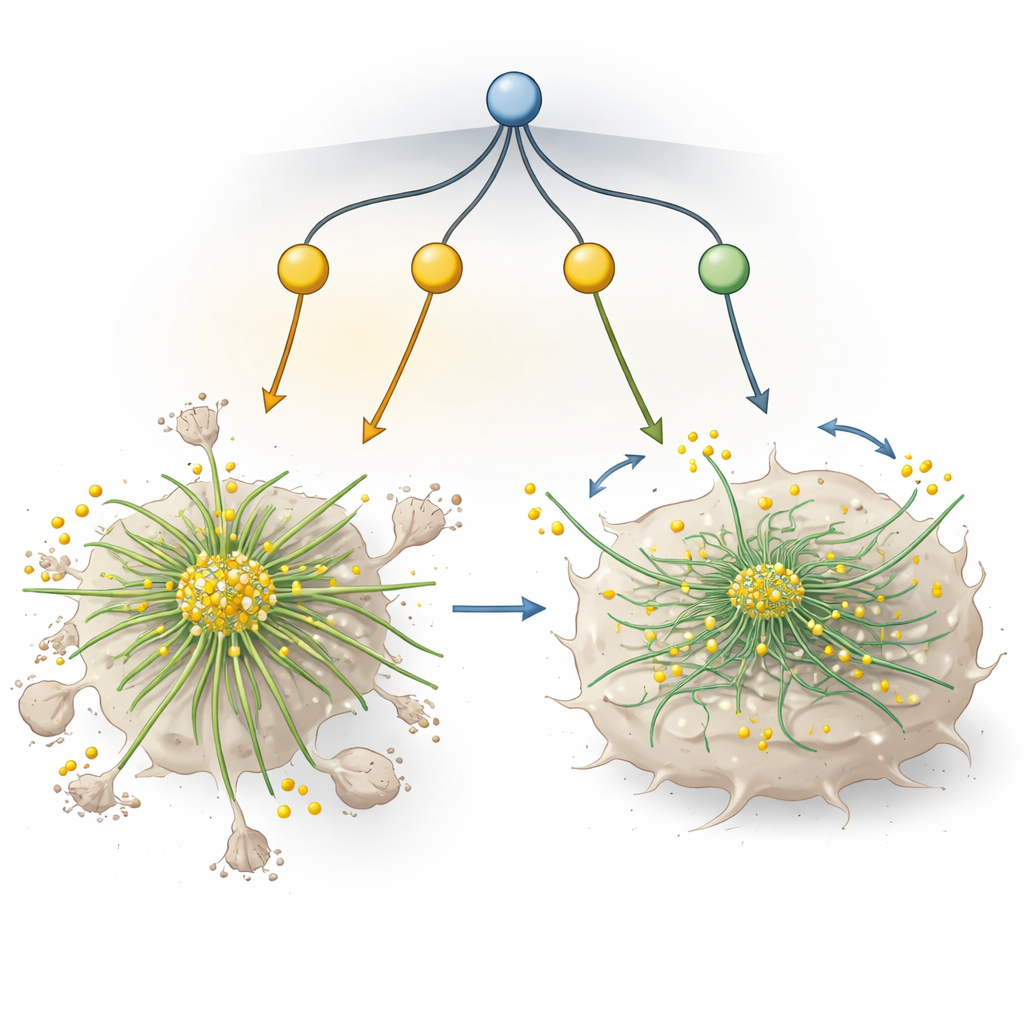
Further experiments revealed that FOXJ1 changes the basic behavior of microtubules even before any drug is added. Cells lacking FOXJ1 had slower-growing microtubules and lower levels of a chemical change associated with long-lived, stable fibers, yet these same cells grabbed onto taxane molecules more readily and stabilized dramatically when treated. In contrast, higher FOXJ1 seemed to favor a more dynamic microtubule network that, paradoxically, became harder for taxanes to freeze and bundle. One FOXJ1-controlled protein, TPPP3, turned out to be an important accomplice: when overproduced on its own, it partially reproduced the same resistance, both in cell cultures and in mouse tumors. This points to a broader FOXJ1-driven program that subtly reshapes the microtubule scaffold so that taxane drugs cannot fully lock it down.
From petri dish to patient outcomes
The scientists then asked whether FOXJ1 matters in real patients. In a large dataset of men with advanced prostate cancer, tumors that had previously been exposed to taxanes showed more frequent gains of the FOXJ1 gene and tended to express more of it. Most strikingly, in a major clinical trial where men received hormone-blocking therapy with or without added docetaxel, those whose tumors started out with high FOXJ1 did not seem to gain much benefit from the chemotherapy. Men with low FOXJ1, in contrast, experienced clear improvements in how long they lived without their disease worsening and in overall survival when docetaxel was added.
What this means for future cancer care
In plain terms, this work identifies FOXJ1 as a cellular switch that can make prostate cancer cells relatively blind to taxane drugs by altering how their inner scaffolding behaves. Measuring FOXJ1 levels in tumor samples could help doctors predict which patients are unlikely to benefit from taxane chemotherapy and spare them the side effects of an ineffective treatment. In the longer term, therapies that dampen FOXJ1 activity or target key partners like TPPP3 might re-sensitize tumors, allowing existing drugs such as docetaxel to work again. By understanding how cancer cells rewire their internal architecture, researchers are opening new paths to keep vital chemotherapies effective for longer.
Citation: Xie, F., Gjyrezi, A., Fein, D. et al. FOXJ1 mediates taxane resistance through regulation of microtubule dynamics. Nat Commun 17, 2763 (2026). https://doi.org/10.1038/s41467-026-69556-0
Keywords: prostate cancer, chemotherapy resistance, taxanes, microtubules, FOXJ1