Clear Sky Science · en
A gut microbiome-kidney-heart axis predictive of future cardiovascular diseases
How Gut Bugs May Foreshadow Heart Trouble
Most of us know that high blood pressure or high cholesterol can raise the risk of heart attacks and strokes. This study adds a surprising player to that story: the trillions of microbes living in our gut. By following chemical footprints in the blood, the researchers show that gut microbes are linked to how well our kidneys and heart work long before obvious disease appears. In other words, your gut ecosystem may quietly signal who is headed toward future cardiovascular disease years in advance.
The Hidden Link Between Gut, Kidneys and Heart
Cardiovascular diseases remain the leading cause of death worldwide, and doctors urgently need ways to spot problems early, when damage is still reversible. The team behind this work focused on a “cardiorenal” connection: the tight relationship between kidney function and heart health. Even small declines in kidney performance within the so‑called normal range are known to raise heart risk. At the same time, many studies have tied the gut microbiome to obesity, type 2 diabetes and heart disease, but it was unclear whether gut microbes also shape the very first, subtle shifts in kidney and heart function.
Studying People Before Disease Takes Hold
To catch these early changes, the researchers first examined 275 European adults from the MetaCardis study who were free of obesity, diabetes, metabolic syndrome and known heart disease. Although clinically “healthy,” many already had mild elevations in blood pressure or blood sugar—warning signs of future trouble. The team combined detailed gut microbiome measurements with hundreds of blood chemicals and clinical traits. They looked for patterns linking gut microbes to two key indicators: estimated glomerular filtration rate (a standard measure of kidney filtering capacity) and a heart‑derived hormone fragment called pro‑atrial natriuretic peptide, which reflects strain on the heart. 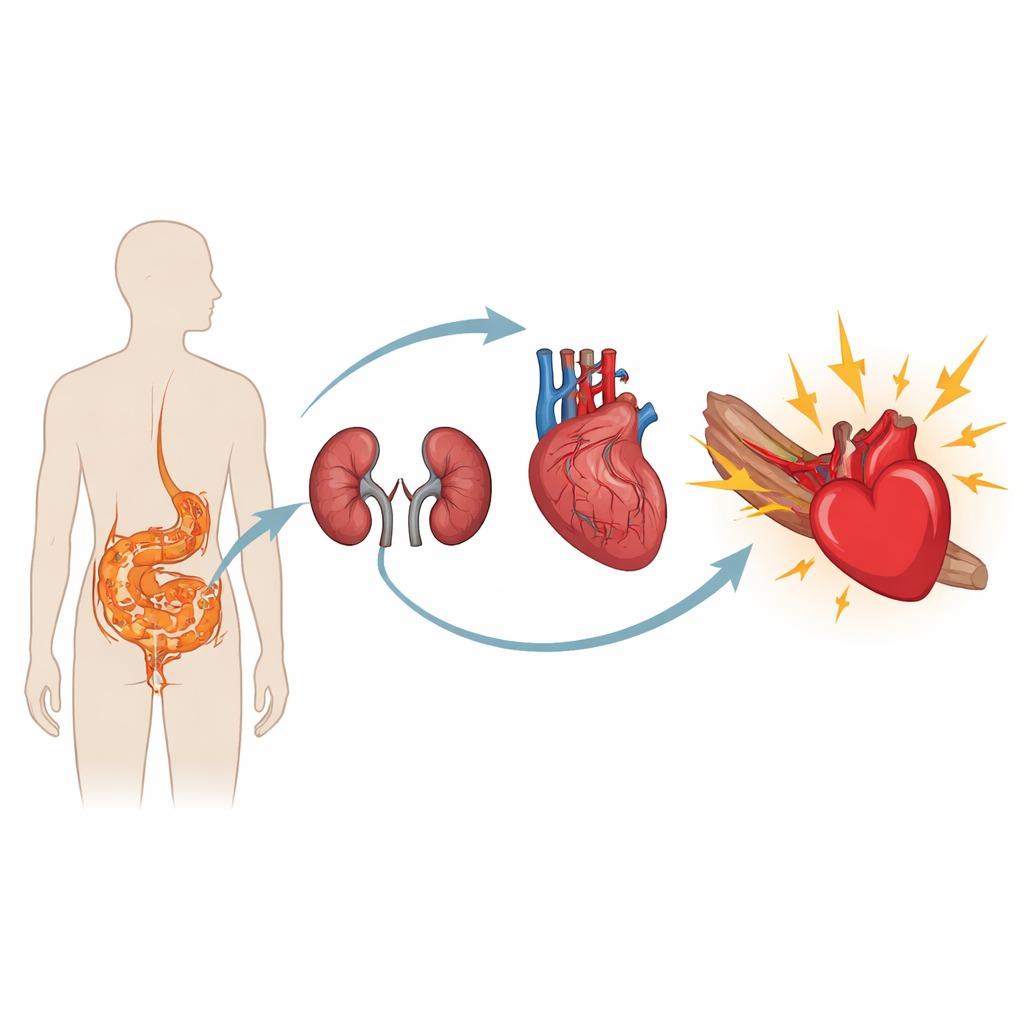
Microbial Chemicals as Early Warning Signals
The analysis revealed that people with distinct gut microbial activities, particularly those involved in breaking down the dietary building blocks phenylalanine and tyrosine, also had distinctive kidney and heart readouts. A set of small molecules in the blood—many produced by microbes from these aromatic amino acids—were strongly linked to slightly lower kidney function and higher heart strain. Several of these compounds, such as phenylacetylglutamine, 4‑cresyl sulfate and related derivatives, are already known as “uremic toxins” because they accumulate when kidneys fail. Here, however, they were detected in people who were still within the normal clinical range, suggesting that gut‑derived chemicals start interacting with the kidney‑heart axis much earlier than previously appreciated.
From Healthy Patterns to Disease Progression
Next, the team asked whether these microbe‑related signals persisted in 1,602 MetaCardis participants with overt cardiometabolic disease—obesity, diabetes or ischemic heart disease. Many of the apparently protective relationships seen in healthy individuals, for example between beneficial fiber‑fermenting bacteria and lower levels of harmful metabolites, were blunted or lost in those with established disease. This pattern hints that as metabolic illness advances, the gut ecosystem may shift in ways that favor build‑up of damaging compounds. Using genetic tools known as Mendelian randomization, the researchers also found evidence that some of these microbial metabolites may actively worsen kidney function, while reduced kidney filtering in turn allows more toxins to build up, feeding a vicious cycle between gut, kidneys and heart.
Predicting Future Heart Events in the Wider Population
To see whether these blood chemicals matter in everyday life, the scientists turned to the Canadian Longitudinal Study on Aging, which is tracking tens of thousands of adults over time. In more than 8,600 participants, higher baseline levels of several key metabolites—again, largely products of microbial phenylalanine and tyrosine metabolism—predicted a greater chance of heart attacks and higher overall mortality over the following years, even after accounting for age, sex and kidney function. When these metabolites were added to standard cardiovascular risk factors in statistical models, the ability to predict future heart attacks improved significantly, suggesting that they carry independent and clinically useful information. 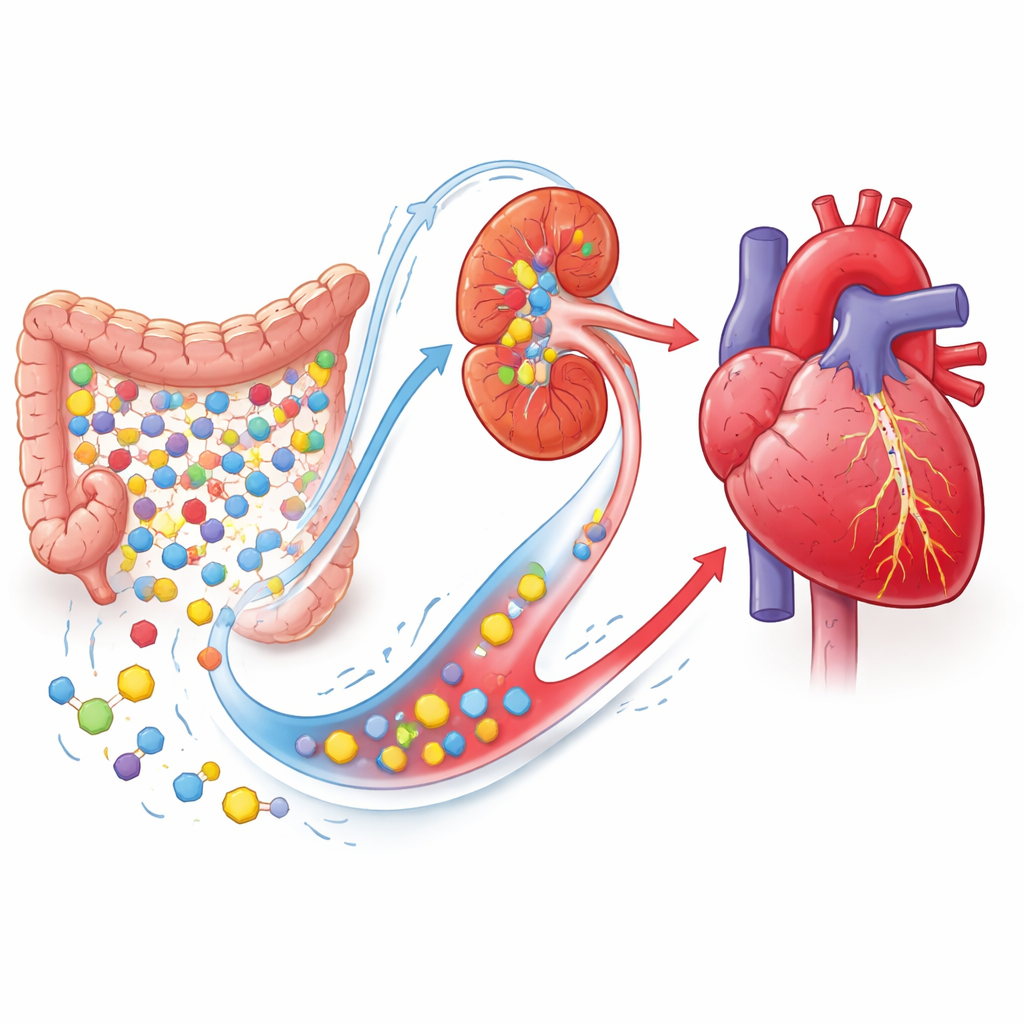
What This Could Mean for Prevention
For a general reader, the central message is that the gut microbiome does more than help digest food: it forms part of a three‑way conversation with the kidneys and heart. In some people, especially those drifting toward high blood pressure or diabetes, this dialogue may shift toward overproduction and poor clearance of specific microbial chemicals that strain the kidneys and, ultimately, the heart. While this work does not yet prove cause and effect, it points to blood markers that could one day help identify individuals at heightened risk much earlier than current tests allow, and it suggests that adjusting diet or the gut microbiome itself might become a new avenue to protect kidney and heart health.
Citation: Chechi, K., Chakaroun, R., Myridakis, A. et al. A gut microbiome-kidney-heart axis predictive of future cardiovascular diseases. Nat Commun 17, 3477 (2026). https://doi.org/10.1038/s41467-026-69405-0
Keywords: gut microbiome, kidney function, cardiovascular disease, microbial metabolites, precision prevention