Clear Sky Science · en
An Antarctic ecosystem value index to quantify ecological value across trophic levels and over time
Why Antarctic Waters Matter to All of Us
The ocean surrounding Antarctica may feel worlds away, but it quietly helps regulate Earth’s climate and supports unique wildlife found nowhere else. As climate change and expanding fisheries reshape this icy frontier, scientists and policymakers urgently need to know which areas of the Southern Ocean are most important for the web of life, today and in the future. This paper introduces a new way to measure that importance, showing where Antarctic seas are biological “hotspots” that deserve special protection.
Finding Nature’s Hotspots in a Frozen Ocean
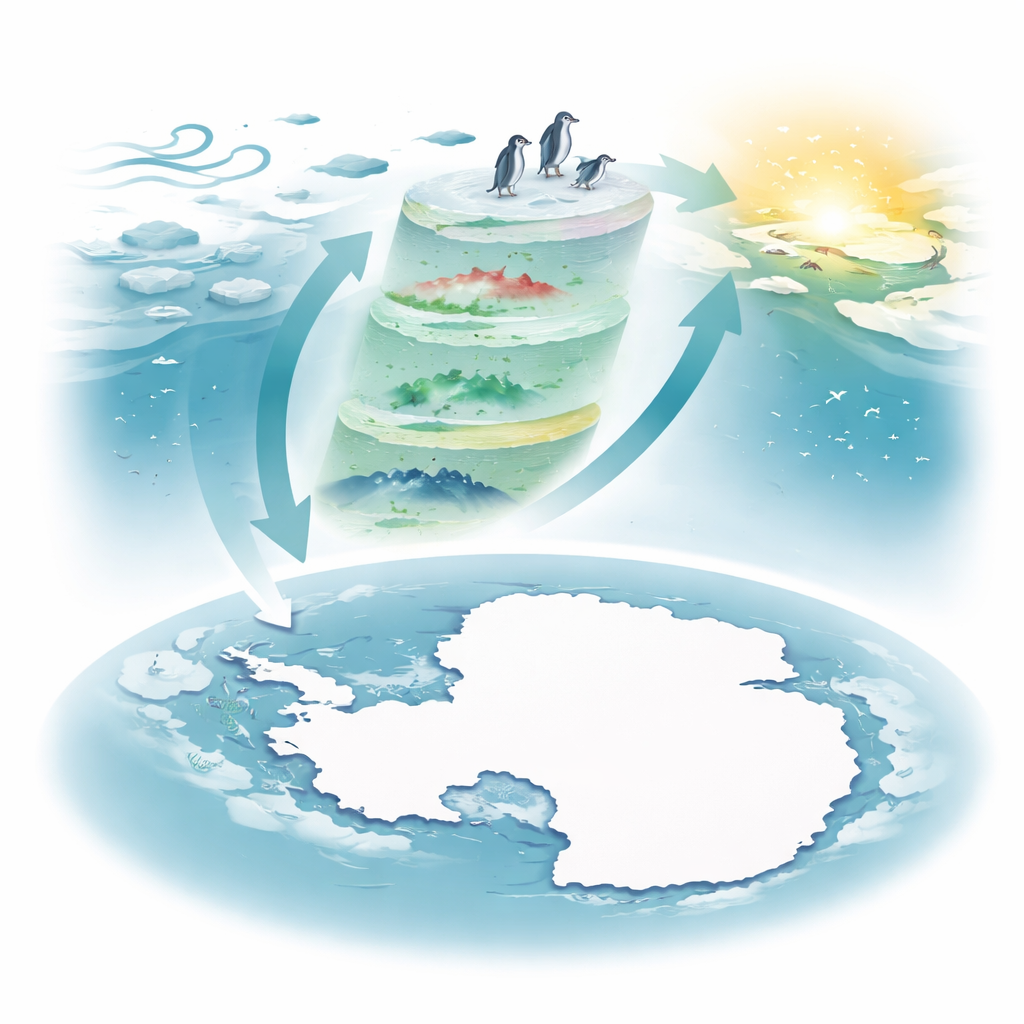
The authors develop the Antarctic Ecosystem Value (AEV) Index, a single score that captures how valuable different patches of ocean are to the Antarctic ecosystem itself. Instead of focusing on one species, the index blends information from several key levels of the food web: microscopic plant-like organisms (phytoplankton) that fuel the system, krill that graze on them, bottom-dwelling fish, and two iconic penguins, Emperor and Adélie. Using a state-of-the-art Earth system model, combined with specialized krill, fish, and penguin models, they calculate how dense or productive each group is across the seas fringing Antarctica, then normalize and sum these layers to highlight where many of them peak together.
Polynyas: Open-Water Oases in the Ice
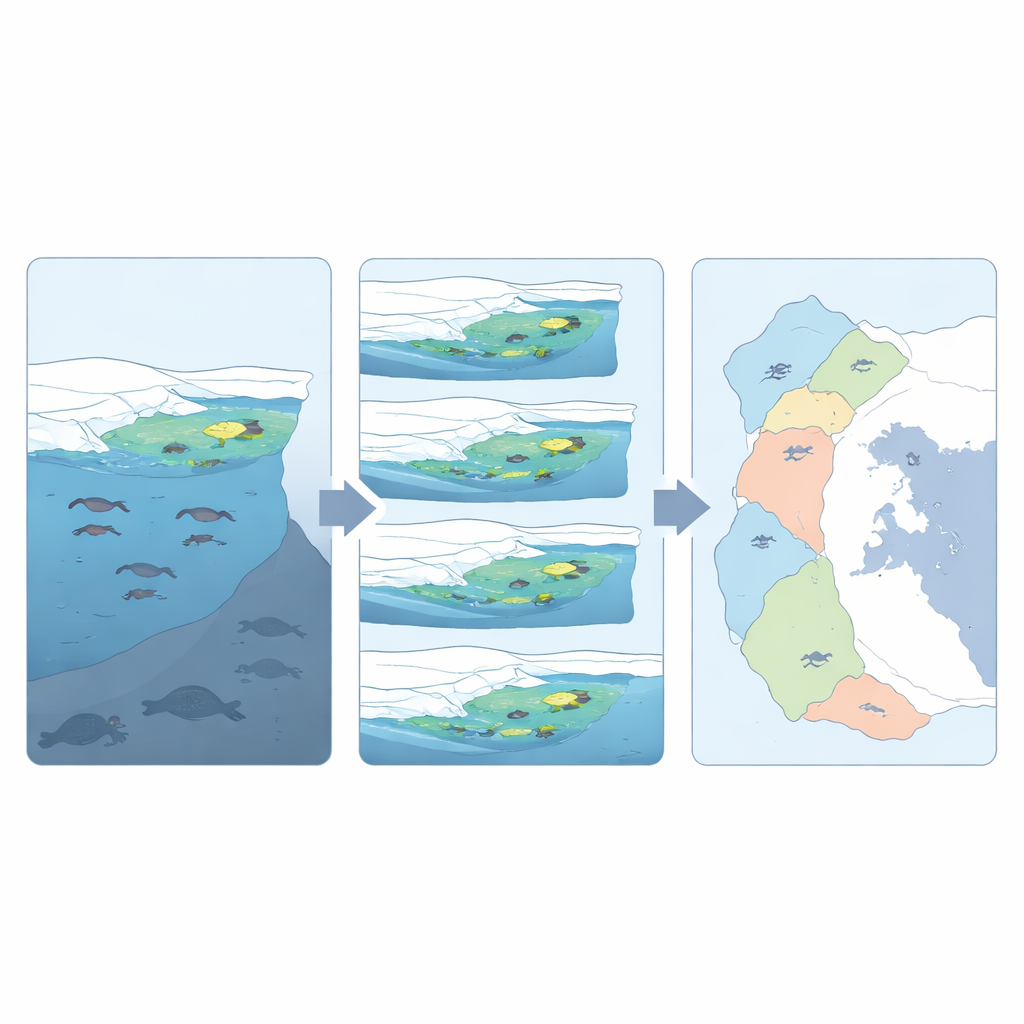
A central finding is the outsized importance of coastal polynyas—recurring areas of thin or absent sea ice along the coast, carved open by strong winds. Though they account for less than 7% of the area in each region, polynyas often contain 31–72% higher AEV values than surrounding waters and host a large share of the most valuable locations. In these open-water “oases,” sunlight can penetrate earlier in spring, triggering rich blooms of phytoplankton. That productivity cascades upward: krill find abundant food, demersal fish benefit from sinking organic matter, and penguins and other predators gain reliable access to prey and breathing holes. The index shows that many of Antarctica’s biological hotspots cluster where polynyas typically form, especially in places like the Ross Sea, parts of East Antarctica, and the Amundsen Sea.
A Changing Climate, a Shifting Food Web
To understand how these hotspots may change, the team projects the AEV Index through the 21st century under a mid-to-high greenhouse gas scenario. Surprisingly, the broad pattern of high-value areas remains fairly stable: coastal zones and polynyas tend to stay important, and overall productivity even rises in many regions as thinning ice lets in more light and lengthens the growing season. But the mix of species underlying that value shifts. As waters warm and sea ice retreats, conditions become less suitable for Emperor penguins, whose colonies are projected to decline sharply in many areas, leaving only a few strongholds. Adélie penguins fare somewhat better, with stable or increasing numbers in some regions but declines near the Antarctic Peninsula and parts of East Antarctica. Meanwhile, lower levels of the food web—phytoplankton, krill, and bottom fish—often maintain or increase their contributions to the index, though some species such as Antarctic toothfish are expected to lose habitat as bottom waters warm beyond their thermal limits.
Guiding Protection Where It Counts Most
The AEV Index also reveals how well existing and proposed Marine Protected Areas (MPAs) line up with these ecological hotspots. In most regions, more than half of the “exceptional” areas already fall within current or planned MPAs, with the Ross Sea reserve performing especially well at covering high-value zones both now and in future projections. Yet important gaps remain. Several highly valuable polynyas in East Antarctica and the Amundsen Sea lie outside any protected boundaries, despite hosting dense food webs and being likely to remain important under climate change. The index is not a full measure of ecosystem health and does not yet include whales, seals, or many fish and bird species, but it offers a powerful, model-based map of where Antarctic life is most tightly concentrated across multiple trophic levels.
What This Means for the Future of Antarctic Life
In plain terms, this study shows that a relatively small set of coastal “oases” around Antarctica carry a large share of the ecological weight, and that many of these places are expected to stay important even as the climate warms. It also warns that top predators like Emperor penguins are likely to lose ground, even where the underlying productivity remains high. By distilling complex model outputs into a single ecosystem value index, the work gives policymakers a clear, science-based way to see which regions matter most for sustaining Antarctic food webs, and where expanding or strengthening MPAs—particularly around key polynyas in East Antarctica and the Amundsen Sea—could make the biggest difference for the long-term resilience of this critical polar ecosystem.
Citation: DuVivier, A.K., Krumhardt, K.M., Landrum, L.L. et al. An Antarctic ecosystem value index to quantify ecological value across trophic levels and over time. Nat Commun 17, 3203 (2026). https://doi.org/10.1038/s41467-026-69011-0
Keywords: Antarctic polynyas, marine protected areas, Southern Ocean ecosystems, climate change impacts, penguin and krill habitats