Clear Sky Science · en
Increased contact transmission of contemporary Human H5N1 compared to Bovine and Mountain Lion H5N1 in a hamster model
Why this animal flu study matters to you
Bird flu headlines can sound distant—about chickens, cows, or wild birds far from daily life. This study tackles a pressing question behind those headlines: how easily are the latest H5N1 bird flu viruses, now infecting dairy cows and other mammals in the United States, able to spread between mammals in ways that might one day threaten people? By testing these viruses in hamsters, researchers probe whether a virus taken from a human is behaving differently from viruses collected from a cow and a mountain lion, and what that might mean for future outbreaks.
Three viruses, one small stand-in for people
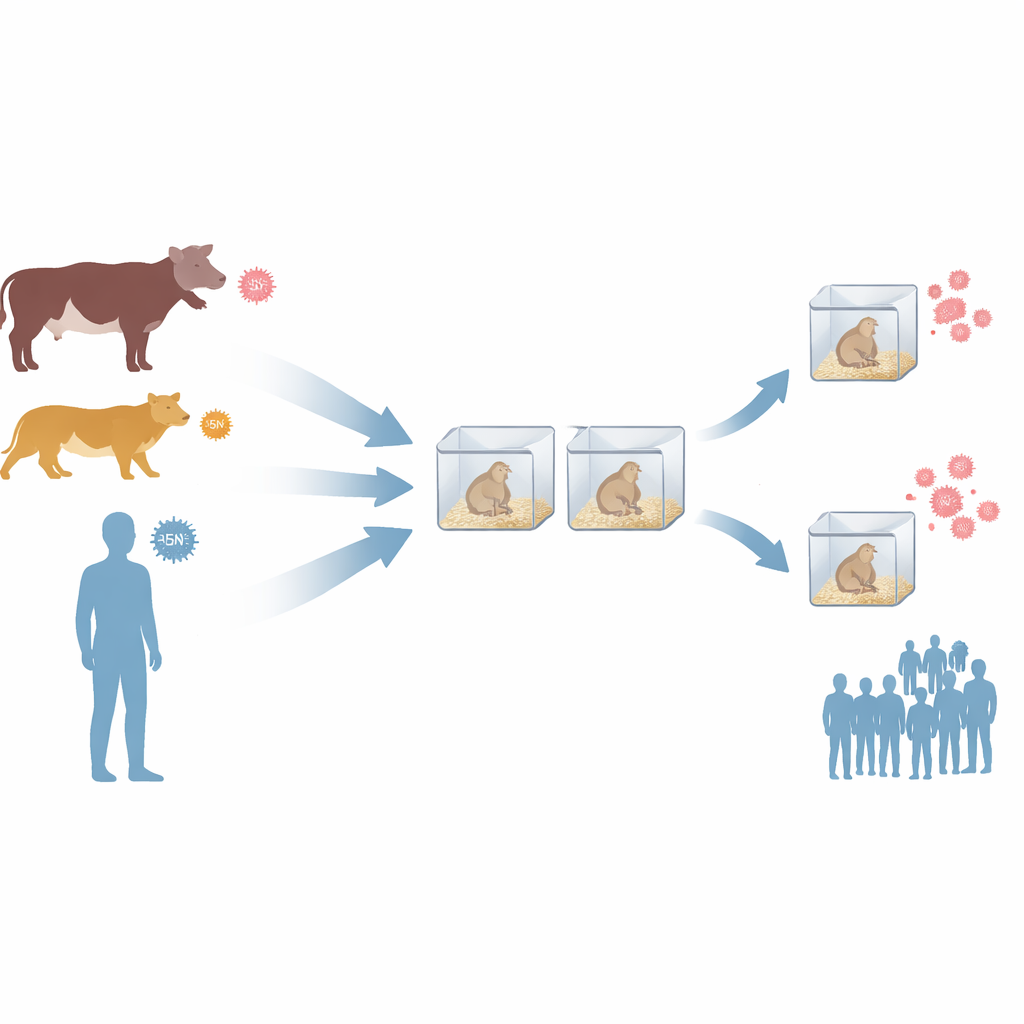
The team focused on three closely related H5N1 viruses from the ongoing outbreak, each originally found in a different mammal: a dairy cow in Ohio, a mountain lion in Montana, and a person in Texas. Syrian hamsters were chosen as the test species because they are small, easy to handle, and have already proven useful for studying respiratory diseases like COVID-19. Researchers dripped a controlled amount of each virus into the noses of hamsters, then followed how sick they became, how much virus they shed, and whether they could pass the infection on to other hamsters through close contact or shared air.
How sick did the hamsters get?
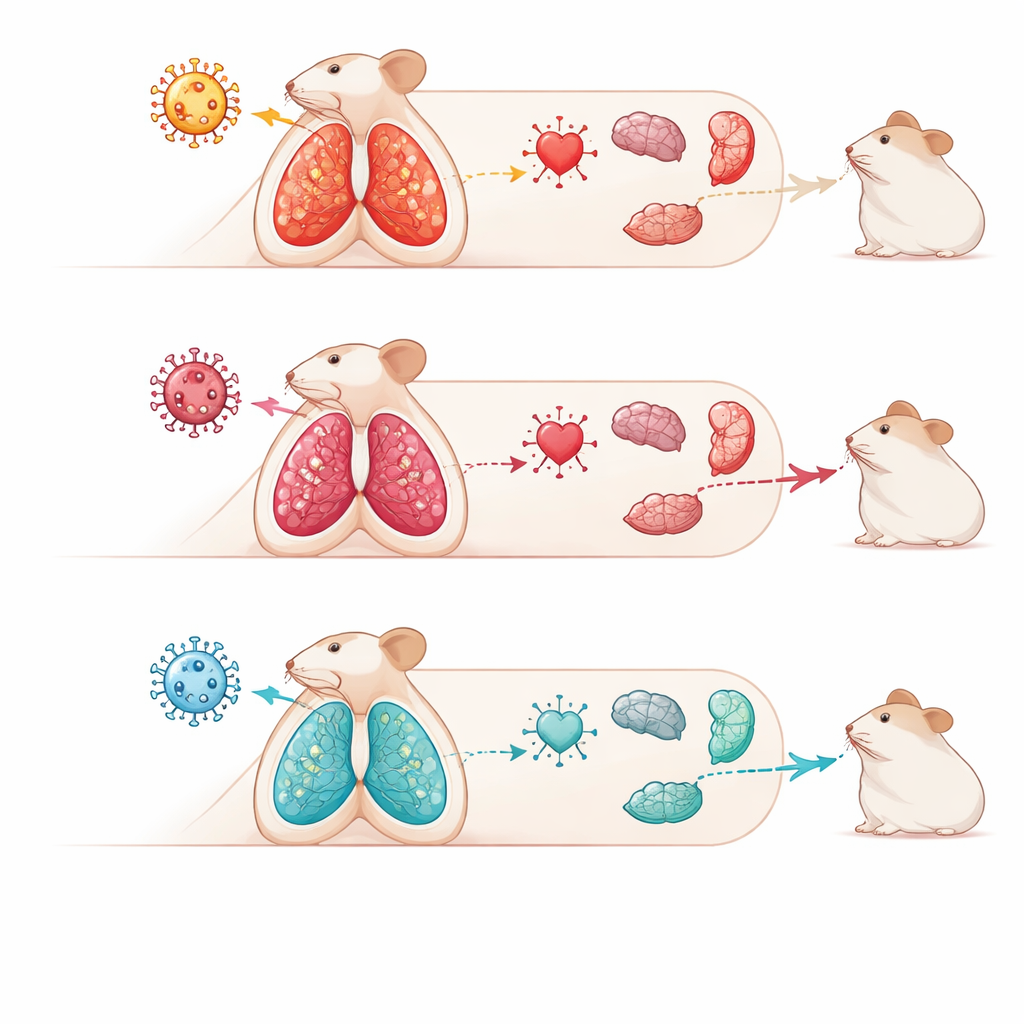
All three viruses were able to infect the hamsters and grow well in their breathing passages. The animals showed clear signs of illness—ruffled fur, breathing trouble, and weight loss—and some had to be humanely euthanized when they became too sick. Overall, the cow- and mountain lion–derived viruses killed about half of the infected hamsters, while the human-derived virus killed slightly more. When the scientists examined organs, they found that the cow and human viruses tended to spread more widely through the body and caused more noticeable damage in the lungs and windpipe than the mountain lion virus. In other words, all three were dangerous in this animal model, but the cow and human strains appeared more aggressive.
Which virus spread most easily?
To test spread, the researchers placed newly infected “donor” hamsters in special cages designed to separate two kinds of exposure. In the same compartment, healthy animals could touch and mingle with donors, mimicking close contact. In an adjoining compartment, another set of hamsters shared only the air, but no physical contact or shared bedding, mimicking airborne exposure. Although the donors shed large amounts of virus, actual transmission to their neighbors was surprisingly rare. Only the human-derived virus produced full, ongoing infections in close-contact hamsters, and even then only in two of eight animals. The cow and mountain lion viruses occasionally left enough of a trace to trigger an immune response in a neighbor, but without detectable virus growth, suggesting that any passed-on virus was quickly stopped.
What makes the human virus special?
To look under the hood, the team moved from animals to lab dishes. They grew the three viruses in two kinds of cells that stand in for the respiratory tract and tested them at two temperatures that approximate the cooler nose and the warmer deep lung. The human virus consistently replicated faster and reached higher levels than the cow and mountain lion viruses, and it did so equally well at both temperatures. By contrast, the other two viruses, especially the mountain lion strain, slowed down noticeably at the cooler setting. Genetic comparisons offered a clue: the human virus carried a well-known change in one of its polymerase proteins, called PB2 E627K, previously linked to better growth of bird flu viruses in mammals. This mutation likely helps explain the virus’s stronger performance in both cells and hamsters.
What this means for future outbreaks
For a layperson, the key takeaway is both sobering and reassuring. On the one hand, the human-derived H5N1 virus clearly behaves more like a “mammal‑tuned” virus: it grows efficiently in mammalian cells, causes serious disease in hamsters, and is better—though still not very good—at spreading through close contact than its cow and mountain lion cousins. On the other hand, none of the tested viruses spread easily through the air in this model, and transmission overall remained low, echoing the real-world picture where human-to-human spread of H5N1 has not yet been seen. The study shows that Syrian hamsters are a useful additional tool, alongside ferrets and other models, for watching how H5N1 is changing. That kind of careful tracking will be essential for spotting any future versions of the virus that take further steps toward efficient human-to-human transmission.
Citation: Koolaparambil Mukesh, R., Kaiser, F.K., Schulz, J.E. et al. Increased contact transmission of contemporary Human H5N1 compared to Bovine and Mountain Lion H5N1 in a hamster model. Nat Commun 17, 3869 (2026). https://doi.org/10.1038/s41467-026-68900-8
Keywords: H5N1 bird flu, hamster model, avian influenza transmission, zoonotic viruses, dairy cattle outbreak