Clear Sky Science · en
Different sex determination systems in two closely related Eurasian minnow (Phoxinus) species
Why tiny river fish matter
Eurasian minnows are small, familiar freshwater fish, but hidden in their DNA is a surprisingly dramatic story. This study shows that two closely related minnow species, living side by side in European rivers and even capable of hybridizing, actually use different genetic systems to decide whether an embryo becomes male or female. That quiet difference in their chromosomes may help keep the species apart and offers a window into how new species form.
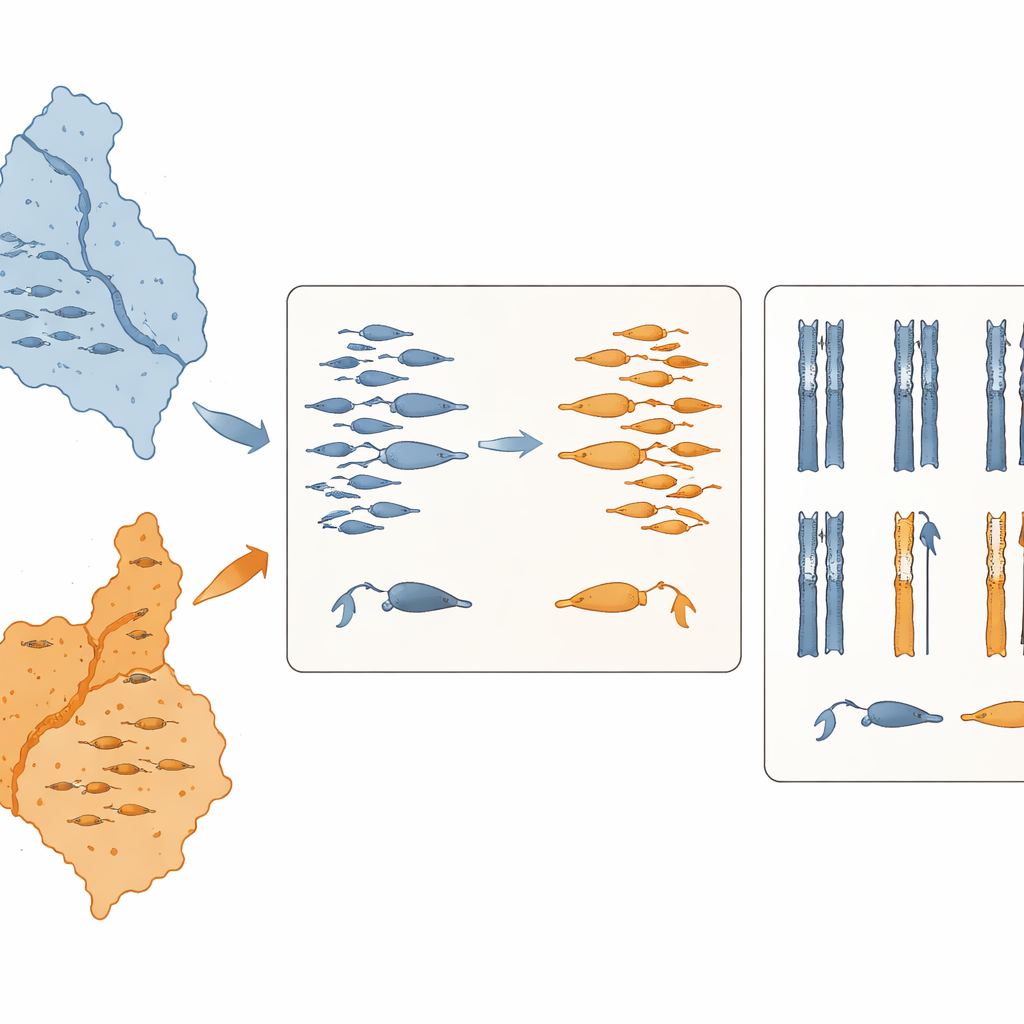
Two look‑alike minnows, two hidden rulebooks
The researchers focused on two species: Phoxinus phoxinus, common in the Meuse and Rhine river systems, and Phoxinus csikii, found mainly in the Danube and parts of the Rhine. These minnows often share waters, and hybrids have been reported, yet their exact boundaries as species remain fuzzy. Because sex determination can evolve quickly and influence whether hybrids are fertile, the team set out to discover how each species’ sex is genetically decided. They first confirmed, using mitochondrial DNA from dozens of fish, that their samples indeed fell into two clear genetic clusters matching the two named species, justifying a detailed, species‑by‑species look at their genomes.
Peering into the genome for clues
Sex chromosomes in mammals and birds are easy to spot: the X and Y, or Z and W, differ in size and content. In many fishes, however, the sex chromosomes still look almost identical, making them hard to detect by microscope alone. To get around this, the researchers sequenced whole genomes from identified males and females of both minnow species. They then used several complementary strategies. One compared DNA coverage between the sexes, which can flag large chunks of chromosome present mainly in males or females. Another scanned millions of genetic variants, looking for positions where one sex is mostly mixed (carrying two different versions) while the other sex is uniform. A third, more flexible approach counted short DNA fragments called k‑mers directly from the raw data, searching for sequences that show up mostly in one sex without relying too heavily on an existing reference genome.
One species with male‑based sex, one with female‑based sex
For P. phoxinus, the patterns converged: males carried more mixed variants and unique DNA sequences in two small regions, one on chromosome 3 and one on chromosome 12. In river populations from the Rhine, the chromosome‑3 region most clearly separated males from females, whereas in the Meuse, the chromosome‑12 region played a stronger role. In both areas, males tended to have two different versions of the DNA, while females had matching copies. This signature points to a classic XX/XY system, where males carry the distinct sex chromosome. Within these regions, the team found genes tied to sperm development, cell growth, and subtle coloration—traits that can be tightly linked to sex.
In P. csikii, the story flipped. Traditional variant‑based scans, which depended more heavily on the P. phoxinus reference genome, did not pick up a clear sex‑linked region, likely because many female‑specific sequences are missing from that reference. But the k‑mer analysis, which works directly from the raw reads, showed a strong cluster of female‑only DNA fragments near the beginning of chromosome 3. There, females were mostly mixed at certain positions, while males carried matching copies. This pattern is the hallmark of a ZZ/ZW system, where females have the unusual sex chromosome. Genes in this region were linked to stress responses, cell membranes, and hormone pathways important for ovary function, again fitting with a role in sex and reproduction.
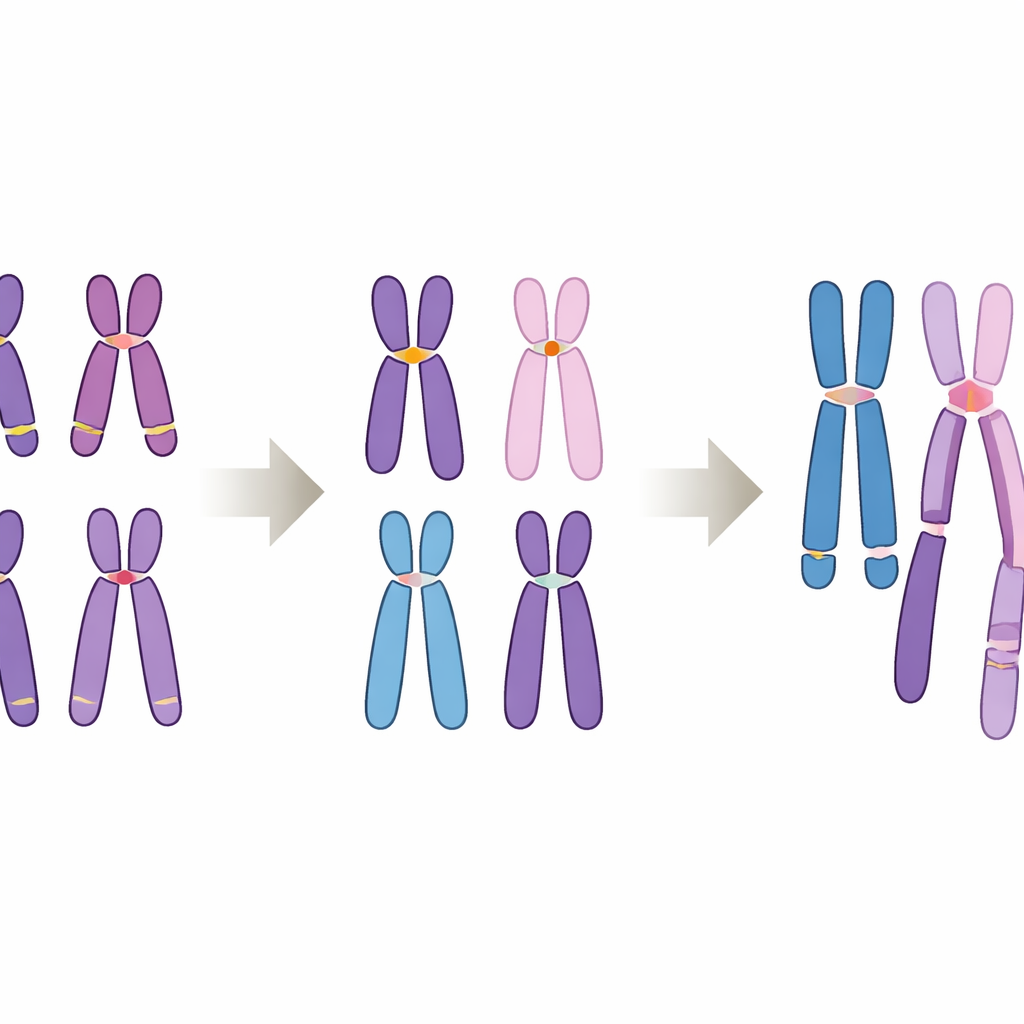
How different sex rules may keep species apart
That two such closely related minnows use opposite sex systems—one male‑based (XX/XY), one female‑based (ZZ/ZW)—highlights just how flexible sex determination can be in fish. When species with different systems interbreed, their offspring can inherit unusual combinations of sex chromosomes that do not pair or function well. This can cause skewed sex ratios, infertility, or poor survival, all of which act as barriers to mixing the species’ gene pools. The authors suggest that these contrasting sex systems may therefore help maintain, or even promote, reproductive isolation between P. phoxinus and P. csikii, despite their overlapping ranges. In short, by uncovering how these minnows decide who is male and who is female, the study also sheds light on how new species arise and stay distinct in crowded river networks.
Citation: Oriowo, T.O., Smith, S.H., Thorman, J. et al. Different sex determination systems in two closely related Eurasian minnow (Phoxinus) species. Heredity 135, 259–270 (2026). https://doi.org/10.1038/s41437-026-00827-8
Keywords: sex determination, Eurasian minnows, fish chromosomes, hybridization, speciation