Clear Sky Science · en
Th17/Treg cell imbalance in allergic rhinitis: mechanisms and therapeutic implications
Why Stuffy Noses Are More Than Just a Nuisance
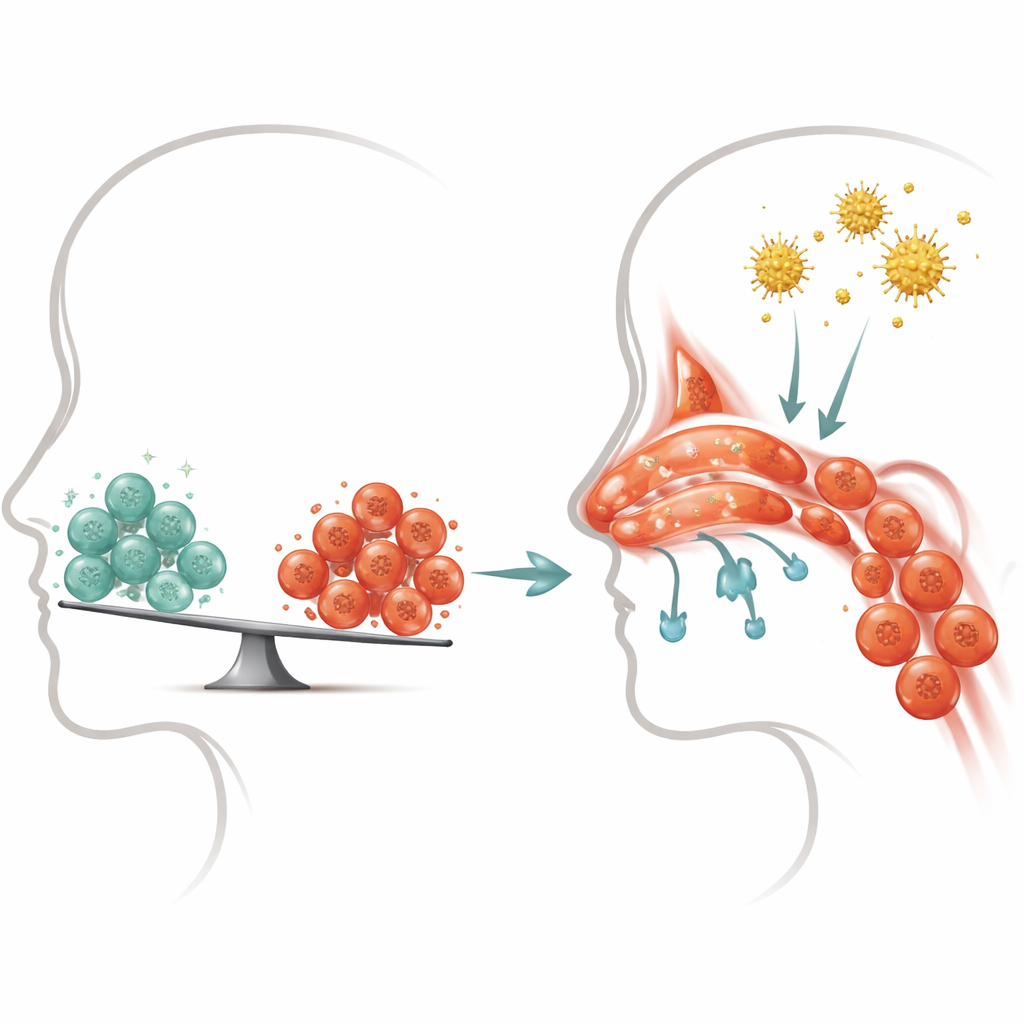
Allergic rhinitis, often experienced as seasonal hay fever, is far more than a simple runny or stuffy nose. It saps concentration, disrupts sleep, and lowers work and school performance for millions of people worldwide. This review article explores how a subtle tug‑of‑war inside the immune system – between cells that stir up inflammation and cells that calm it down – may explain why some people are so sensitive to pollen, dust mites, and other everyday particles, and how new treatments aim to restore that balance.
The Body’s Early and Late Alarm Signals
When someone with allergic rhinitis encounters an allergen, such as dust mites or pollen, their nose doesn’t simply overreact at random. First, antibodies called IgE, already parked on mast cells and basophils in the nasal lining, recognize the invader. This triggers a rapid “early phase” reaction: chemical messengers like histamine and leukotrienes are released, blood vessels widen, glands ooze fluid, and nerves are stimulated – producing sneezing, itching, congestion, and a runny nose within minutes. Hours later, a “late phase” unfolds as more immune cells move into the nasal tissues. This second wave deepens and prolongs symptoms, turning a passing exposure into a day‑long or chronic problem.
Two Key Teams: Fire‑Starters and Peacekeepers
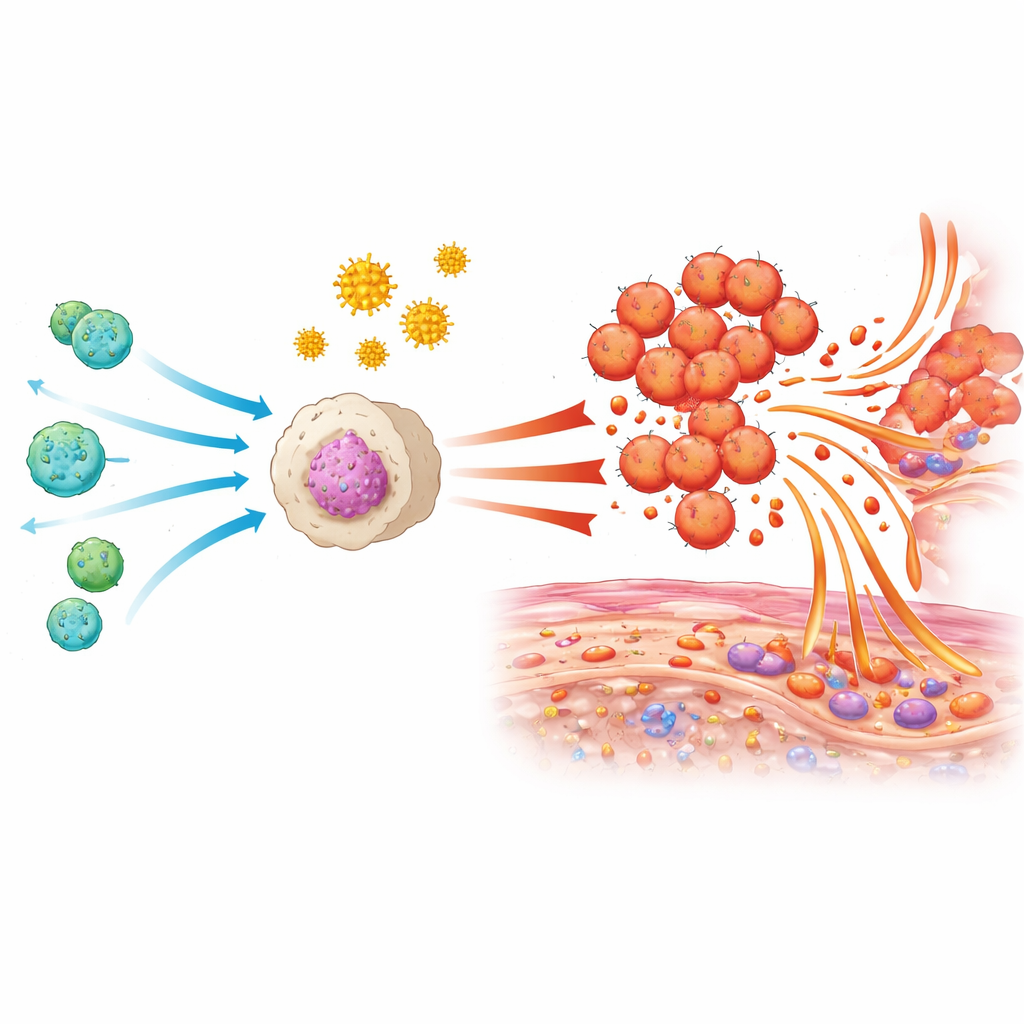
Among the many white blood cells involved, two CD4 T‑cell teams play starring roles. Th17 cells behave like fire‑starters: they release the cytokine IL‑17 and related signals that summon and activate inflammatory cells such as neutrophils and eosinophils, and they can also boost the classic allergy‑driving Th2 response and IgE production. Regulatory T cells, or Tregs, act as peacekeepers, producing calming molecules like IL‑10 and TGF‑β and using surface “brakes” to rein in overactive immune cells. In people with allergic rhinitis, studies consistently show more Th17 activity and fewer or weaker Tregs, leading to a skewed Th17/Treg ratio. This imbalance helps drive more severe nasal inflammation, stronger symptoms, and may even link nasal allergy with asthma and other chronic airway problems.
How the Balance Tips Inside Immune Cells
Whether an immature T cell becomes a Th17 fire‑starter or a Treg peacekeeper depends on a complex network of internal switches. Certain cytokines, such as IL‑6, IL‑21, and IL‑23, encourage Th17 development by activating signaling pathways (notably JAK/STAT3) and turning on the master Th17 gene program. Other signals, especially IL‑2 and high levels of TGF‑β, favor Tregs by boosting Foxp3, the defining Treg control gene. Additional regulators – including metabolic state, oxygen levels, and tiny RNA molecules (microRNAs) – can nudge the same starting cell toward either outcome. Under some conditions, even established Tregs can “re‑program” into Th17‑like cells, underscoring how dynamic and fragile this balance is. In allergic rhinitis, the tilt toward inflammatory inputs and away from stabilizing ones appears to be a central driver of disease.
Current and Emerging Ways to Reset the Immune Tug‑of‑War
Many treatments for allergic rhinitis, both familiar and experimental, can be viewed as attempts to rebalance Th17 and Treg forces. Standard drugs such as intranasal steroids and antihistamines don’t just ease symptoms; in animal and human studies they often reduce Th17‑related signals and support Treg markers. Allergen‑specific immunotherapy (the “allergy shots” or sublingual drops that gradually expose patients to their trigger) can, over time, boost Treg numbers and calming cytokines while dampening Th17 and Th2 responses, helping the immune system tolerate allergens instead of overreacting. Newer targeted approaches – including antibodies against IL‑17 or IL‑9, and immune‑modulating cytokines like IL‑27, IL‑35, and IL‑37 – are being tested to selectively tune these pathways. Additional strategies range from probiotics and fecal microbiota transplantation to cell therapies using mesenchymal stem cells, as well as traditional Chinese medicine formulas, purified plant compounds, and acupuncture, many of which show the ability in models to lower Th17 activity and strengthen Treg‑like regulation.
Looking Toward Smarter, Personalized Relief
The authors conclude that restoring balance between Th17 fire‑starters and Treg peacekeepers is a promising route to more lasting control of allergic rhinitis, but it is not yet ready to be applied in a simple, one‑size‑fits‑all way. The same cells that drive disease also help defend against infections, so broadly shutting down Th17 or globally boosting Tregs could carry risks. Future research needs better models of the human nasal environment, a deeper map of the upstream control circuits, and reliable biomarkers such as IL‑17, IL‑6, and IL‑23 to guide personalized combinations of therapies. Ultimately, the goal is to move beyond merely masking symptoms toward precisely re‑educating the immune system, so that a whiff of pollen or dust no longer sets off an unnecessary internal storm.
Citation: Xiong, Y., Wang, F., Hu, G. et al. Th17/Treg cell imbalance in allergic rhinitis: mechanisms and therapeutic implications. Genes Immun 27, 157–172 (2026). https://doi.org/10.1038/s41435-026-00378-2
Keywords: allergic rhinitis, Th17 cells, regulatory T cells, immune imbalance, allergen immunotherapy