Clear Sky Science · en
The Royal College of Ophthalmologists National Ophthalmology Database age-related macular degeneration (AMD) audit: report 1, associations with socio-economic deprivation in neovascular AMD
Why where you live can affect how well you see
As people grow older, one of the leading threats to their sight is age-related macular degeneration, a condition that damages the sharp, central part of vision. This study looks at whether people’s chances of keeping their sight after modern eye injections differ depending on how deprived their local area is. Using data from tens of thousands of eyes treated in England’s National Health Service, the researchers ask a simple but important question: does your postcode still matter for your vision, even when you receive the same type of care?
Understanding a common cause of sight loss
Age-related macular degeneration comes in different forms, and the neovascular or “wet” type can steal central vision quickly. Fortunately, regular injections into the eye that block a growth signal in blood vessels can slow or even improve sight in many people. A key lesson from earlier work is that people who start treatment earlier, before vision has fallen too far, tend to do better in the long run. That means it is not only the quality of treatment that matters, but how early in the disease journey people are diagnosed and brought into care.
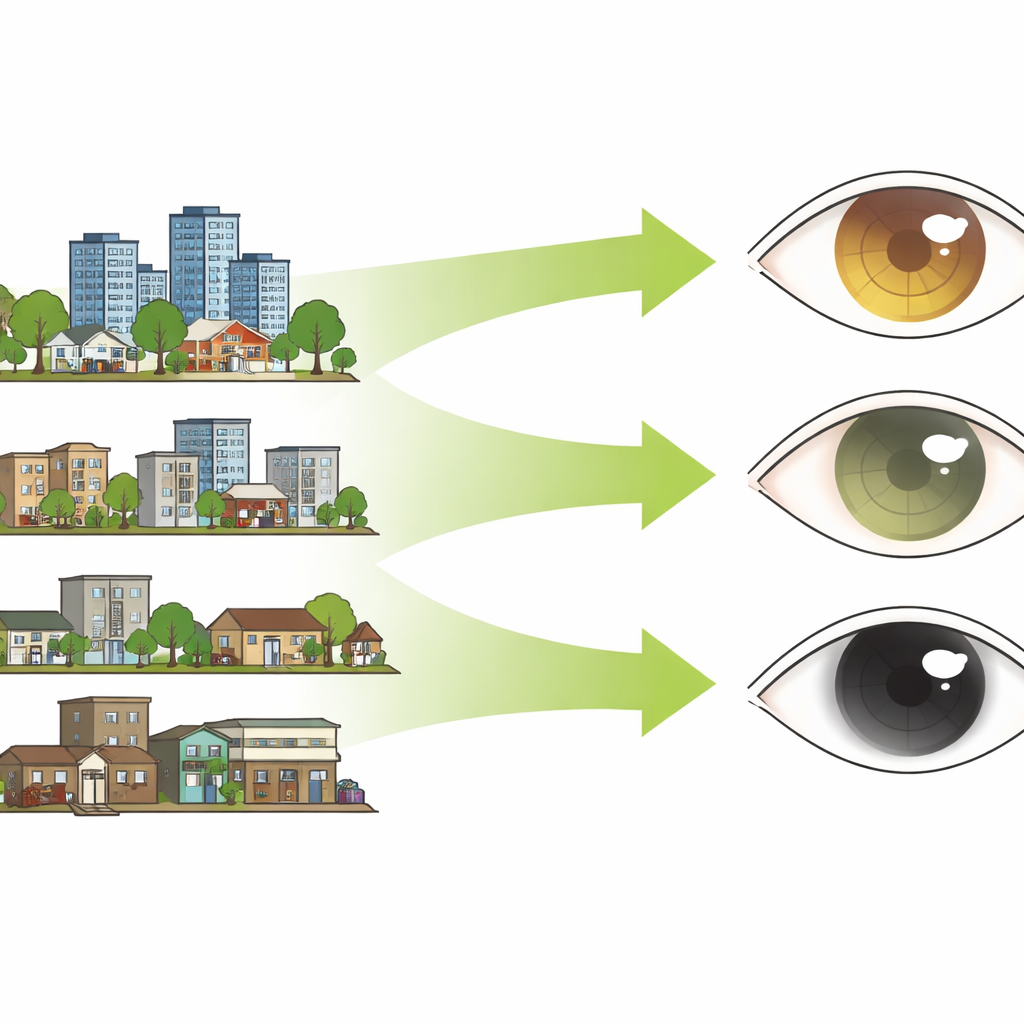
How the study followed patients across England
The team drew on the Royal College of Ophthalmologists’ National Ophthalmology Database, which collects routine information from eye clinics providing publicly funded care. They examined more than 48,000 eyes that started injections for neovascular macular degeneration between 2020 and 2023 at 60 English centres. Each patient’s home postcode was linked to a national score that ranks neighbourhoods from most to least deprived, based on income, employment, education, health, crime, housing and local environment. The researchers compared age, vision at the start of treatment, key points in the treatment pathway and vision one year later across these deprivation bands.
Who was treated and how their care looked
Most treated eyes came from people in their early eighties, with slightly younger ages among those from the poorest areas. Overall, the number of injections given in the first year was similar regardless of deprivation, typically seven or eight injections per eye. Most patients completed their initial “loading” course of three injections within ten weeks, again with little difference by neighbourhood. Loss to follow up, where no data were available at one year, was modest but tended to be a bit more common in the more deprived groups. Taken together, these findings suggest that once patients reach specialist services, the basic pattern of care is broadly similar across the social spectrum.
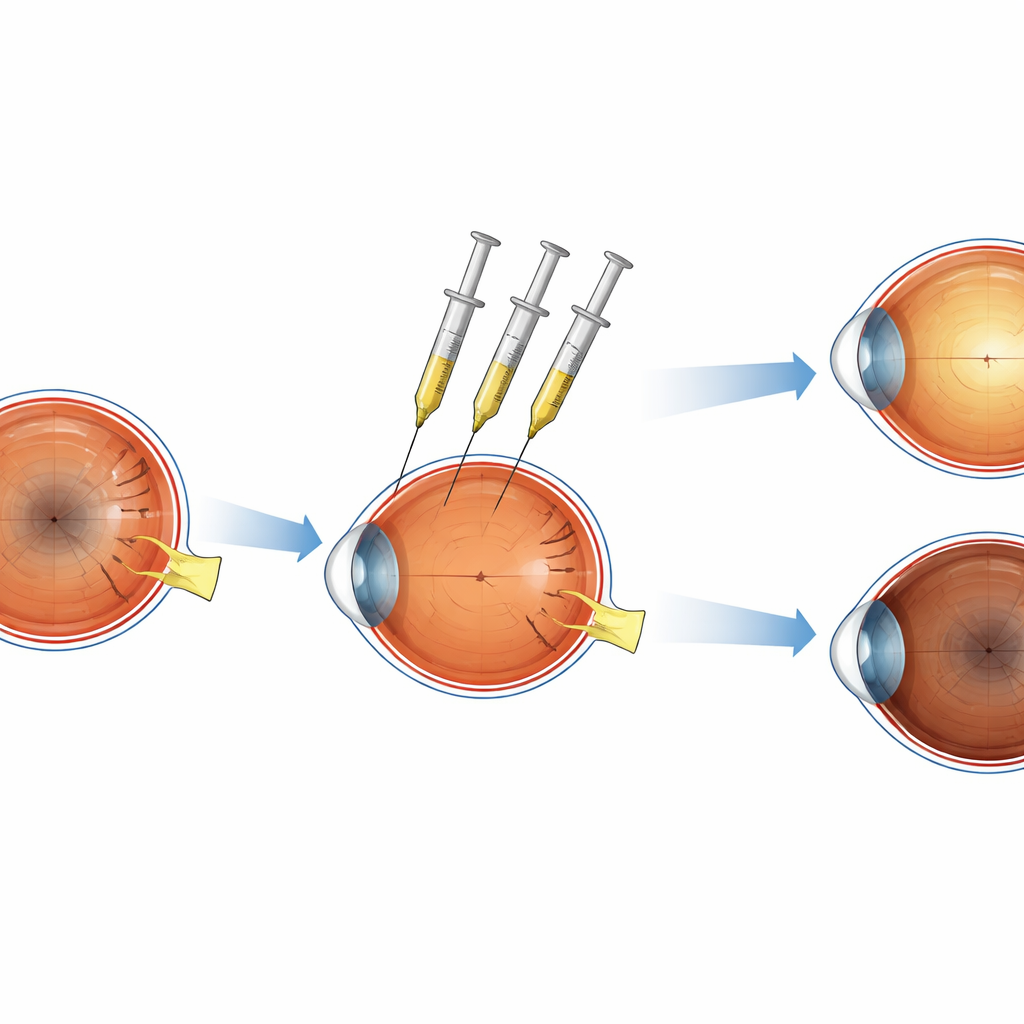
How starting point and outcomes differed by area
Despite receiving comparable treatment, patients from more deprived areas tended to start off with worse sight in the affected eye. Their measured visual acuity at the first injection was lower, and they were less likely to arrive with near-normal reading vision. After one year of treatment, vision improved on average in all deprivation groups, but a gap remained. People from the least deprived areas were more likely to reach the threshold the study defined as a “good” outcome, while those from the most deprived areas were more likely to experience a “poor” result, meaning a noticeable drop in letters read on the eye chart compared with their own starting point. These patterns held even when looking separately at first and second eyes treated.
What this means for patients and services
For a lay reader, the key message is that where you live can still influence how well you see after advanced eye treatment, not because doctors offer fewer injections, but because people in poorer areas often arrive later and face more barriers throughout their care journey. The study shows that modern injections help many patients across England, yet it also reveals a clear social gradient in vision at the start and one year later. Closing this gap will likely require better access to eye checks, quicker routes into specialist clinics and extra support to help vulnerable patients stay in care, so that timely treatment can protect sight more equally for everyone.
Citation: Shenoy, R., Monachan, M.T., Gruszka-Goh, M. et al. The Royal College of Ophthalmologists National Ophthalmology Database age-related macular degeneration (AMD) audit: report 1, associations with socio-economic deprivation in neovascular AMD. Eye 40, 999–1004 (2026). https://doi.org/10.1038/s41433-026-04382-8
Keywords: age related macular degeneration, socioeconomic deprivation, vision outcomes, eye injections, health inequality