Clear Sky Science · en
Paediatric uveal melanoma in Ireland 2010 – 2024: incidence, clinical features, management, and outcomes
Why this rare eye cancer in children matters
Most people think of eye cancer as an illness of older adults, yet this study looks at a handful of children in Ireland who developed a very rare eye tumor called uveal melanoma. By tracing how these youngsters were diagnosed, treated, and followed over time, the researchers offer insight into how modern eye care can save sight and keep a close watch for spread of disease, even when numbers are too small for large trials.
How the study was carried out
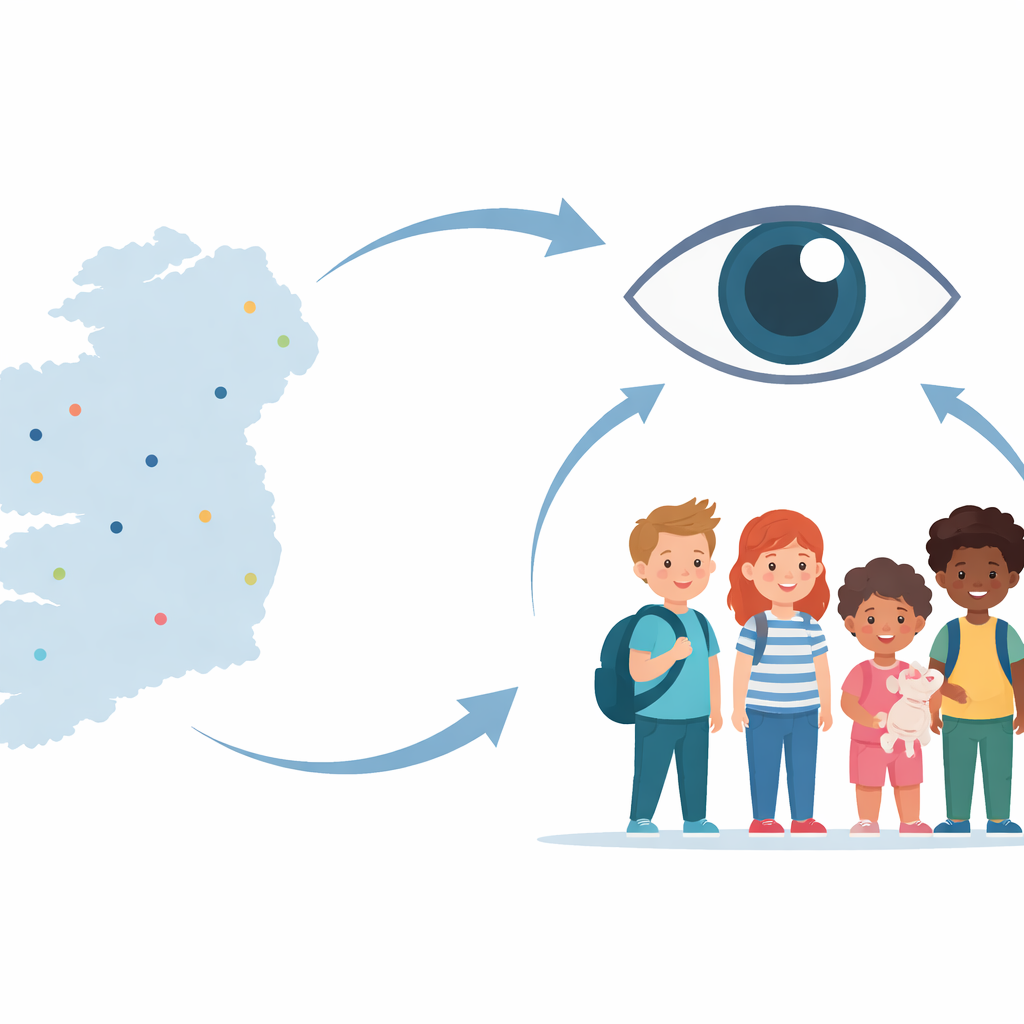
The team reviewed every case of this cancer diagnosed in people under 18 across Ireland between 2010 and 2024, all seen at the national eye cancer centre in Dublin. They collected details from medical records about age, sex, where in the eye the tumor grew, how big it was, how it looked under the microscope when tissue was available, what treatments were used, and how well each child could see before and after therapy. They also tracked whether the cancer came back in the eye or spread elsewhere in the body.
Who the affected children were
Only six children were found over fifteen years, highlighting just how uncommon this disease is. They were between 6 and 17 years old, and most were boys. In five children the growth arose in the light sensing layer at the back of the eye, while in one it straddled both this layer and the ring of tissue near the colored part of the eye. The children usually came to attention after failing a school vision test or routine eye check, or because they noticed blurred or distorted vision in one eye, which led optometrists and eye doctors to look more closely.
Ways the tumors were treated
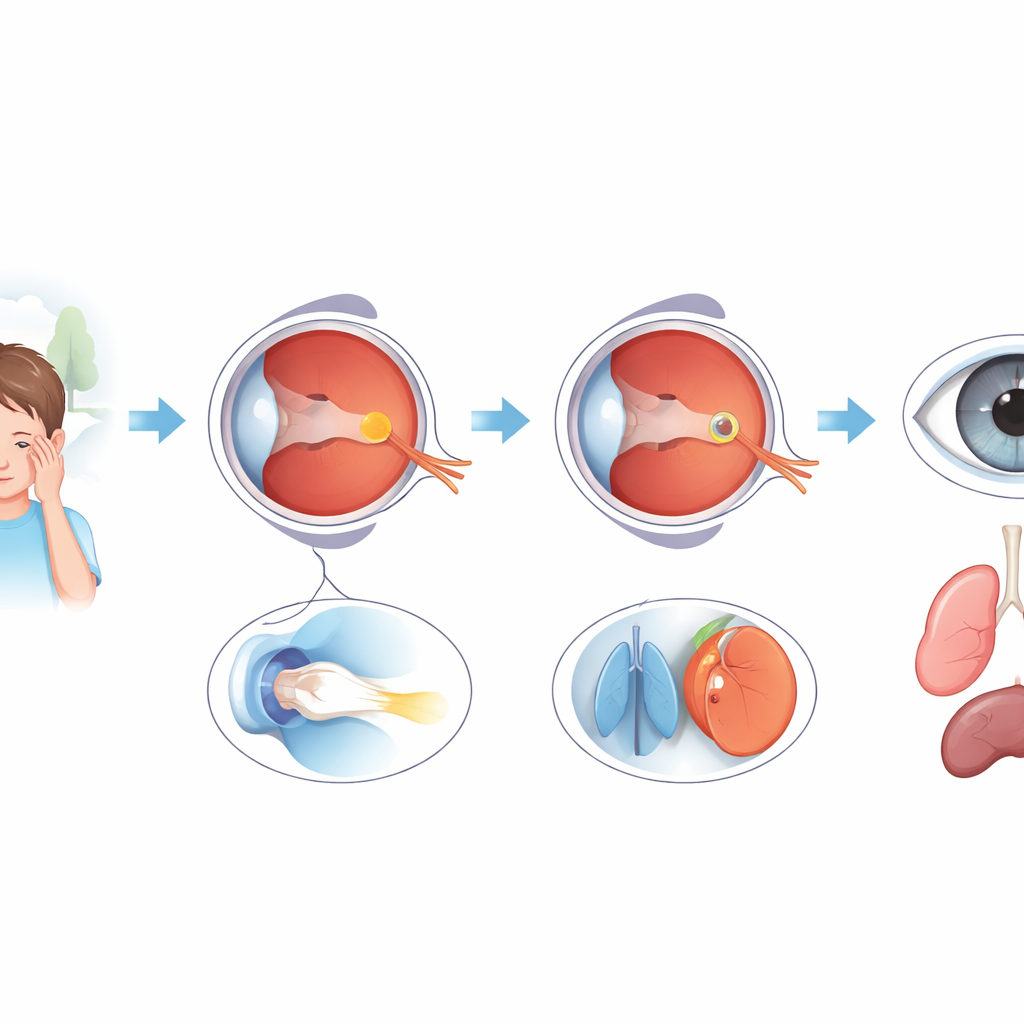
Treatment choices depended mainly on tumor size and position. Two children had the affected eye removed, a step reserved for large or awkwardly placed tumors. The others received eye-sparing radiation, either with a small radioactive plaque temporarily stitched to the outside of the eye or with a tightly focused external beam. In some cases, doctors also injected medicine into the eye to calm down abnormal new blood vessels. When tissue samples were available, specialists examined cell shape and searched for changes in certain genes and chromosomes that are linked to a higher or lower chance of spread in adults.
What happened after treatment
On average, the children were followed for about two and a half years, with some monitored for far longer through regular eye exams and scans of the chest and liver. During this time, none of the six developed spread of the cancer elsewhere in the body or had tumor regrowth in the treated eye. Several children kept good vision, especially those whose tumors were small and could be managed with precise radiation. Genetic tests, when possible, showed a mixed picture of risk markers, underlining how individual each case can be and how useful such tests may be in planning long term follow up.
What these findings mean
The study shows that while uveal melanoma in children is very rare, careful eye checks, rapid referral, and tailored treatment can control the tumor and often preserve useful sight. The recent cluster of cases in just a few years raises the question of whether this is a random pattern or a sign of changing trends, something that can only be answered by pooling data with other countries. For families and clinicians, the message is that unusual vision changes in a child deserve prompt expert review, and that modern care offers good chances of limiting both the impact on vision and the risk of wider illness.
Citation: Nevrov, D., O’Riordan, M., Fadlelseed, H. et al. Paediatric uveal melanoma in Ireland 2010 – 2024: incidence, clinical features, management, and outcomes. Eye 40, 1050–1056 (2026). https://doi.org/10.1038/s41433-026-04334-2
Keywords: paediatric uveal melanoma, eye cancer in children, ocular oncology, radiation eye therapy, cancer genetics