Clear Sky Science · en
PubMatcher: a web app to support genomic data interpretation through simplified bibliographic research
Why this new search tool matters
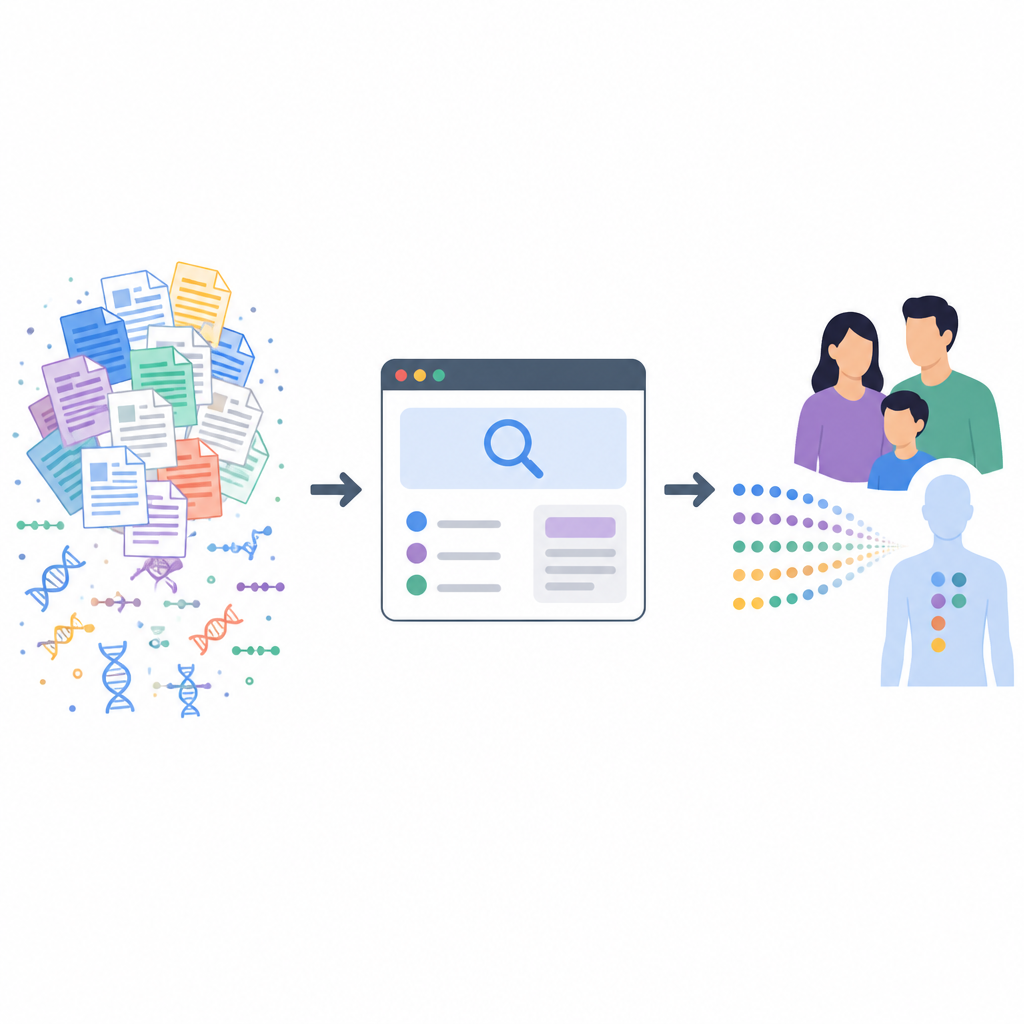
Doctors who care for people with rare genetic diseases are flooded with DNA data but often struggle to turn it into answers for real patients. Many gene changes fall in little-known genes that are not fully covered by classic reference books, so important clues can be missed. This article presents PubMatcher, a free web tool that helps experts quickly connect lists of genes from genome tests with medical features seen in their patients by scanning several trusted databases at once.
From endless data to a focused starting point
Modern whole-genome sequencing can reveal hundreds of rare genetic changes in a single person. Standard filters narrow this list but still leave many candidates, and most sit in genes that are poorly described or not clearly linked to disease. Key online catalogs, such as OMIM, may skip some gene–disease links or describe different symptoms than those seen in clinic. As a result, doctors and scientists often have to run many separate searches in PubMed and other resources, a slow and sometimes inconsistent process when decisions about diagnosis and counseling are at stake.
How the PubMatcher web app works
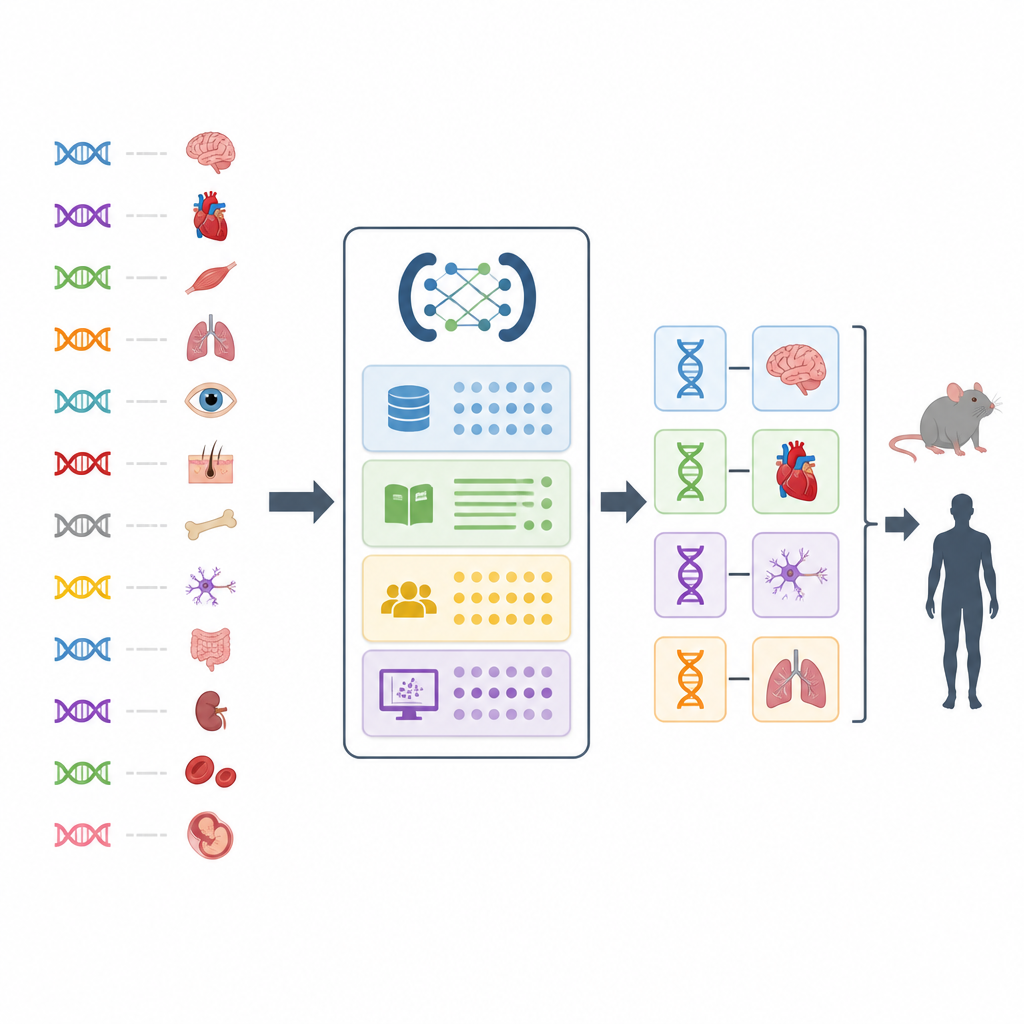
PubMatcher is designed as a one-stop search window for gene lists. Users enter one or more gene names and one or more symptoms or keywords, either by typing them or by using an “extract from text” feature that automatically pulls gene symbols out of clinical notes or reports. Behind the scenes, the tool sends combined gene-and-symptom searches to PubMed and also queries several curated resources, including protein function data, mouse knockout results, clinical variant databases, and expert gene panels. It stores some reference tables locally so that results appear quickly, and it offers safeguards to avoid false hits when gene names look like ordinary words.
What the results page shows at a glance
PubMatcher displays each gene-and-symptom pair in a single table row so that users can scan many genes at once. For every gene, the page shows how tolerant it is to damaging mutations in large human population datasets, which helps flag genes where harmful changes are more likely to cause disease. It lists how many PubMed papers mention both the gene and the symptom, and shows the title of the most relevant one. The tool adds summaries of what the gene’s protein does, what happens in mouse experiments when the gene is switched off, how many disease-linked and uncertain variants are reported in clinical databases, and whether expert groups and major catalogs already consider the gene tied to a disorder.
Testing the tool on real genome cases
The authors tested PubMatcher on 20 family-based genome studies from French rare disease clinics. After routine filtering, about 70 percent of remaining variants lay in genes that were either not known to cause disease or not classified as disease genes in OMIM, confirming that many possible leads sit outside familiar territory. They then reviewed 100 genome cases and found 15 in which PubMatcher highlighted variants in genes that were missing, incompletely labeled, or described with too narrow a symptom list in OMIM. These genes turned out to be relevant to the patients’ kidney, skin, blood, or brain problems based on recent papers and animal studies, and in some instances guided more focused follow-up tests.
Future directions for smarter searching
Because PubMatcher depends on outside databases, its reach grows as those resources improve. The authors note that newer artificial intelligence tools could one day mine the literature even more deeply, but current technical limits prevent their full use in the app. They also suggest adding features that would rank genes by how well they match a patient’s symptoms and expanding to other animal models beyond mice. Even in its current form, PubMatcher has already been adopted by geneticists outside the development team, who use it to slot into existing workflows alongside variant-centered tools.
What this means for patients and families
For non-specialists, the key message is that PubMatcher does not change how genes work, but it helps doctors make better sense of complex genome results. By bringing scattered pieces of information into one clear view, especially for lesser-known genes, it increases the chance that a rare but important clue will be noticed. This can speed up the path from raw DNA data to a possible explanation for a person’s illness, and it helps researchers recognize new gene–disease links that may benefit future patients.
Citation: Marin, V., Lannes, H., Dumont, V. et al. PubMatcher: a web app to support genomic data interpretation through simplified bibliographic research. Eur J Hum Genet 34, 667–674 (2026). https://doi.org/10.1038/s41431-026-02068-z
Keywords: genomic data interpretation, gene phenotype associations, whole genome sequencing, clinical genetics tools, rare disease genomics