Clear Sky Science · en
“It was up to me to be curious”: perceptions and experiences of students with intellectual disability on genetics and health education
Why this topic matters to everyday life
More and more of our healthcare, from cancer tests to understanding why someone has a disability, is shaped by genetics. Yet the people whose lives are most affected by these advances—students with intellectual disability—often leave school without the knowledge or confidence to understand their own health or to speak up in medical settings. This study, carried out in Australia with young people with intellectual disability as co-researchers, asks a simple but powerful question: what did students actually learn in high school about health, genetics, and their rights in healthcare—and what do they wish had been different? 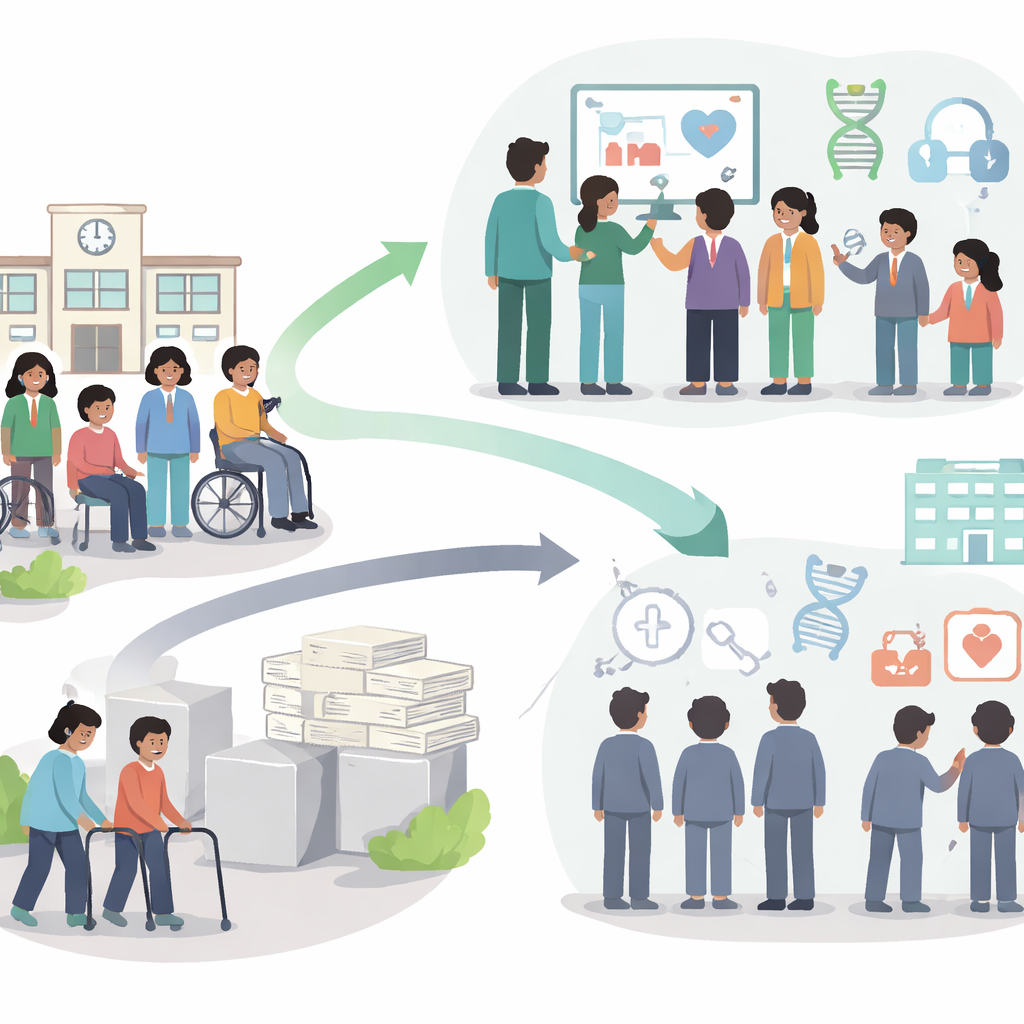
What students said they learned at school
Fourteen current and former high school students with intellectual disability, aged 12 to 28, took part in in-depth interviews. They described learning a patchwork of general science and health topics: how the body works, hygiene, food, exercise, and sometimes basic ideas about genes. A few remembered lessons that mentioned genes or genetic conditions, but these were often abstract and not clearly linked to their own lives, disabilities, or health. Others said they had never heard about genes at school at all. Many felt they were left to fill the gaps themselves, asking parents, support workers, or advocacy groups questions that school had never addressed.
How teaching methods helped or hurt
Students were very clear about what made learning work for them and what made it fail. Hands-on experiments, outdoor activities, videos, pictures, and step-by-step explanations helped them understand and remember new ideas. When teachers broke tasks down, used visual supports, and repeated key points, students felt more able to work independently. By contrast, some lessons were packed with long words and large amounts of writing, with little explanation. A few students said this made them feel “stupid” or shut out. They also reported times when curiosity was discouraged—for example, being removed from class for asking too many questions—which sent the message that their interest in understanding was unwelcome.
Health rights, decision-making, and school climate
Beyond facts about bodies or genes, students wanted school to teach them about health rights and real-world decision-making. Many had been taught to simply trust doctors and do what they were told, without being encouraged to ask questions or say no. Only one participant recalled being explicitly taught about consent. Lessons on puberty, relationships, contraception, mental health, and medication safety were inconsistent and often incomplete. At the same time, several students described facing bullying, stigma, and even abusive treatment at school, with little guidance on how to report harm or seek help. These experiences shaped how safe they felt to speak up—not only in the classroom but also in healthcare settings later on. 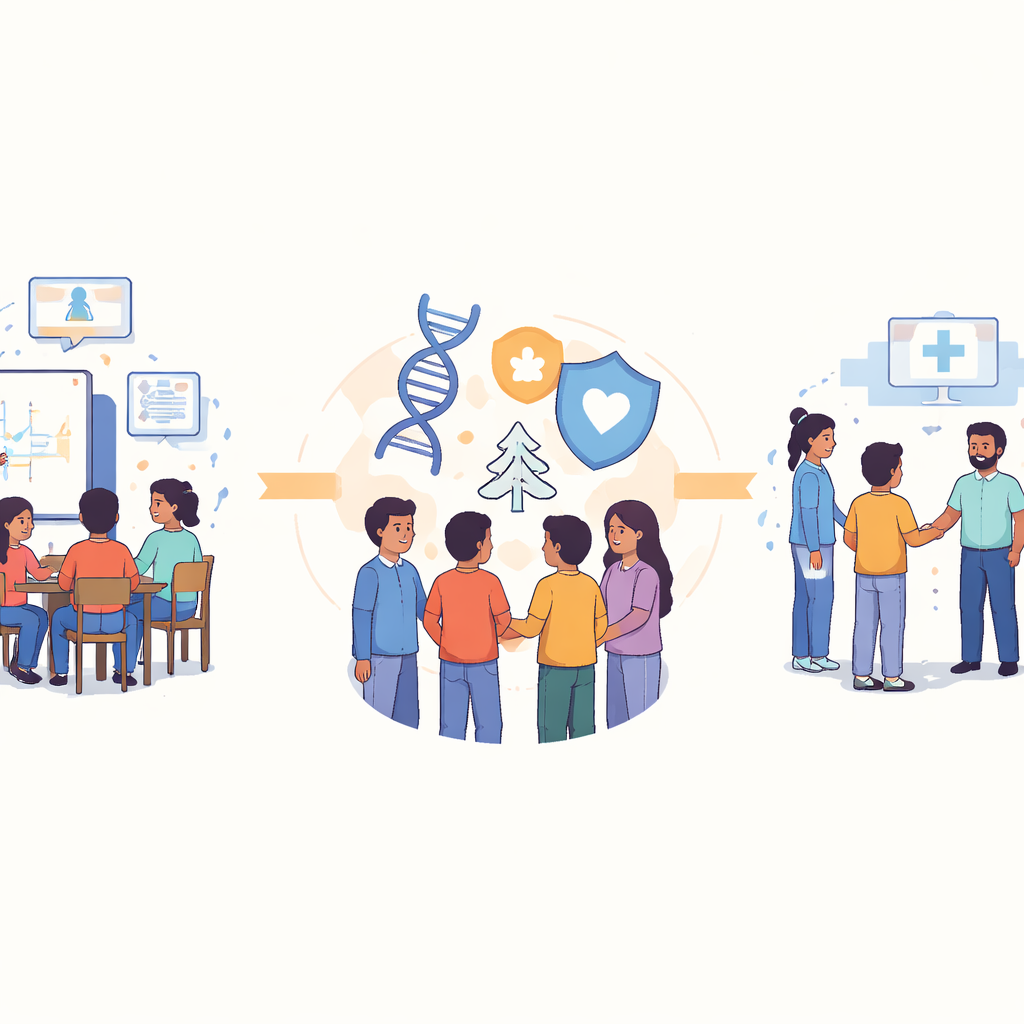
Students’ ideas for better learning
Participants had concrete suggestions for change. They wanted schools to teach clearly about genetic conditions, disability, and neurodiversity, so that students could better understand themselves and others and reduce stigma. They suggested involving health experts, such as doctors, nurses, and genetic specialists, alongside teachers, and including people with lived experience as co-educators. They called for more visual supports, Easy Read materials, and trauma-aware teaching practices that take into account past experiences of bullying or abuse. They also argued that schools should teach life skills such as making choices, regulating emotions, navigating social media, and handling health information online—skills that underpin becoming an informed health consumer.
What this means for the future
The study concludes that high schools are missing a crucial chance to prepare students with intellectual disability to take part in decisions about their own health and genetic information. When teaching is inaccessible or disconnected from students’ real lives, young people are left dependent on others’ opinions and are more vulnerable to poor healthcare, missed diagnoses, and avoidable illness. By listening directly to students and involving them as co-researchers, this work shows that they not only want to learn more about health and genetics but also know what would help them do so. The authors argue that co-designed, respectful, and person-centred education can equip students with intellectual disability to navigate the healthcare system as empowered partners—improving both their experiences and their long-term health outcomes.
Citation: Hansen, J., Strnadová, I., Danker, J. et al. “It was up to me to be curious”: perceptions and experiences of students with intellectual disability on genetics and health education. Eur J Hum Genet 34, 491–497 (2026). https://doi.org/10.1038/s41431-026-02041-w
Keywords: intellectual disability, genetic health literacy, inclusive education, health rights, student voice