Clear Sky Science · en
Tofacitinib repairs inflammation and mitochondrial dysregulation in GM-CSF-reprogrammed RA macrophages
Why this matters for people with arthritis
Rheumatoid arthritis is not just about aching joints—it is driven by overactive immune cells that live inside the joint lining. This study shows that a common pill for rheumatoid arthritis, tofacitinib, can calm a particularly stubborn group of these cells by fixing both their inflammatory behavior and their damaged “power plants,” the mitochondria. Understanding this hidden cell rewiring helps explain why some treatments fail and points toward smarter ways to control joint damage and pain.
The troublemaking joint guardians
In healthy joints, a type of white blood cell called a macrophage quietly cleans up debris and helps with repair. In rheumatoid arthritis, these cells pile up in the joint lining and become fierce promoters of inflammation. The researchers focused on a signal called GM-CSF, found at high levels in rheumatoid joints and blood. Macrophages that sense this signal through a matching receptor become locked into a harmful state: they pour out inflammatory molecules such as IL-1 beta and S100 proteins, and they lose genes that normally keep inflammation in check. Surveys of patient joint samples showed that this GM-CSF–responsive program appears early in disease, persists in long-standing arthritis, and tracks with measures of disease activity.
When cell power plants go off-balance
These GM-CSF-shaped macrophages are not just angry; they are metabolically rewired. Instead of mainly using their mitochondria to make energy efficiently, they shift toward rapid sugar burning (glycolysis). Key enzymes of the cell’s energy cycle are suppressed, leading to a buildup of byproducts such as citrate and succinate and activation of the oxygen-sensing factor HIF-1 alpha. Inside the cells, mitochondria become fragmented and more numerous, a structural hallmark of stress. Measurements confirmed that most of the cells’ ATP—chemical energy—now comes from glycolysis rather than from mitochondrial pathways, and joint tissues from patients showed the same bias toward mitochondrial break-up.
Why many standard drugs fall short
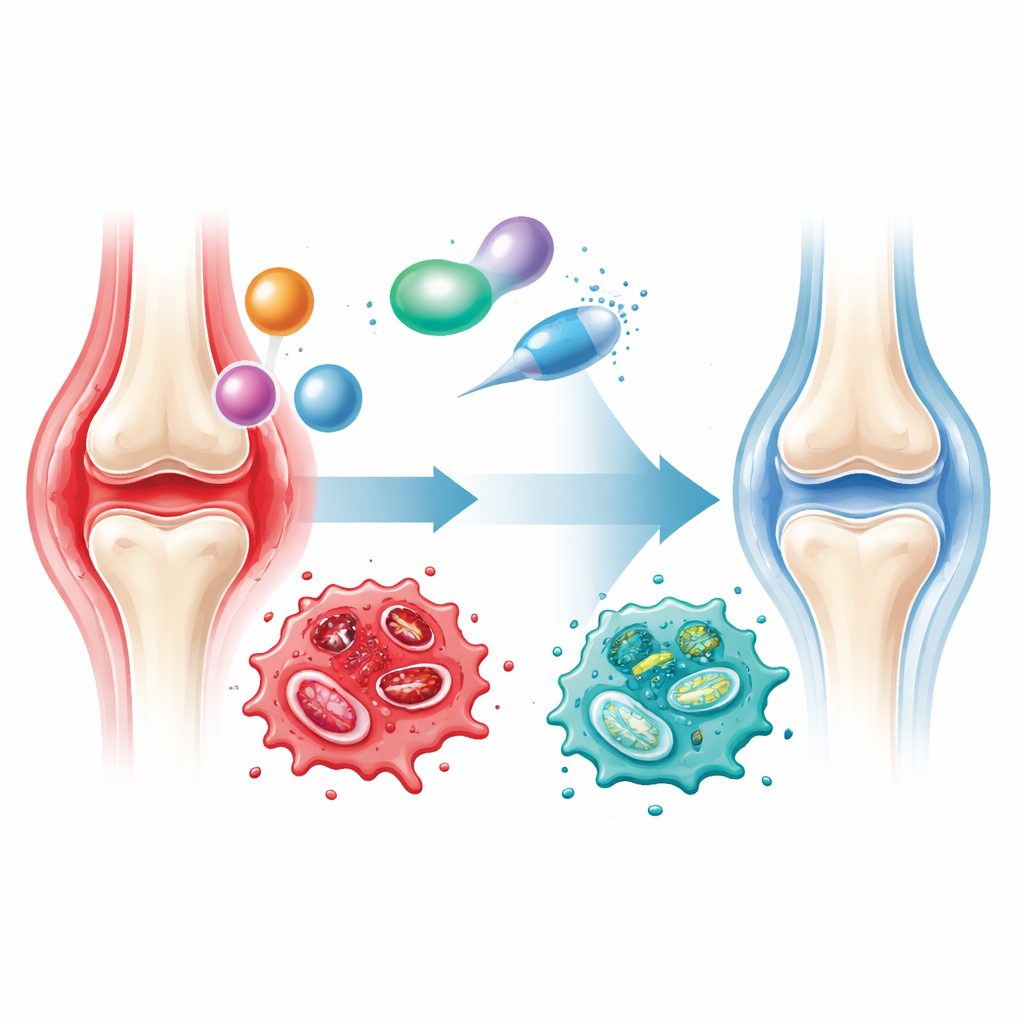
The team then asked whether current therapies can fix this disturbed state. Drugs that block TNF or the IL-6 receptor—mainstays of rheumatoid arthritis treatment—as well as traditional disease-modifying pills, did little to change GM-CSF levels or its receptor in the joint lining. Directly slowing sugar entry into cells or partially blocking mitochondrial respiration trimmed some aspects of the metabolic shift and restored a few repair-related genes, but the core inflammatory program and damaged mitochondrial structure remained largely intact. In other words, simply cutting fuel supply did not reset these macrophages to a healthy, balanced mode.
A pill that resets inflamed cells
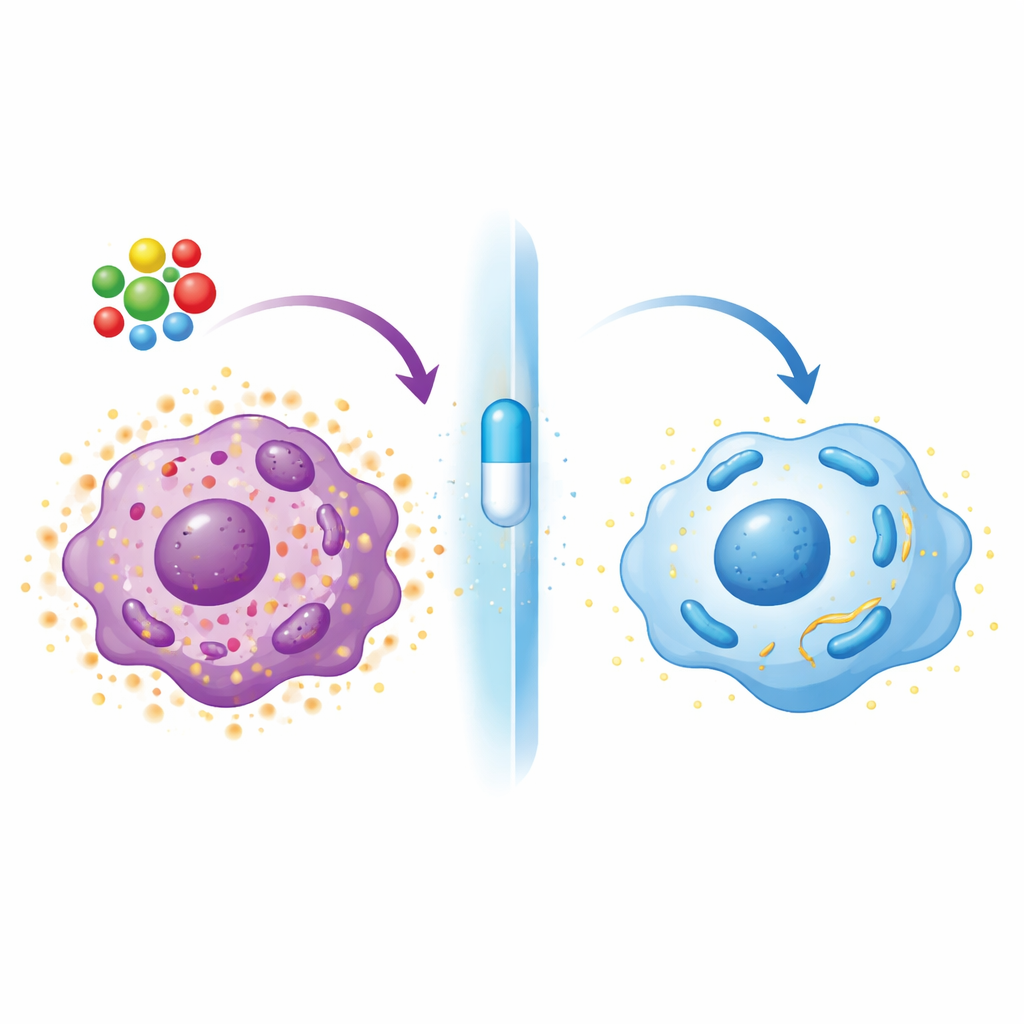
Tofacitinib, a pill that blocks JAK-STAT signaling, told a different story. In both blood-derived macrophages and pieces of patient joint tissue grown in the lab, tofacitinib lowered the GM-CSF receptor, shut down the STAT5 pathway, and shifted cells away from the IL-1 beta and S100-rich profile toward a more regulatory one marked by IL-10 and other calming genes. Energy production was redirected back toward the mitochondria: key enzymes in the energy cycle recovered, levels of reactive oxygen species and lactate dropped, and mitochondrial fragmentation lessened. Similar changes appeared in a mouse model where excess GM-CSF was injected into joints to trigger arthritis: tofacitinib reduced swelling, inflammatory markers, glycolytic enzymes, and signs of mitochondrial stress in joint macrophages.
What this means for people living with RA
For someone with rheumatoid arthritis, these findings suggest that not all drugs act on the deepest drivers of joint inflammation. Signals like GM-CSF can push macrophages into a self-sustaining, high-sugar, high-stress state that many standard treatments do not fully reverse. Tofacitinib, by turning off a key switch inside these cells (STAT5), appears able to both cool the inflammatory storm and repair the cells’ internal power systems. This dual action may help explain its clinical benefits and highlights the value of therapies that tackle both immune signals and cell metabolism to protect joints more effectively.
Citation: Satoeya, N., Zack, S.R., Zoubi, O.A. et al. Tofacitinib repairs inflammation and mitochondrial dysregulation in GM-CSF-reprogrammed RA macrophages. Cell Mol Immunol 23, 417–431 (2026). https://doi.org/10.1038/s41423-026-01395-x
Keywords: rheumatoid arthritis, macrophages, GM-CSF, tofacitinib, cell metabolism