Clear Sky Science · en
Spatial single-cell landscape of tumor-associated macrophages and their crosstalk with the tumor microenvironment
Why the tumor neighborhood matters
Cancers do not grow in isolation. They live in a bustling neighborhood of immune cells and connective tissue that can either slow them down or help them spread. This study maps, in great detail, a key group of immune cells called tumor-associated macrophages across many cancer types, showing where they sit inside tumors, how they talk with nearby cells, and how this hidden chatter can influence treatment, including modern immunotherapies.
Looking at single cells in space
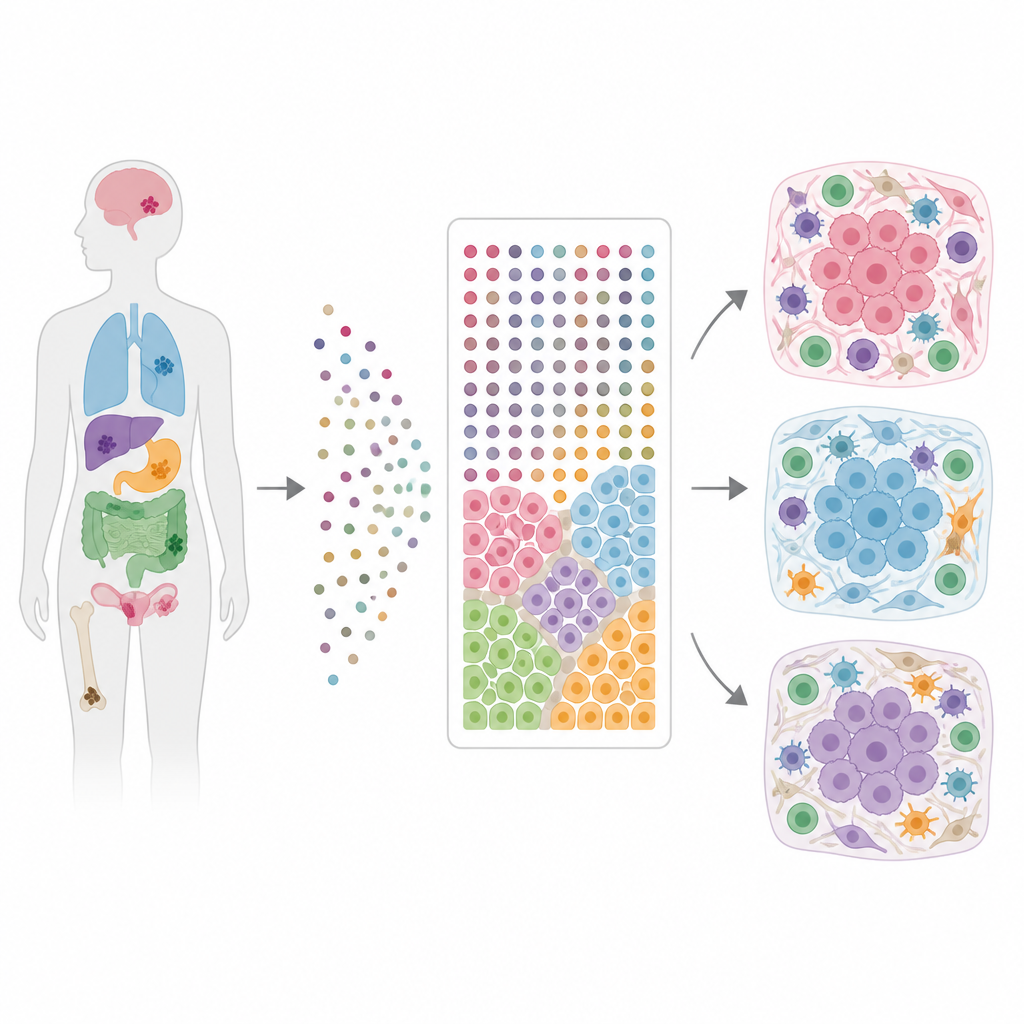
The researchers combined two powerful approaches that read out gene activity from thousands of individual cells. One looks at single cells after they are separated from tissue, while the other keeps cells in their original positions inside thin tissue slices. By integrating data from over a million cells and dozens of tissue sections from sixteen human cancers, they built a large atlas of the tumor environment. Within this atlas they focused on macrophages, immune cells that can both attack invaders and support healing, and found that these cells gather especially close to cancer cells compared with other immune cell types.
Many flavors of helper immune cells
Instead of the traditional view of macrophages as only two types, the team identified twenty eight distinct subgroups. Some were found across many cancers, while others appeared mainly in certain organs. A number of subgroups looked more like long term resident cells from normal tissue, while others were tied to inflammation or to strong signaling molecules that call in lymphocytes. Several macrophage groups shared features of both classically “aggressive” and “healing” states at the same time, underlining that real tumor macrophages rarely fit into a simple good or bad box.
Where macrophages sit shapes what they do
By overlaying the atlas on spatial maps of tumors, the researchers showed that macrophage subgroups occupy different niches. Some cluster in the tumor core, a region often short of oxygen and rich in new blood vessels, while others prefer the outer rim or nearby normal tissue. Macrophages in the core were linked to genes involved in sugar burning and acid production, suggesting they help feed the energy needs of rapidly growing cancer cells. A specific inflammatory subgroup produced signals that recruit other white blood cells and encourage formation of new blood vessels, further supporting tumor expansion.
Crosstalk with killer T cells and fibroblasts
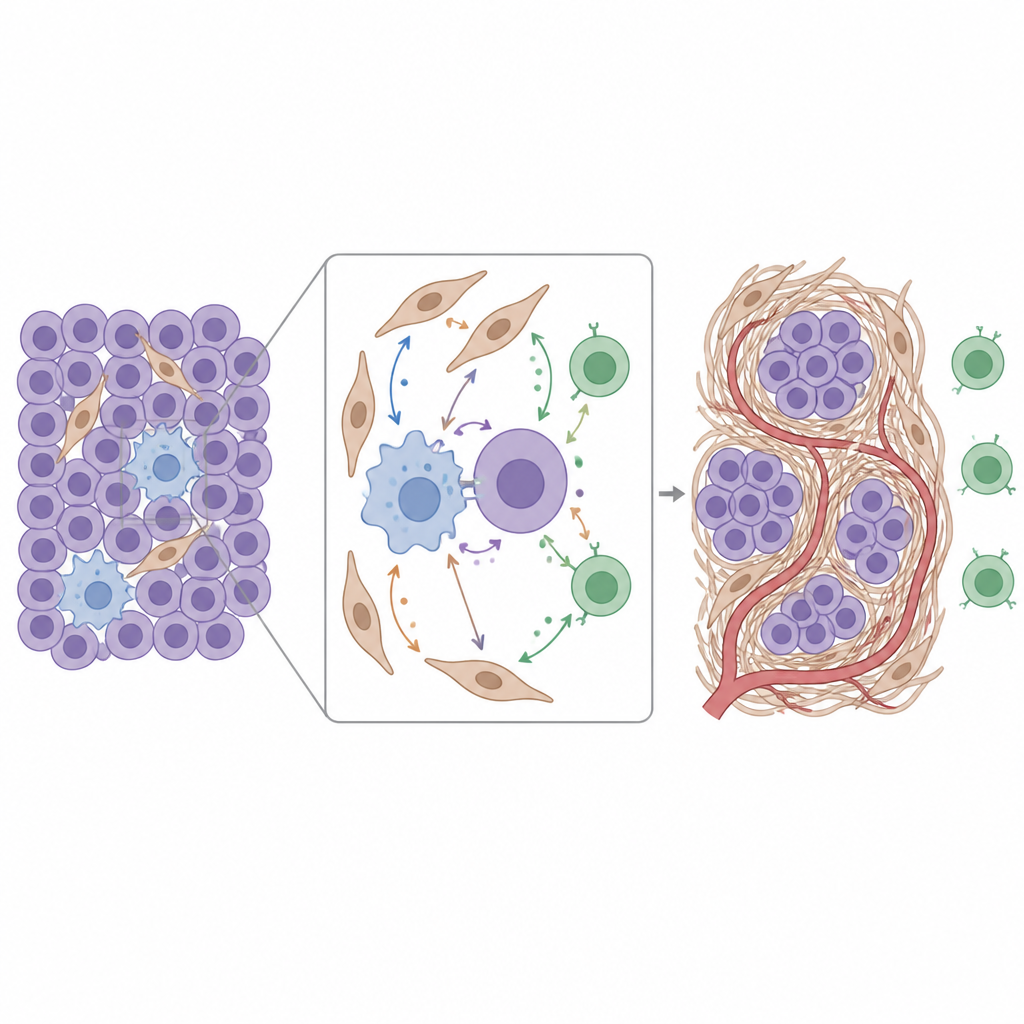
Two sets of macrophages stood out for their close ties with CD8 T cells, the main killers of cancer cells. One set appears to help activate these T cells, and its presence often tracked with better outcomes and stronger responses to immune checkpoint drugs. Another set produces strong chemical attractants that draw T cells toward tumors, yet in some cases these T cells end up circling the tumor edge rather than entering the core, where they could do the most damage. The study also uncovered tight links between macrophages and cancer associated fibroblasts, the structural cells that lay down scar like tissue. Certain macrophages seem to transform toward a fibroblast like state, while others secrete a protein called SPP1 that activates fibroblasts and helps them form dense barriers and support structures around tumors.
What this means for future cancer care
Overall, the work paints tumor associated macrophages as central organizers of the cancer neighborhood rather than passive bystanders. By shaping blood vessel growth, fueling cancer cell metabolism, building physical barriers, and steering T cells and other immune cells, different macrophage subgroups can either restrain tumors or help them thrive. The atlas highlights several signaling routes and cell states, such as SPP1 producing macrophages in the tumor core and macrophages that partner with fibroblasts, as promising targets for therapies that aim to rewire the tumor environment and improve the impact of immunotherapy.
Citation: Nie, Rc., Hu, Gs., Cao, Sq. et al. Spatial single-cell landscape of tumor-associated macrophages and their crosstalk with the tumor microenvironment. Cell Discov 12, 35 (2026). https://doi.org/10.1038/s41421-026-00888-3
Keywords: tumor-associated macrophages, tumor microenvironment, spatial transcriptomics, cancer immunotherapy, cancer-associated fibroblasts